


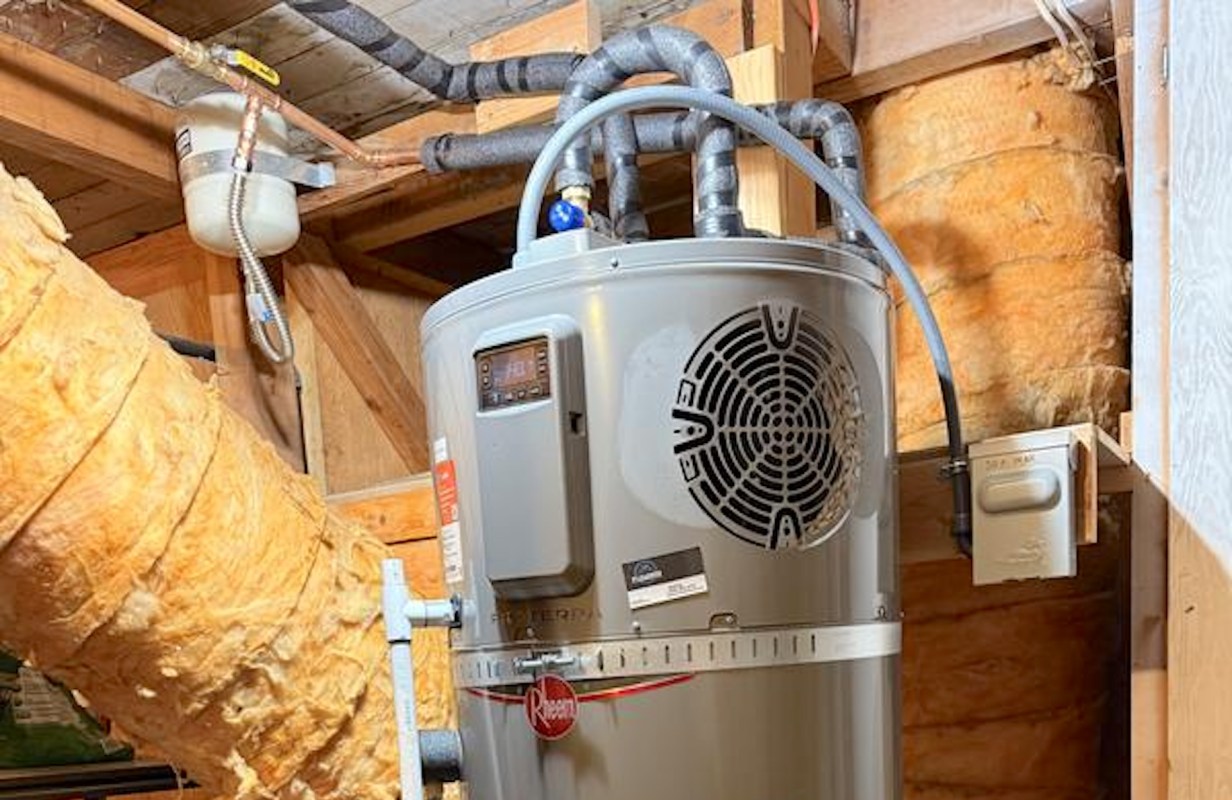
Over 311 days, a self-installed 65-gallon Rheem heat-pump water heater consumed just 650 kilowatt-hours, according to one homeowner who installed an ESPHome tracking system on the unit.
That's an eye-catching real-world data point for how little electricity these systems can use compared with a standard electric tank. That matters for households weighing a replacement, as one of electrification's biggest selling points is the potential for lower utility bills while still having the same result.
Here's what to know
In a Reddit post on r/heatpumps, the homeowner said they handled the Rheem installation themselves after a six-year-old Bradford White electric water heater began leaking. They also added ESPHome monitoring to Home Assistant and installed a powered anode rod because their roughly 800-ppm water quickly eats through standard rods.
According to the post, the unit relied almost entirely on heat-pump mode, with the resistance element turning on only a few times during winter. The homeowner estimated savings of 70% to 80% versus the old heater, although that was not based on measured before-and-after data, since the previous tank was not being monitored.
They said the DIY project cost about $2,300, and that a 30% tax credit lowered the net cost to around $1,600. Based on estimated annual savings of roughly $300, they said the system would pay for itself in about five years.
More background
Water heating is a major energy cost, and heat-pump water heaters are built to reduce that demand by transferring heat rather than creating it directly with resistance coils.
Also, because the home's hard water "burns through rods fast," the homeowner said they opted for a powered anode rod to help protect the tank over time.
The poster said they usually keep the tank at 130 degrees Fahrenheit, then use a Home Assistant automation to reduce the set point to 120 degrees during 3-6 p.m. peak pricing hours.
Save $10,000 on solar panels without even sharing your phone number Want to go solar but not sure who to trust? EnergySage has your back with free and transparent quotes from fully vetted providers in your area. To get started, just answer a few questions about your home — no phone number required. Within a day or two, EnergySage will email you the best options for your needs, and their expert advisers can help you compare quotes and pick a winner. Solar panels can save you more than $50k over their 25-year lifespan, and EnergySage can help you save as much as $10k on installation. Which begs the question — isn't that worth an email or two? |

In the comments, people debated Legionella risk, stratification, and tank temperature. In the end, many commenters pointed out that 120 degrees is enough to mitigate bacteria risk.
Another commenter added that installation is fairly simple when a home already has an electric water heater, so long as there is enough room for the wider tank and somewhere for the condensate to drain.
What can be done?
If an older electric tank is close to the end of its life, a heat-pump water heater may be worth a serious look. Before buying, review available tax credits, make sure the unit will fit, and determine whether any plumbing or electrical changes are required.
For shoppers who want more intelligence built into the appliance, Cala is one company trying to modernize the category. Its customizable smart heat pump water heaters help homeowners decrease their energy bills by heating water exactly when it's needed. That kind of scheduling can be especially helpful for families on time-of-use utility plans or households with predictable shower, laundry, and dishwasher patterns.
In this case, the homeowner said they blocked the heater's internet access and relied on local monitoring, while other buyers may prefer a built-in smart experience from a company like Cala.
The original poster broke down the pay-off time: "At $300/year savings it's an easy break even in year 5."
Where can I learn more?
These articles cover homeowner heat-pump upgrades, energy savings, efficiency data, and common misconceptions about heat-pump technology.
• One homeowner reported massive energy bill savings after switching to a heat-pump water heater.
• Across many homes, families save 50% on bills by upgrading to heat-pump HVAC systems.
• New research shows heat pumps are 180% more efficient than outdated home heating systems.
• An EnergySage advisor said common heat-pump myths often overlook how well the systems perform.

Get TCD's free newsletters for easy tips, smart advice, and a chance to earn $5,000 toward home upgrades. To see more stories like this one, change your Google preferences here.






