


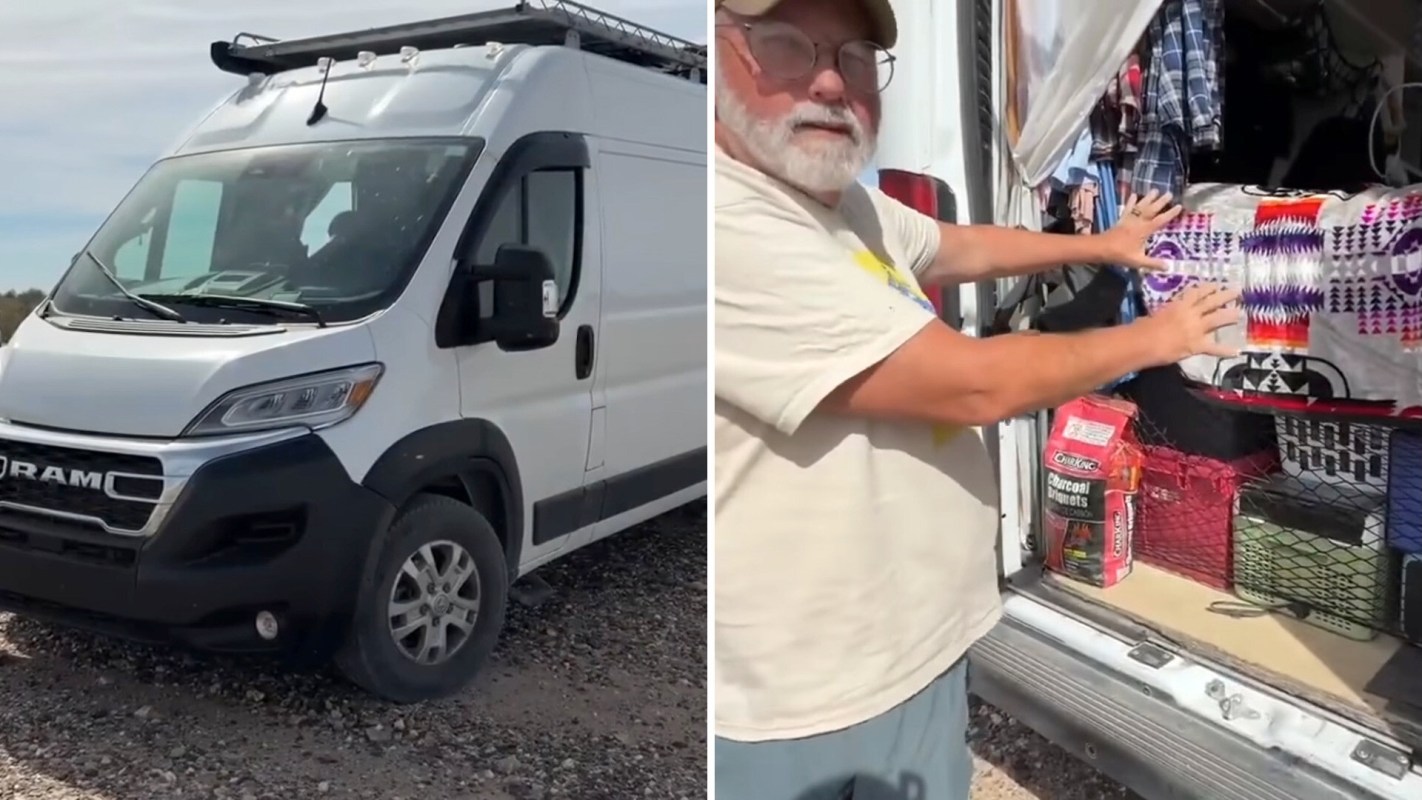
After receiving a $20,000 quote for insulation and wiring alone, one couple's Ram ProMaster camper van buildout became a DIY project rather than a hired builder's job.
Here's what to know
In a YouTube tour shared by CheapRVliving (@CheapRVliving), host Bob Wells explored the couple's kitchen, sleeping space, storage, and power system. At the time of filming, Steve, the DIY builder, said he had been traveling in the van for roughly 18 to 24 months.
Traveling while they were still physically able became a priority for the couple after Brenda, who has polycystic kidney disease, received a kidney transplant.
The move involved buying the van and selling their house. Both already enjoyed car camping and backpacking.
Steve planned the interior by watching YouTube videos, taking notes, and combining ideas from other builds. The total cost of the finished conversion wasn't disclosed, so the exact savings remain unknown.
"I'm glad we did cuz it ended up the way we wanted it, right? You know, and obviously didn't cost us an arm and a leg like some of them," Steve said.
TCD Picks » Quince Spotlight
💡These best-sellers from Quince deliver affordable, sustainable luxury for all




"WIth a DIY you can not only save a lot of money and still be just as comfortable with all the amenities you want & need, but be self-sufficient when a problem comes up, saving money on the repair," one commenter said.
More background
The couple's setup combines everyday comforts with equipment chosen to keep weight and expenses down.
Hammocks and bug spray go into storage pockets repurposed from heavy-duty canvas flowerpot holders. For main storage, the couple uses lightweight baskets on shelves instead of installing extensive wooden cabinetry.
The kitchen has a USB-rechargeable water pump connected to freshwater containers, a 12-volt refrigerator, and a separate small freezer. A two-burner propane stove and other compact appliances let the couple prepare meals, while swiveling front seats and folding tables turn the cab into a dining and living area.
The van also carries 600 watts of rooftop solar, which Steve said usually meets their electricity needs while traveling in the West.
In Ohio, however, they use the van to provide additional charging alongside solar power, according to the video. They also have a generator-charging option for extended rainy weather.
What can be done?
A folding outdoor table uses simple hinges, and an upholstery shop supplied a custom foam mattress. To shower, the couple hangs a portable, rechargeable unit from a broomstick supported between the rear doors.
Installing the ventilation fan meant cutting into the new van's roof — a step Steve found daunting. Not every conversion task will suit every beginner.
Camping without hookups — known as boondocking — is another way the couple limits ongoing expenses. At the time of filming, Steve said they hadn't paid for camping during the preceding year, though that approach won't work for every traveler.
For Steve, who is retired and receives Social Security and a pension, building the interior himself meant keeping more money available for experiences.
"If you go and have one built out, there went your emergency fund, there went your traveling ... " he said, "I'd rather spend that on traveling."
Where can I learn more?
Steve's build offers one approach to managing costs and powering a home on wheels; these stories explore others.
• An Indiana overlander installed 400 watts of solar on an Alibaba camper, with wiring proving hardest.
• A DIYer transformed a rotted Ford E350 into an off-grid luxury tiny home.
• A full-time van dweller built a low-budget home despite having no previous building experience.

Get TCD's free newsletters for easy tips, smart advice, and a chance to earn $5,000 toward home upgrades. To see more stories like this one, change your Google preferences here.






