


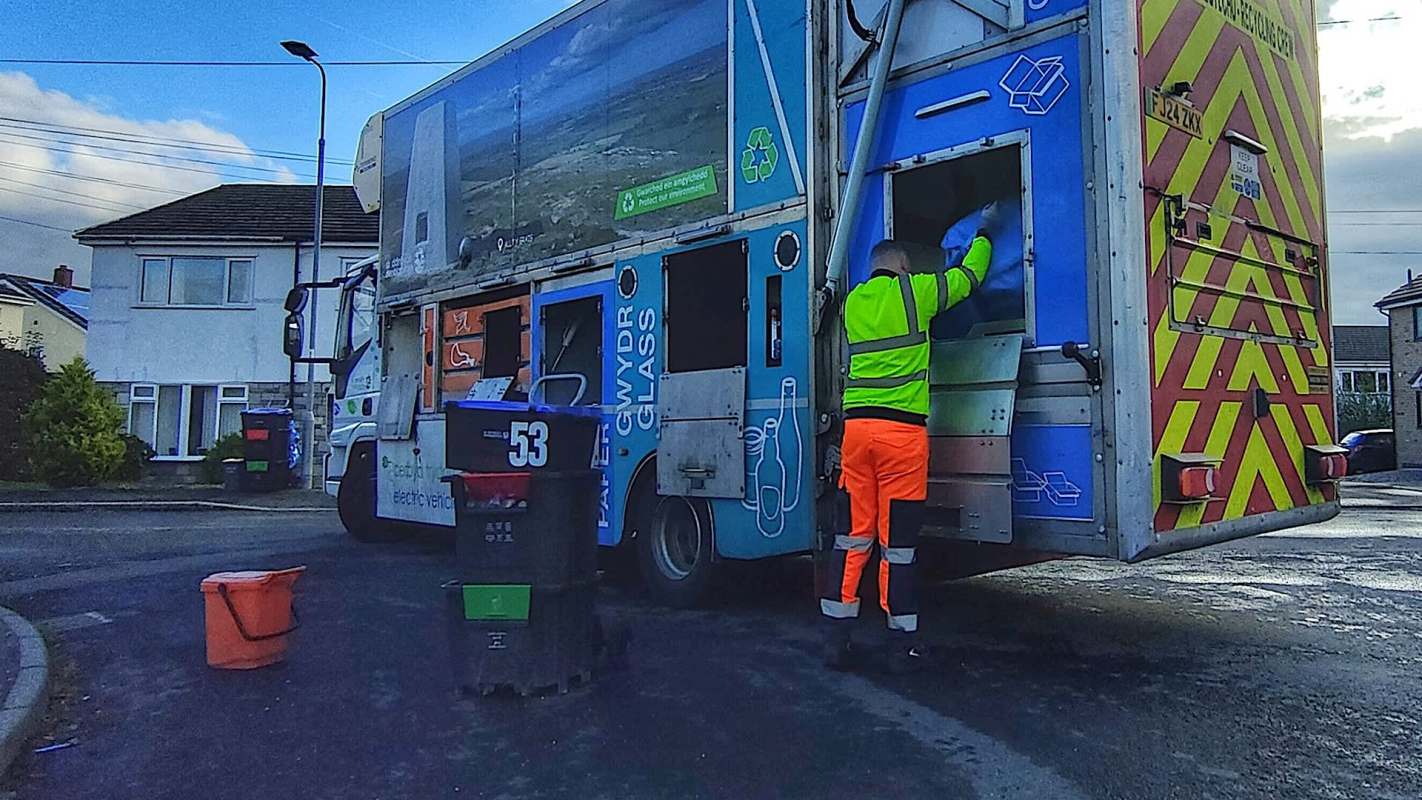
A recycling trial in Denbighshire, Wales, is adding another container to residents' waste-sorting routines, raising concerns over how much work households should take on to improve recycling.
At least 4,500 households are taking part.
Here's what to know
Most households put out three containers each week: an orange caddy for food scraps, a blue hessian sack for cardboard, and a three-tier recycling unit called a Trolibocs, according to The Independent. A separate bin for residual waste is collected once every four weeks.
"Putting your bins out has become a full-time job, and especially in the fourth week when they all go out," Denbighshire resident Linda Muraca told The Times. "You should see the state of our roads once the refuse collectors have been. Rubbish is often all over the place."
If residents count the Trolibocs compartments separately and include optional services, they can have up to 11 waste containers.
How the council counts the Trolibocs matters when describing residents' weekly workload, the council said. It regards the unit as one container divided into compartments, not three individual bins. Denbighshire County Council, however, disputes reports that households must put out 12 bins.
TCD Picks » Quince Spotlight
💡These best-sellers from Quince deliver affordable, sustainable luxury for all




More background
For absorbent hygiene waste, residents can opt for a black container. Batteries have a pink clip-on holder, while textiles go in disposable white bags. The Independent says a green-wheeled container for garden waste is another optional service beyond the standard collection.
Not every household uses all the optional services. Residents can also leave small electrical items on top of the Trolibocs for collection.
What's being done?
"Denbighshire is proud to be working alongside residents to achieve some of the highest recycling rates in the UK," a council spokesperson said. "We recognize that any change to collection services can take time to adapt to, and we will continue to work with residents to ensure the service remains effective, practical, and easy to use.
"Residents deserve an accurate representation of the service they use every week. The reality is that households are not putting out 12 bins for collection. They are typically putting out three containers each week, with a fourth container once every four weeks. Any suggestion otherwise distorts how the service actually operates and the significant recycling success being achieved across the county.
"The soft plastics trial is currently running with a small number of households in the county and will continue until early December. The overall reception from residents has been positive, reflected in both their feedback and participation in the trial. The trial builds on the established recycling service and is helping the council prepare for forthcoming Welsh Government changes to recycling requirements that will apply to all local authorities in Wales."
Where can I learn more?
Other communities are revising what residents can recycle and how they collect waste.
• In Massachusetts, 5,000 homes could face pay-as-you-throw trash pickup and lose drop-off access.
• On Oahu, residents are being urged to recycle food scraps using green bins.
• New Bedford is urging curbside food-scrap pickup to extend the life of Crapo Hill.
• In Calgary, expanded blue-cart recycling now accepts snack wrappers, foam trays, and toothpaste tubes.
• In Cornwall, officials hope turning leftovers into power will encourage more households to recycle.

Get TCD's free newsletters for easy tips, smart advice, and a chance to earn $5,000 toward home upgrades. To see more stories like this one, change your Google preferences here.






