


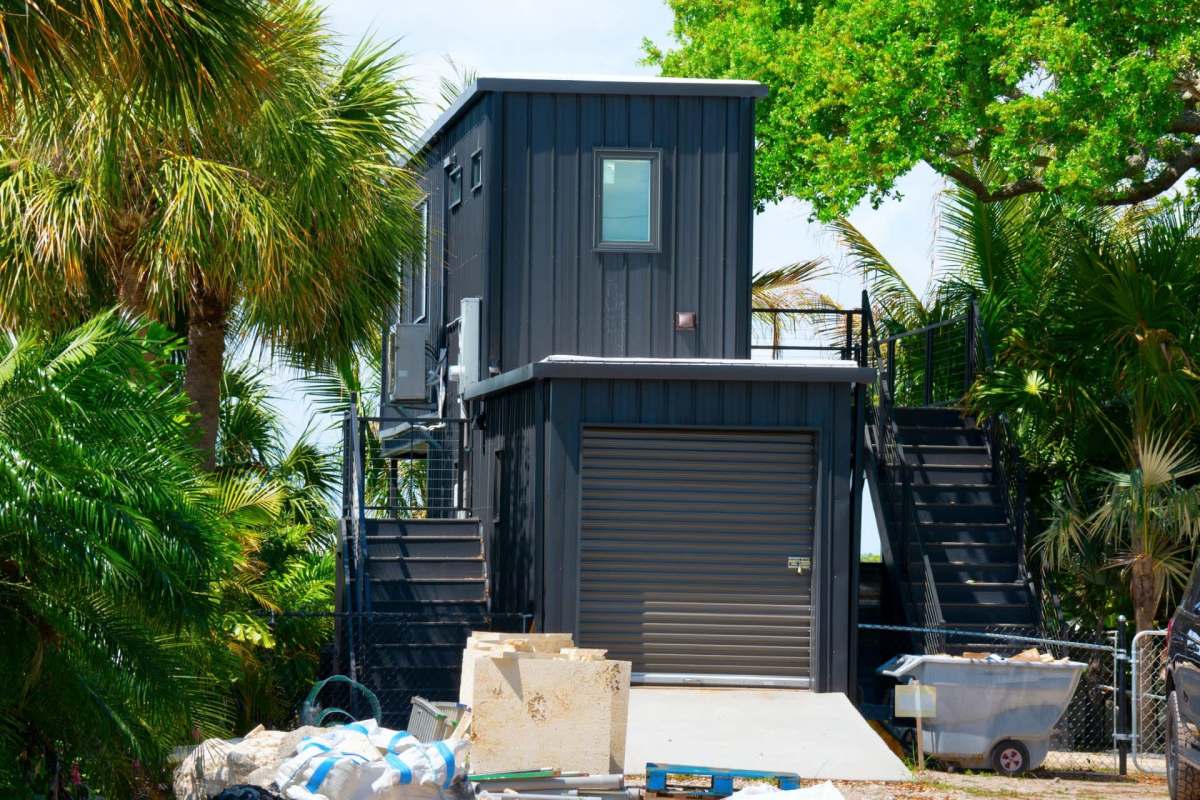
In DeLand, Florida, the Neighborhood Center of West Volusia has started work on what is expected to become Volusia County's first transitional tiny-home village — a pilot project that turns repurposed shipping containers into a stepping stone for people moving out of emergency shelters and toward more stable housing.
What's happening?
According to ClickOrlando, a field near Palmetto Avenue is being developed into a village of repurposed shipping-container homes, expected to take shape by March.
Late last year, DeLand reportedly began permitting tiny homes to expand affordable housing options. After four years of planning, the Neighborhood Center of West Volusia recently broke ground as one of the first groups to move forward under that change.
Savannah-Jane Griffin, CEO of the Neighborhood Center of West Volusia, said fundraising has already brought in a large share of the project's budget.
"We've been able to fundraise about $795,000 for this project. We're anticipating it to cost $1.2 million, so we're still looking for donations," Griffin said.
When complete, the village is intended for up to 16 people leaving the nonprofit's emergency shelters as they work toward permanent housing.
TCD Picks » Quince Spotlight
💡These best-sellers from Quince deliver affordable, sustainable luxury for all




Why does it matter?
For many unhoused people or individuals dealing with financial hardships who are trying to regain stability, the biggest challenge isn't just finding a place to sleep for one night — it is also having enough time and financial flexibility to save for something more permanent.
Residents will be able to stay for as long as two years, Griffin said, and they will put part of their income toward housing costs.
"They'll pay 30% of their income for housing and really just give them time to save money so they can get into permanent housing," Griffin said.
Stacked onto issues like the rising costs of basic necessities like groceries and medical bills, rising global temperatures are also a significant contributor to housing instability globally. One new study found that climate change could quadruple homelessness in Australia within a decade if emissions remain high.
What's being done?
For the Neighborhood Center, shipping containers offered a practical option that balances durability with lower construction costs.
"We're using shipping containers because of the durability and the affordability," Griffin said. "We're a non-profit organization, so we're looking for what is the most durable and affordable house that we could put on a property where we'll be able to house up to 16 individuals."
After the containers are delivered, the group plans to outfit the units with patios, furniture, and other features to make them feel comfortable and livable rather than bare-bones.
DeLand's revised tiny-home rules created an opening for the nonprofit to pursue a project that may not have been feasible before.
"In Volusia County, the data shows that we're about 55,000 short in affordable housing units for the individuals that need them," Griffin said. "My hope is that this could lead to more projects like this in the future."

Get TCD's free newsletters for easy tips, smart advice, and a chance to earn $5,000 toward home upgrades. To see more stories like this one, change your Google preferences here.






