


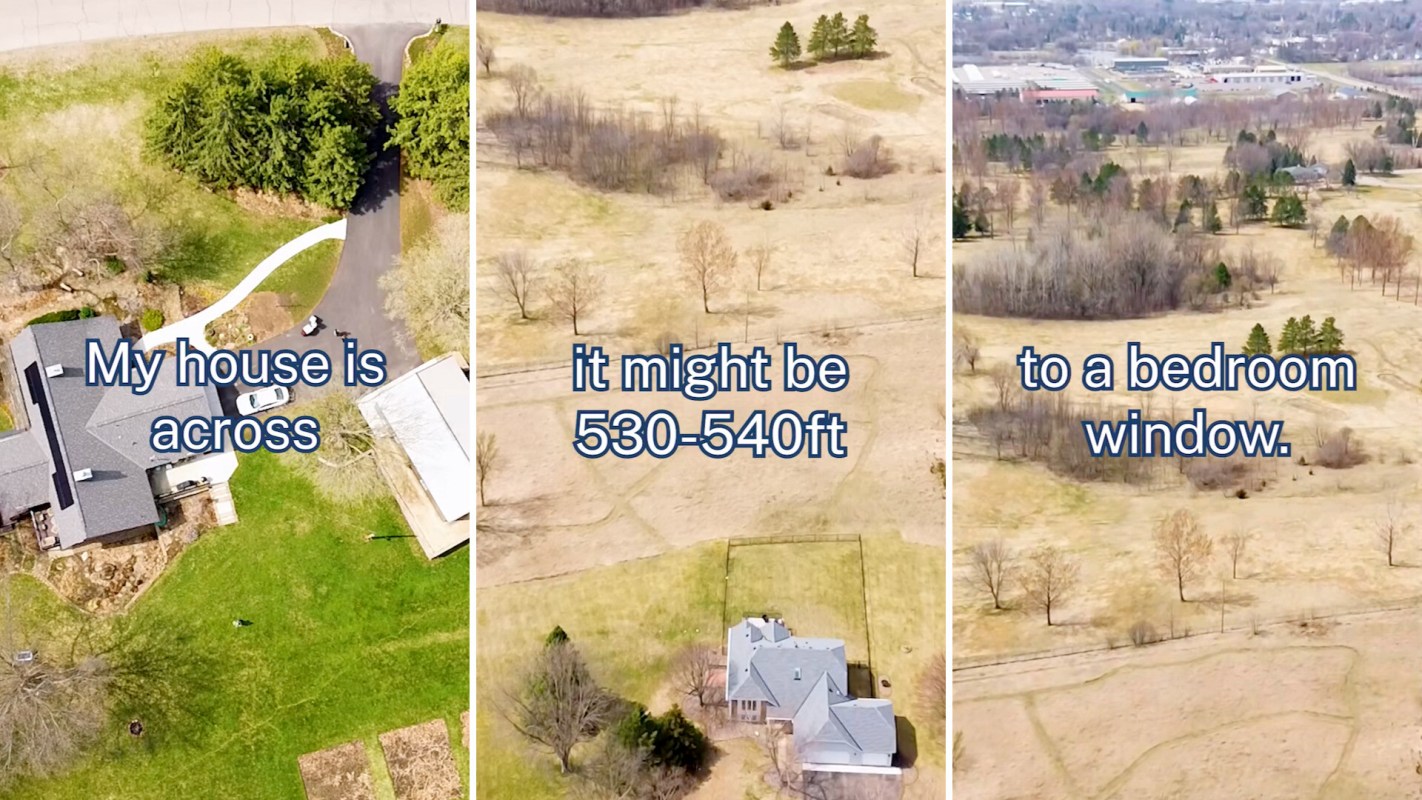
A Minnesota resident is raising concerns about how close a proposed data center could be to nearby homes, saying some neighbors may end up just a few hundred feet from the development.
In a recent TikTok posted by CURE (@cure_mn), Farmington resident Cathy Johnson said the project's setback would still leave very little separation between the facility and residential properties.
@cure_mn This massive data center project would sit only 530 feet (think less than 1.5 football fields) from residential neighbors. 📐Farmington resident Cathy Johnson, whose home sits across from the proposed site, raises questions about transparency, protections, and public input for developments at this scale. #DataCenters ♬ original sound - CURE_mn
Johnson, whose home sits across from the proposed site, said the distance between the data center and nearby houses could be much smaller than many people realize.
"My house is across the street," Johnson said in the video. "If the setback's 500 feet, it might be 530 or 40 feet to a bedroom window."
The post focuses on concerns about transparency, zoning protections, and whether residents are being given enough information and input before a large industrial project moves forward.
The short clip quickly gained attention online, with commenters raising concerns about nonstop noise, light pollution, wildlife disruption, and the broader impact on nearby neighborhoods.
TCD Picks » Quince Spotlight
💡These best-sellers from Quince deliver affordable, sustainable luxury for all




"You should demand a moratorium until studies have determined safety," one commenter wrote.
"It will be so loud. A humming vibration that will never stop. Devastating," another added.
Data centers are becoming increasingly central to modern life because they power cloud storage, internet services, and rapidly expanding artificial intelligence tools.
That growing reliance also ties them more closely to local energy and water systems.
While AI can help improve efficiency in some parts of the grid, the facilities behind them often require large amounts of electricity and cooling resources.
That demand can place pressure on nearby infrastructure, raise questions about long-term energy planning, and contribute to concerns about cost, environmental impact, and oversight.
For communities facing similar proposals, common steps include attending local planning meetings, requesting detailed site maps, and asking officials to explain setbacks, noise expectations, lighting plans, water use, and traffic impacts in plain language.
Residents can also ask whether independent studies are required, how public comments will influence decisions, and what mitigation measures developers must follow if the project is approved.
Organizing around specific demands — such as stronger setbacks, noise limits, shielding for lights, and transparent environmental reporting — may also be more effective than broad opposition alone.
Online reaction reflected concern from viewers unfamiliar with projects of this scale.
"That's such beautiful land with wildlife," one commenter wrote. "It's so sad."
"If they go through with this, I might cry," another said. "It's so dystopian and terrifying."
"I'd sell so fast," another added.

Get TCD's free newsletters for easy tips, smart advice, and a chance to earn $5,000 toward home upgrades. To see more stories like this one, change your Google preferences here.






