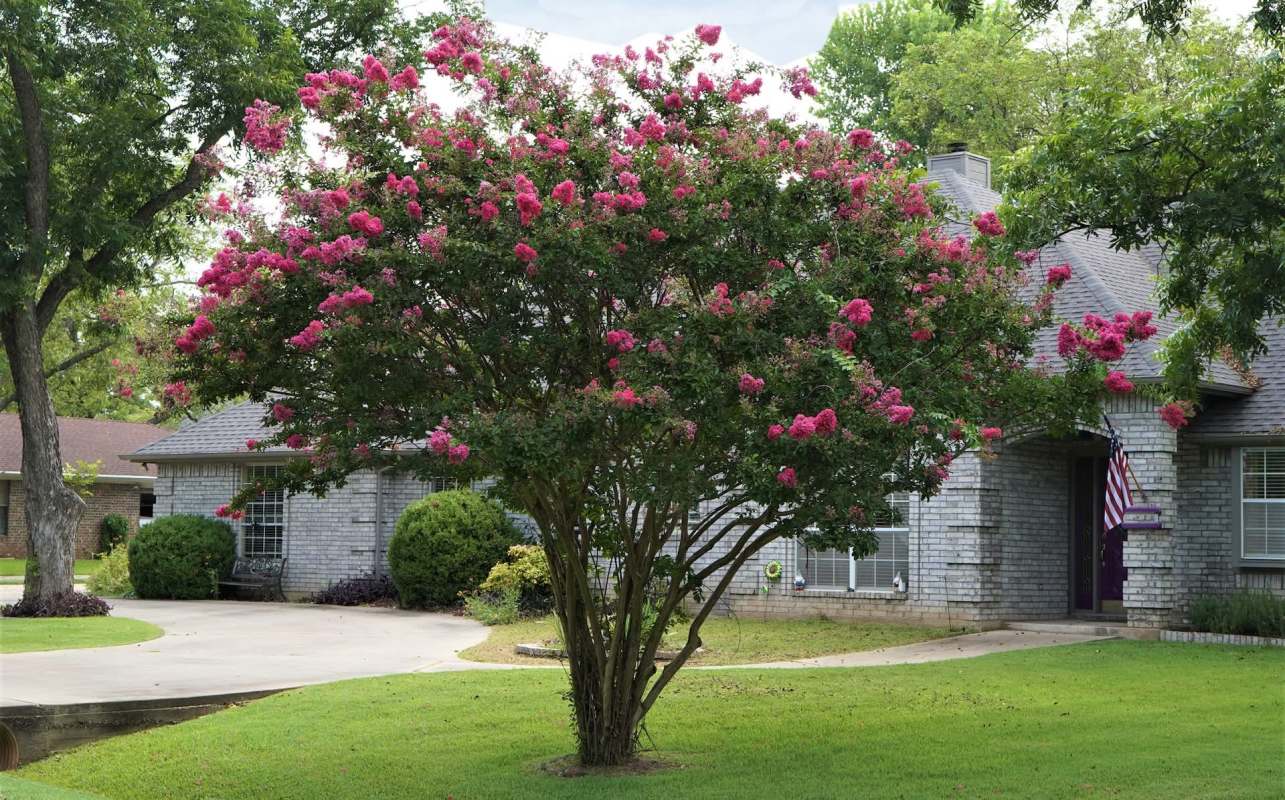
Two years after having three large crepe myrtles removed, one homeowner says new growth is still popping up every couple of weeks — a frustrating outcome that has struck a chord with other gardeners.
What happened?
In a recent post shared on Reddit, the original poster wrote: "I removed 3 large trees and had the stumps ground. Two years later they are still producing seedlings every 2 weeks."
The frustrated homeowner added, "I mow them down and they laugh at me," before joking that "The only proper place for a crepe myrtle is in the path of an EF5 tornado with softball size hail for the encore."
In the discussion, users compared crepe myrtles with other hard-to-remove woody plants, including rose of Sharon, saying roots can continue sending up new growth long after the main plant has been taken out.
Advice in the thread also centered on treating stumps right away after cutting. One commenter shared a commonly recommended method, writing: "41% Glyphosate painted on to the freshly cut stump (within 5 minutes) is recommended by the University of Florida to kill Brazilian Pepper... follow the label instructions for safety."
The backlash against crepe myrtles was not universal. Some commenters defended the plant as a strong fit for Southern and very dry landscapes. One called it "one of the best house shrubs/trees in the South. Beautiful, heat and drought tolerant. Easily controlled." Another noted that in a hot, dry climate, they are "the only thing that grows without watering."
TCD Picks » Quince Spotlight
💡These best-sellers from Quince deliver affordable, sustainable luxury for all




Why does it matter?
Removing a tree or shrub does not always mean the work is over. Re-sprouting roots can turn one landscaping decision into years of extra mowing, chemical treatments, or repeated labor. As more Americans look for low-maintenance, drought-resistant yards, choosing the wrong plant for a space can bring higher costs, more upkeep, and more headaches than expected.
By contrast, installing a native plant lawn can save money and time on maintenance while lowering water bills, especially in drought-prone areas.
There are several low-maintenance lawn-replacement options worth considering, including native plants, clover, buffalo grass, and xeriscaping. Even a partial lawn replacement can help homeowners cut back on watering, mowing, and fertilizer use while creating a yard better suited to local conditions and wildlife.
What can I do?
If you are removing a tree known for suckering or re-sprouting, it may be worth asking a licensed arborist or landscaper about a full removal plan before work begins. Stump grinding alone may not stop regrowth in every case, and local extension offices can often offer region-specific advice on the safest and most effective methods.
If you are replanting, consider starting with species native to your area. Native plants are often better adapted to local heat, rainfall, and soil conditions, which can translate into less watering and maintenance over time.
Homeowners looking to scale back a thirsty, high-maintenance yard can explore these guide pages on rewilding your yard and upgrading to a natural lawn. Those resources can help you compare options such as clover, buffalo grass, native ground cover, and xeriscaping — including ways to start small if a full yard makeover is not realistic.

Get TCD's free newsletters for easy tips, smart advice, and a chance to earn $5,000 toward home upgrades. To see more stories like this one, change your Google preferences here.