


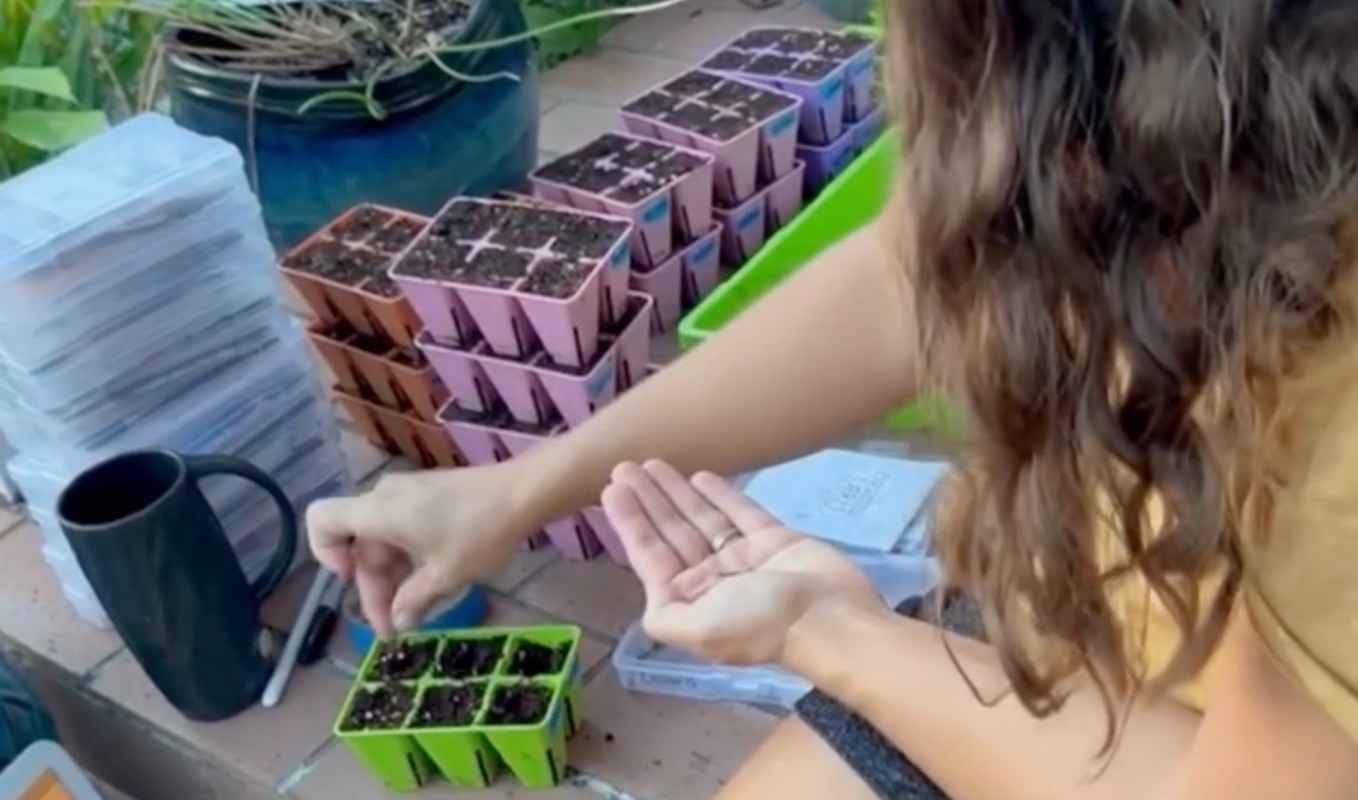
Seed starting can feel like a guessing game when trays stay empty, but one gardening creator says a few common mistakes are often to blame. A recent Instagram post offers frustrated growers a quick checklist to run through before giving up on their seeds.
What's happening?
Instagram gardener Elise Pickett (@theurbanharvest) posted on June 8 to address a complaint the creator said had been coming up often from followers. "Recently my inbox and private community has been filled with questions and comments some variation of 'I planted my seeds, and nothing came up,'" the caption said.
The carousel pointed to three frequent reasons seeds fail to emerge. The first was labeled: "The Goldilocks conundrum, not too wet, not too dry." Pickett explained that either extreme can cause germination to fail, and that a good way to tell is to "squeeze a pinch of soil." If no water comes out, it's too dry; if more than just one drop comes out, it's too wet.
The second seed-starting mistake was titled: "Warmth but protected." This means that warmth is needed, but placing germinating seeds in direct sunlight can be too hot. Picket recommended putting them in a sheltered location, such as under a patio or on a shelf.
The final tip was for tough seeds. "Scaring or nicking tough seeds with a thick coating can help speed germination," Picket wrote, including examples, such as pea seed, moringa, lima bean, and nasturtium.
In the caption, Pickett noted that "these are the top 3 culprits, especially #3 for many of our less common tropical varieties."
TCD Picks » Quince Spotlight
💡These best-sellers from Quince deliver affordable, sustainable luxury for all




Why does it matter?
Germination problems can waste time, money, and momentum. When seeds fail, gardeners often end up buying replacement packets, restarting trays, or giving up on growing certain crops, flowers, or pollinator-friendly plants altogether.
Home gardening can help households save money on produce, enjoy fresher food, and create greener spaces that support bees and butterflies. But those benefits depend on getting plants established in the first place.
The same principle — choosing the right plant for the right conditions — can also make an entire yard easier and less expensive to maintain. Replacing even part of a traditional lawn with native plants, clover, buffalo grass, or xeriscaping can save time and money on lawn maintenance while lowering water bills.
A native-plant lawn, or even a partial lawn replacement, can also reduce mowing and lessen reliance on thirsty turf, especially in warmer, drier conditions.
What can I do?
Because some seeds need light and others need warmth or deeper sowing, it is best to check the packet for information on planting depth, light requirements, soil temperature, and the expected germination timeline. Small seeds may need only a thin covering or just firm contact with the surface.
Warm-weather and tropical varieties may benefit from a heat mat, and the seed-starting mix should stay consistently moist instead of cycling between dry and waterlogged. After seedlings emerge, good airflow matters, too. Labeling trays can help, and patience is part of the process since some seeds sprout in just a few days while others take much longer.

Get TCD's free newsletters for easy tips, smart advice, and a chance to earn $5,000 toward home upgrades. To see more stories like this one, change your Google preferences here.






