


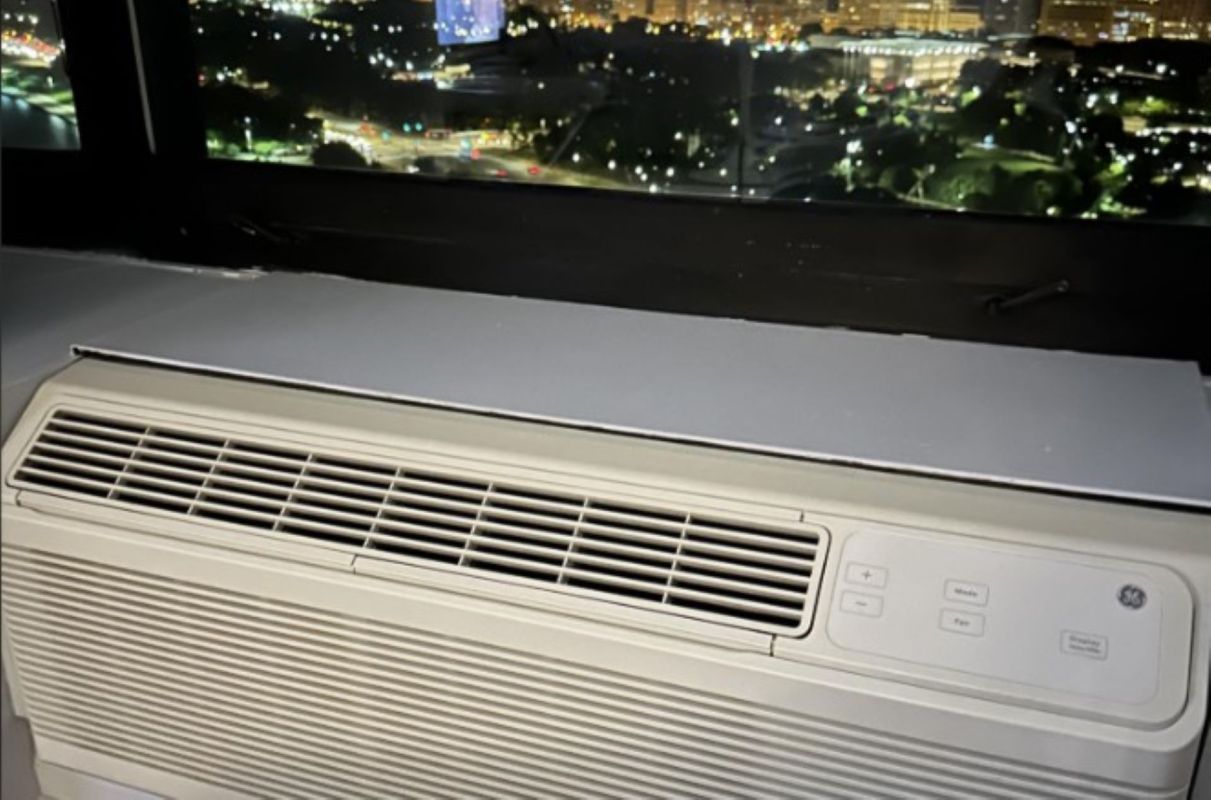
Cool weather outside was not helping one Chicago resident, who said on Reddit that their southwest-facing condo, lined with windows, was still reaching 80 degrees indoors while the temperature outside sat in the upper 50s.
They wanted to know whether a wall air conditioner could safely be used in that situation, or whether a warning about running one below roughly 60 to 65 degrees outside misses how warm the room itself can remain.
Here's what to know
Posting in Reddit's r/hvacadvice forum, the resident said the shades had stayed closed, the windows could only be opened slightly, and the unit's fan setting merely recirculated indoor air.
One commenter's detailed reply explained it this way: "If it is 80 inside and below 60 outside, you are safe to run it. Just don't run it so long that it gets too cold inside. I would say the minimum temperature you want inside would be 70. If it's 60 outside and below 70 inside that's when you start to risk damage."
The poster also said a home inspector had declined to switch the unit on during an inspection and that they were trying to get a better sense of how serious the risk actually was.
For homeowners dealing with an 80-degree room and rising utility costs, upgrading heating and cooling can also be one of the best ways to save money and protect against higher energy prices. Palmetto can help homeowners understand their HVAC options and reduce their energy bills with newer, more efficient HVAC systems and heat pumps, and Palmetto's Comfort Plan network can help readers find efficient heating and cooling solutions for their home and connect them with vetted installers.
More background
Many replies challenged the idea that the 60-to-65-degree warning should be treated as an absolute rule. One Reddit user put it bluntly: "You're really overthinking this. If you're hot then run it."
Others said many newer AC units have built-in temperature cutoffs that stop the compressor when outdoor conditions are too cool, and some shared personal examples of running window units when building design or indoor equipment caused heat to build up.
Save $10,000 on solar panels without even sharing your phone number Want to go solar but not sure who to trust? EnergySage has your back with free and transparent quotes from fully vetted providers in your area. To get started, just answer a few questions about your home — no phone number required. Within a day or two, EnergySage will email you the best options for your needs, and their expert advisers can help you compare quotes and pick a winner. Solar panels can save you more than $50k over their 25-year lifespan, and EnergySage can help you save as much as $10k on installation. Which begs the question — isn't that worth an email or two? |

An outdoor reading in the upper 50s does not necessarily reflect indoor conditions when a sealed, southwest-facing apartment with limited ventilation traps heat like a greenhouse.
What can be done?
Taken together, the replies suggest that using the wall unit in an 80-degree room is less risky than a blanket warning makes it sound, as long as the space is not cooled into the range where that commenter said compressor problems can begin. The poster also noted they could not simply open a window.
For homeowners looking for a longer-term fix to an overheated room, efficient equipment can matter just as much as day-to-day thermostat decisions. If you are not ready to spend upfront, Palmetto's Comfort Plan includes $0-down options that can lower heating and cooling costs by up to 50%, and it includes 12 years of free maintenance.
A single temperature cutoff from a manual or search result may not capture what is happening inside a home that is overheating in the sun. An HVAC professional or installer can help determine whether the best solution is a newer heat pump, a more efficient AC, or some other cooling upgrade.
Homeowners can also pair solar panels with electric appliances, including efficient HVACs, to drive their utility costs even lower. EnergySage makes it easy to compare solar options and find the best solar system and installer for a home and budget, and it can help homeowners save up to $10,000 on solar installations.
Where can I learn more?
Questions like this keep coming up when homes trap heat even in milder weather or residents have limited access to AC. These articles cover renters dealing with overheating homes, landlord repair disputes, low-cost cooling workarounds, and guidance on setting AC for comfort and efficiency.
• Across the U.S., cooling is really not incorporated into habitability standards for many renters.
• In the Southeast, a sick toddler's home still climbed to 94 after promised AC repairs.
• In Arizona, renters can face an emergency five-day window for landlords to fix failed AC.
• In a 100-year-old house, tenants trade tips on cooling a sweltering bedroom cheaply.
• U.S. experts say 78 is the best AC setting for comfort and efficiency.

Get TCD's free newsletters for easy tips, smart advice, and a chance to earn $5,000 toward home upgrades. To see more stories like this one, change your Google preferences here.






