


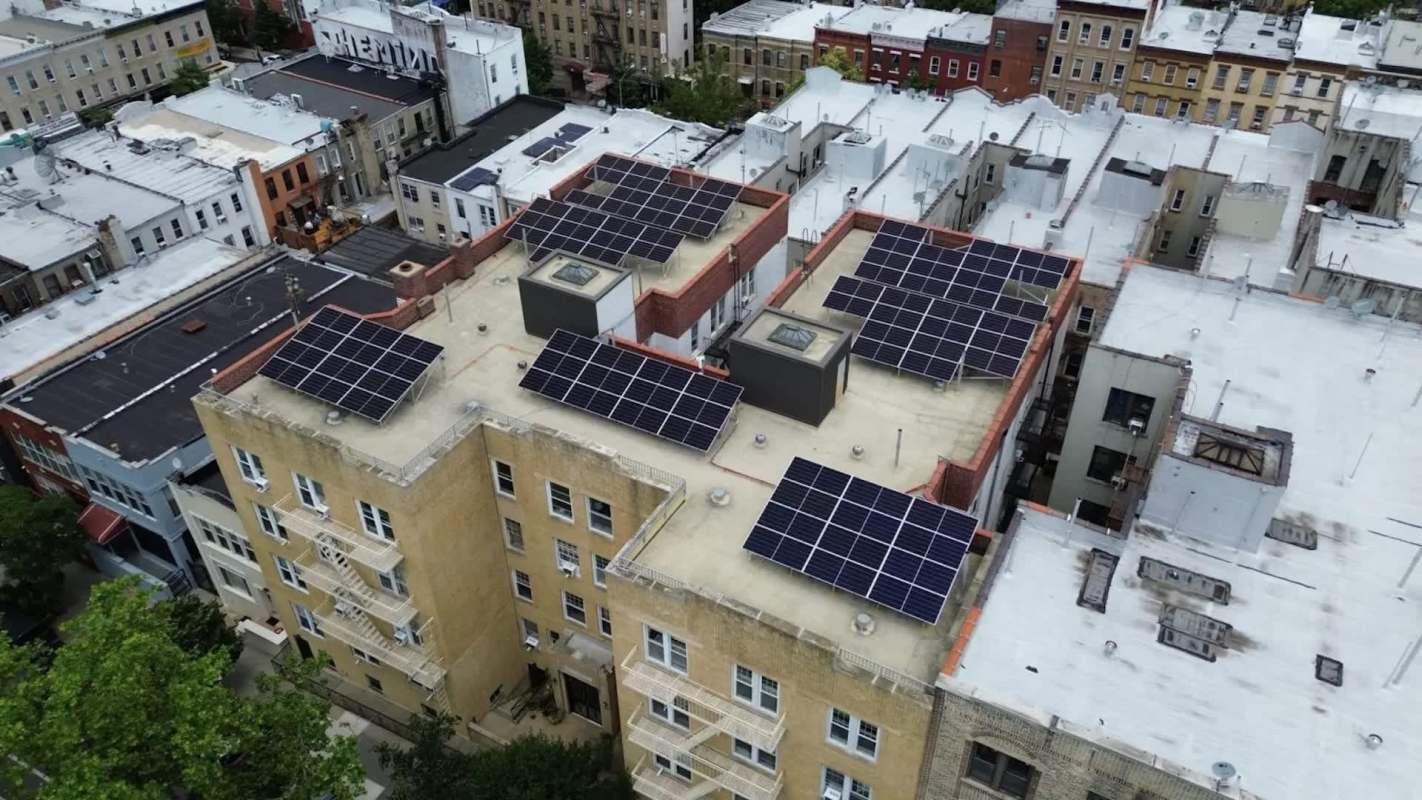
A Brooklyn co-op that had already paid for a new roof found a way to add solar panels without asking residents to reach into their pockets again or dipping into reserve funds.
Instead, the co-op secured an innovative $232,000 loan that will cover panels and electrical upgrades, allowing the building to preserve its reserves while creating a new source of revenue.
Here's what to know
Park Hill, a Sunset Park co-op with 24 units, obtained the financing through submetering platform DaisyChain, according to HABITAT magazine. Brooklyn SolarWorks handled the solar installation.
Submetering involved replacing the co-op's individual unit meters with one meter that covered the entire building. This allowed the co-op to begin purchasing electricity in bulk while charging shareholders retail rates, giving the co-op a recurring source of revenue. That setup required replacing individual Con Edison accounts with one building-wide master meter, which also reduced monthly service charges.
Projected annual submetering revenue of $7,000, alongside another $7,000 in solar credits from the $183,000 array, can be used to pay down the loan. Once the DaisyChain loan has been paid off, the co-op can choose whether to redistribute the $7,000 to shareholders or save it for future capital projects.
Whether you live in a multi-unit co-op or a single-family home, going solar is one of the best ways to save money on home energy. Solar leases in particular can deliver hundreds of dollars in monthly savings without upfront costs. Homeowners can use EasyHome's free explorer tool to see potential savings from vetted installers in their area.
More background
Another benefit of the co-op's submetering setup was that it enabled the use of solar power in individual units, allowing residents to take advantage of a larger solar array.
In buildings where each unit has its own meter, solar generally covers only common-area electricity use. However, because submetering placed all of Park Hill's units under one master meter, the building's solar output can be used in individual units, as well.
Crushed by your bills? See instant solar savings from vetted installers in just a few clicks With energy prices through the roof, there's never been a better time to go solar — and EasyHome can help you find the best prices from the best installers in your area. EasyHome takes the guesswork and headaches out of energy upgrades by showing you estimated savings from a network of vetted local partners. To get started, just enter your ZIP and share a few details about your home — seeing your estimate is really that easy. |

"All that solar will not go to waste, thanks to the submetering arrangement," explained Ryan O'Hara, who manages business development for Brooklyn SolarWorks, per HABITAT magazine.
The financing also differed from a conventional collateral-backed loan. DaisyChain's privately funded pilot relied on anticipated building cash flow and relying on those projections to ensure the borrowing co-op had the means to repay the loan.
Once Park Hill has repaid half of the loan's principal balance, the interest rate will drop considerably, encouraging faster repayment and providing DaisyChain with capital to fund other projects.
For homeowners exploring a different route to solar, EasyHome's free explorer tool can help compare potential savings from vetted local installers. EasyHome can also help homeowners explore backup battery storage options. Pairing solar with a battery allows homeowners to maximize savings while being able to power their home with solar when the grid goes down.
Where can I learn more?
Park Hill's solar array has changed how its residents pay for electricity, and the same is true for others who have invested in the technology.
• California utility customers could access 0% solar and battery loans worth up to $65,000.
• A Michigan city offered solar without upfront costs, helping residents lower their bills.
• A U.K. resident considering shared solar on council roofs questioned who would receive the power.
• New Jersey allowed renters and condo owners to install plug-in solar panels without utility approval.

Get TCD's free newsletters for easy tips, smart advice, and a chance to earn $5,000 toward home upgrades. To see more stories like this one, change your Google preferences here.






