


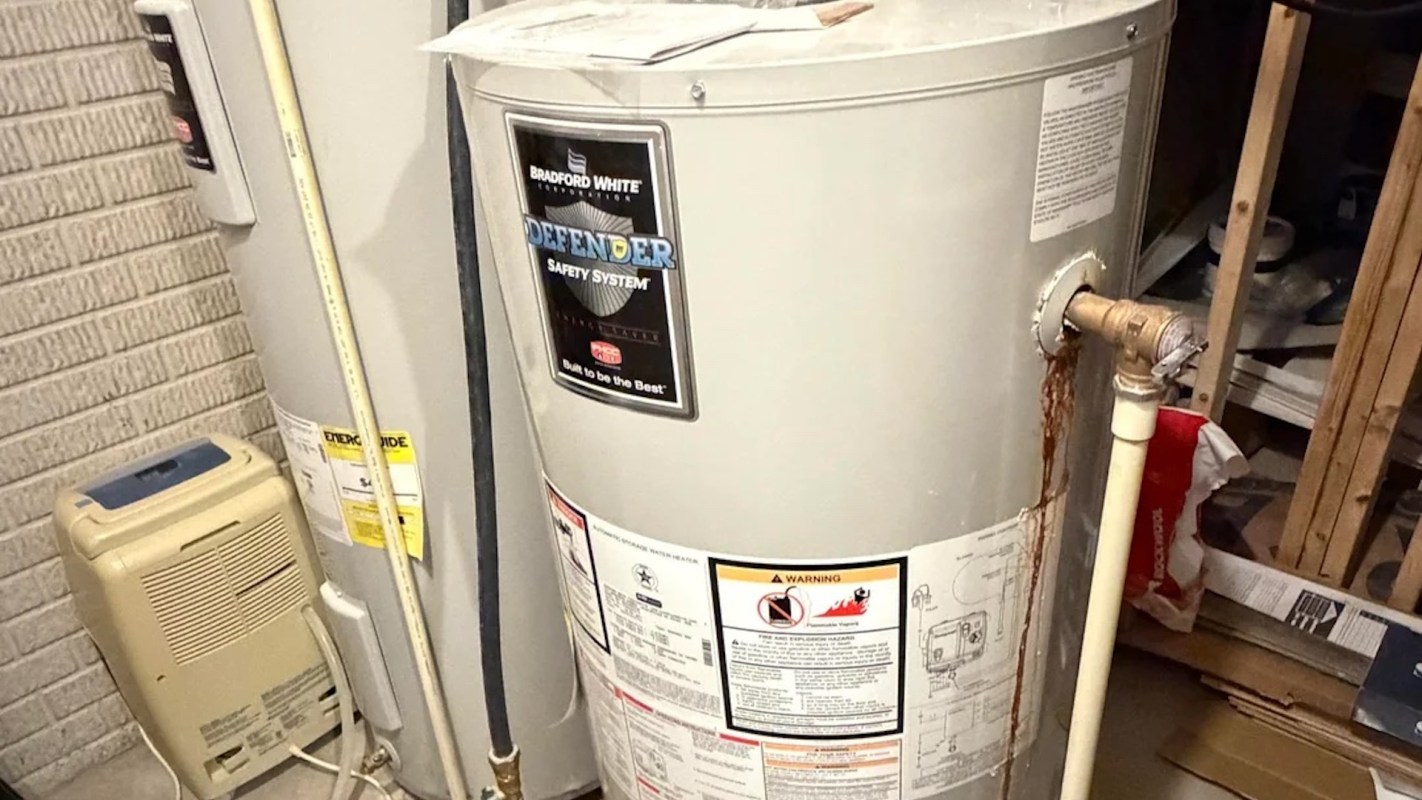
A homeowner on Reddit asking about a rusty valve on an eight-year-old Bradford White water heater turned a routine home-maintenance question into a much larger debate: Is an eight-year-old tank still worth trusting, or is visible corrosion a warning sign that replacement should not wait?
For homeowners staring at aging appliances, that decision can affect both repair headaches and monthly bills.
Here's what to know
On Reddit, a homeowner described an eight-year-old 2018 Bradford White gas water heater that was still working normally but had developed worsening rust around the temperature-and-pressure relief valve opening. The valve had discharged once several years after installation and was later replaced.
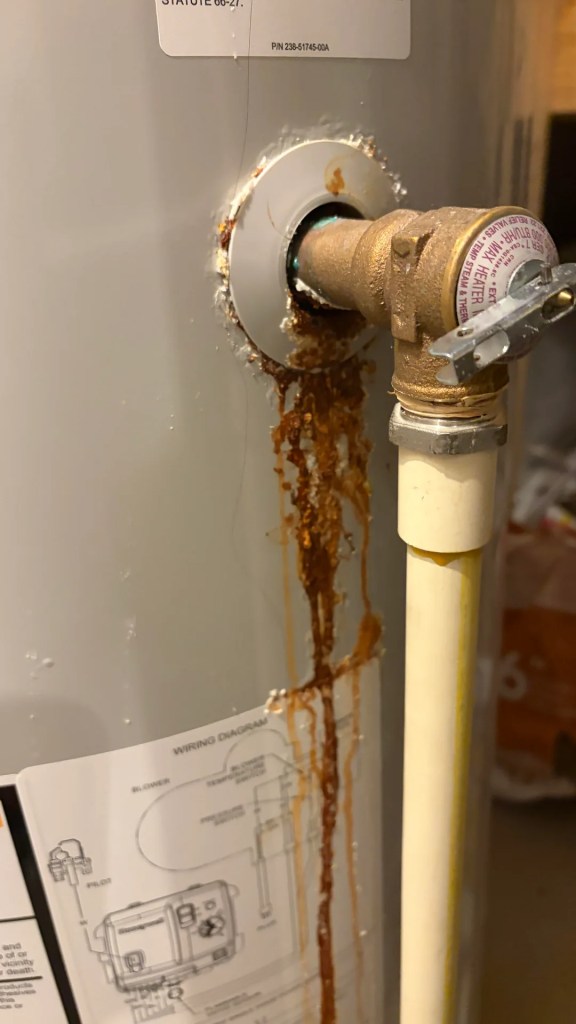
The post quickly widened into a bigger question about how long a still-working tank should stay in service once corrosion becomes visible.
Fear of a messy failure was competing with the instinct not to replace equipment too soon. The homeowner captured both sides of that thinking with two lines: "If it isn't leaking, leave it alone." But they also worried about coming home "to a flooded basement."
Responses split between patience and replacement.
One user said, "A water heater pushing 10 years old is on borrowed time these days," while another argued, "It's already leaking. I wouldn't consider replacement as preemptive now."
More background
The thread also underscored how uneven water-heater lifespans can be. Some Redditors said seven to 10 years is becoming typical for newer tanks, while others pointed to units from 1986, 1998, and 2006 that are still running.
Save $10,000 on solar panels without even sharing your phone number Want to go solar but not sure who to trust? EnergySage has your back with free and transparent quotes from fully vetted providers in your area. To get started, just answer a few questions about your home — no phone number required. Within a day or two, EnergySage will email you the best options for your needs, and their expert advisers can help you compare quotes and pick a winner. Solar panels can save you more than $50k over their 25-year lifespan, and EnergySage can help you save as much as $10k on installation. Which begs the question — isn't that worth an email or two? |

Maintenance and water quality came up repeatedly. Users mentioned hard water, sediment accumulation, routine flushing, and the condition of the sacrificial anode rod as major factors, noting that an ignored anode can speed up internal tank corrosion.
Rust at a relief-valve opening is not, by itself, proof that a tank is about to fail. It can, however, suggest lingering moisture, a bad connection, or corrosion that has extended beneath the outer jacket.
If a tank gives out unexpectedly, the result can be more than just the cost of a new appliance: Cleanup, emergency installation charges, and the need to buy whatever is available fastest can all add to the problem.
What can be done?
A licensed plumber can inspect visible rust, moisture, or uncertainty around the relief valve. Even if the tank is still running normally, a professional can help determine whether the corrosion is only surface-level or a sign of active leaking.
If the unit checks out, routine maintenance may buy more time. Flushing sediment, watching for new seepage, and replacing the anode rod before it is fully spent can all help extend the life of a tank, even if they cannot guarantee it.
For households that decide replacement is the safer move, Cala is one company focused on making that upgrade more efficient. Cala's customizable smart heat pump water heaters help homeowners decrease their energy bills by heating water exactly when it's needed. That kind of demand-based heating can make a replacement feel less like a sunk cost and more like a long-term money-saving home improvement.
Comparing warranty terms, installation costs, and any local rebates or tax credits can also shape the decision.

Get TCD's free newsletters for easy tips, smart advice, and a chance to earn $5,000 toward home upgrades. To see more stories like this one, change your Google preferences here.






