


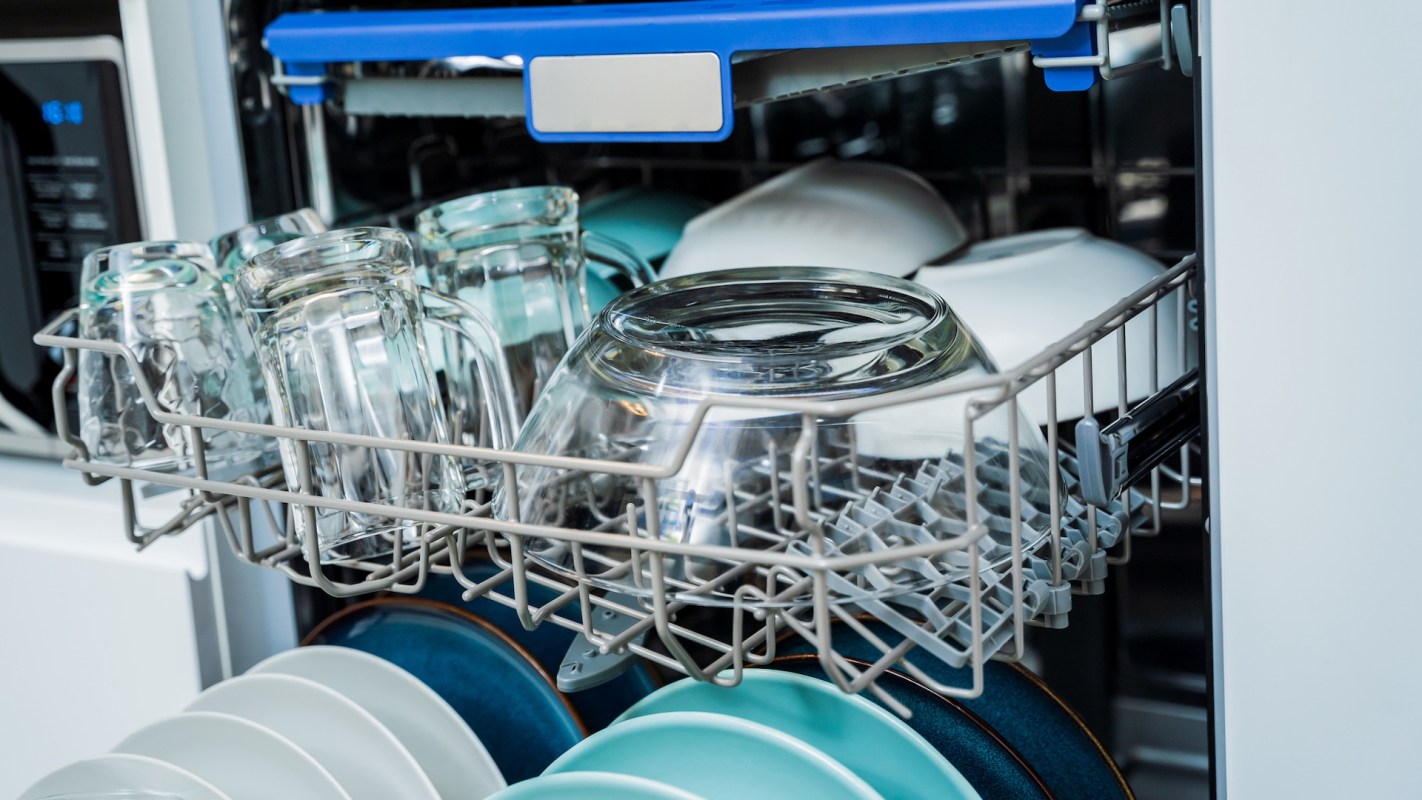
A dishwasher owner's advice for dealing with etched glasses began with the manual and the machine's settings. The commenter had learned from experience that choosing the hottest cycle could damage glasses rather than clean a load better.
Here's what to know
The discussion began when an owner of a new Bosch 800 series dishwasher reported damage to their dishes in a Reddit post, and the problem extended beyond etched glasses and Pyrex.
"Even my plates are losing the enamel," the owner said, noting they use a normal cycle and a rise-aid setting of 2.
With a water softener in the home, they had also cut their powder dose to the dispenser's lowest line rather than filling it to overflowing.
The first time did not go well. A knife still had residue, and the poster's husband found something unpleasant on the outside of a glass. Reducing the prewashing had not reliably delivered clean dishes and utensils.
Party cleanup had sometimes prompted another Bosch owner to choose the hottest setting for grimy dishes. That commenter traced their own etched glasses to those occasional loads.
TCD Picks » Quince Spotlight
💡These best-sellers from Quince deliver affordable, sustainable luxury for all




After reading their manual more closely, the commenter advised: "The hottest setting is only for pans and stuff. Definitely no glasses."
More background
Before loading the dishwasher, the original poster said everyone in their household, including their children, had been expected to wipe each dish with a soapy cloth. Their husband was particularly worried about contamination.
A commenter argued that sort of pre-rinsing interferes with the dishwasher's turbidity sensor, supporting the couple's later agreement to scrape off food chunks instead.
Their guideline for scraping was the size of a grain of rice. They advised only removing food scraps that size or larger.
Bosch's quick-start guide includes much of that advice. It says "there is no need to pre-rinse," that water should be 120 to 125 degrees Fahrenheit to ensure detergent cleans properly, that the spray arm should be unblocked, and that owners should avoid abrasive or bleach-based products when cleaning their dishwasher. Other tips and tricks are available on its official website, along with customer support contact information if more assistance is required.
What can be done?
Commenters provided a series of steps for the OP.
The user who learned the hard way on using the hottest setting chose a generic rinse-aid option at the grocery store. They paired it with powder detergent, filling a little less than half the dispenser. Eco became their regular cycle, and only an occasional particularly dirty plate got a pre-rinse.
Other commenters advocated using less powder, cleaning the filter regularly, and resisting the urge to overly pre-clean.
"The filter shouldn't be too 'gross' if you clean it regularly," one user noted. "Which also helps with keeping your dishes and dishwasher cleaner."
(Bosch's quick-start guide says a dishwasher should have its filter cleaned every two months with normal use.)
In the thread, the OP said they were open to those suggestions.
Where can I learn more?
Other dishwasher owners have asked for help with loading, water connections, maintenance, and repair costs.
• A Bosch owner received a $650 motherboard quote, but commenters suggested checking the pump or hose.
• A U.S. homeowner discovered a dishwasher connected to cold water, sparking debate about the setup.
• An owner weighed $300 replacement racks against a $900 dishwasher, with commenters backing repairs.
• A homeowner's suspected dishwasher mold prompted advice to check the machine's hidden filter.

Get TCD's free newsletters for easy tips, smart advice, and a chance to earn $5,000 toward home upgrades. To see more stories like this one, change your Google preferences here.






