


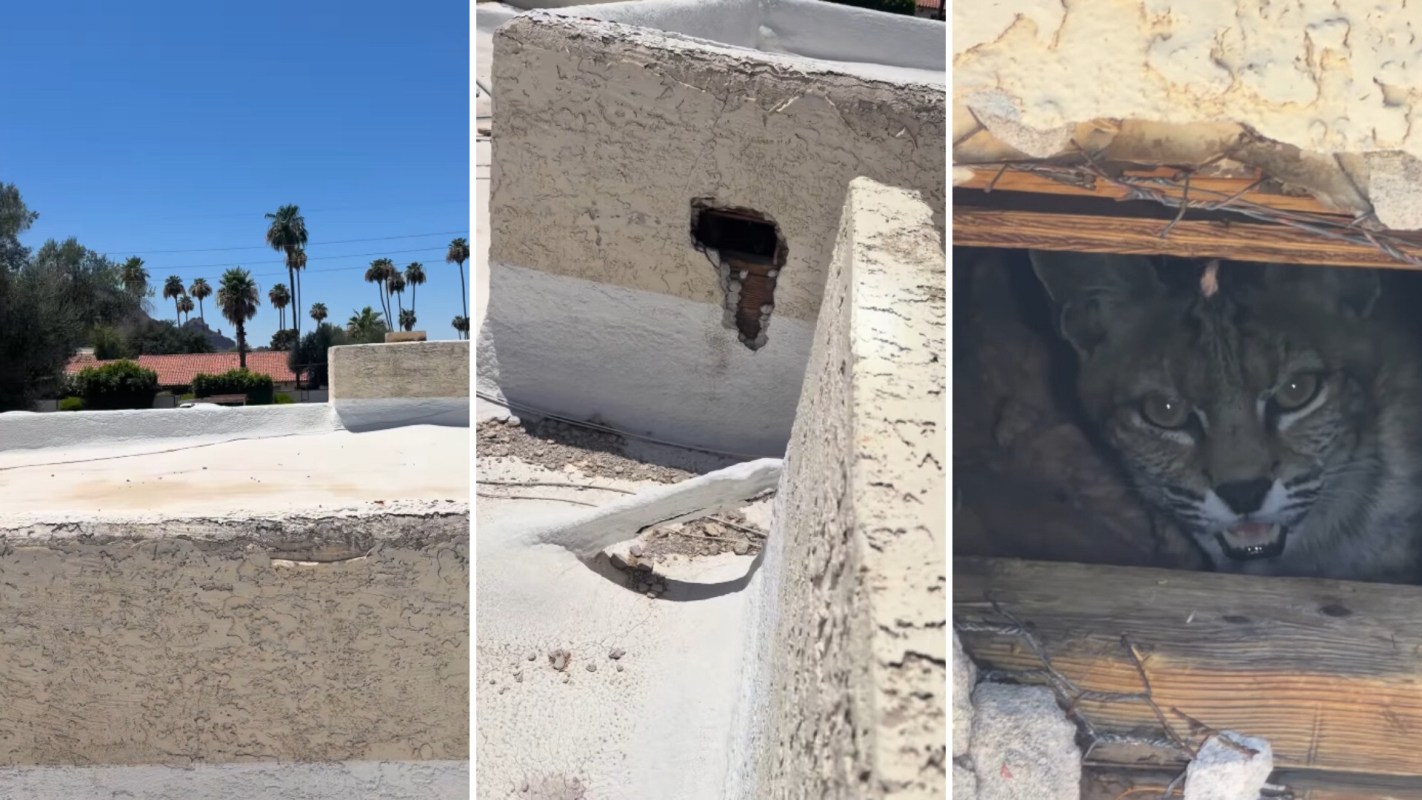
What began as a familiar attic-noise complaint for an Arizona family turned into a far more surprising discovery: Bobcats had apparently moved in overhead and made themselves at home.
Instead of rats or a raccoon, the Scottsdale homeowners found a predator that had turned part of their house into a den.
What happened?
The family initially treated the sounds above their ceiling as a standard attic-animal problem and called for help. AZFamily reported that the hidden occupants were bobcats, and the company called to investigate, Critter Evictors Wildlife Control, posted footage to Instagram.
Only after looking inside did Verner Swenson of Critter Evictors realize this was not a typical attic call.
"We saw some eyes glowing back at us and we realized very quickly it wasn't a raccoon, it was bobcats," Swenson said, per AZFamily.
He said the area above the house had effectively become a den.
TCD Picks » Quince Spotlight
💡These best-sellers from Quince deliver affordable, sustainable luxury for all




"It's hard to say how many were in there. We did see mom and then heard a couple things crawling around in the back," he said.
The Arizona Game and Fish Department said bobcats may enter an area because it offers basics such as food, water, shelter, or living space.
Why does it matter?
Residential areas can unintentionally create the conditions that bring bobcats close to people.
In neighborhoods, animals may find water in pools and pet dishes, as well as shelter in places such as sheds, on rooftops, on decks, and even in attics.
Darren Julian, an urban wildlife specialist with Arizona Game and Fish, said the animals already present in many yards can be part of the draw.
"They're looking for mainly like the bigger birds that we tend to feed, our doves, quail and stuff like that we see in our neighborhoods," Julian said, per AZFamily. "But also rabbits and rodents, things like that. Occasionally they'll prey on small dogs."
What's being done?
Game and Fish recommends that homeowners look over their property for holes, gaps, or other openings where wildlife could make a den, and avoid leaving pet food outdoors.
Since water can also attract bobcats, birdbaths, fountains, pools, and outdoor pet dishes may need extra attention when bobcats have been spotted nearby. The department recommends motion-activated sprinklers.
If you come across a bobcat, officials said that making noise or spraying it with water from a garden hose can help drive it away.
If the animal is confined, Game and Fish advises opening a gate, stepping back, and giving it a clear chance to leave on its own.
When kittens are involved, immediate action may not be the best approach. Swenson said the goal is often to make the space less comfortable until the mother decides to relocate them.
"What we will do is put a little bit of pressure on that animal so she will self-evict if you will," Swenson said.
He said that process involves repeated visits: "What we'll do is come up there every 24 hours. We will tape over the holes, leave our scent on things and just us being there, our presence."
As Julian noted, "Just like a domestic cat, they don't like being soaking wet."

Get TCD's free newsletters for easy tips, smart advice, and a chance to earn $5,000 toward home upgrades. To see more stories like this one, change your Google preferences here.






