


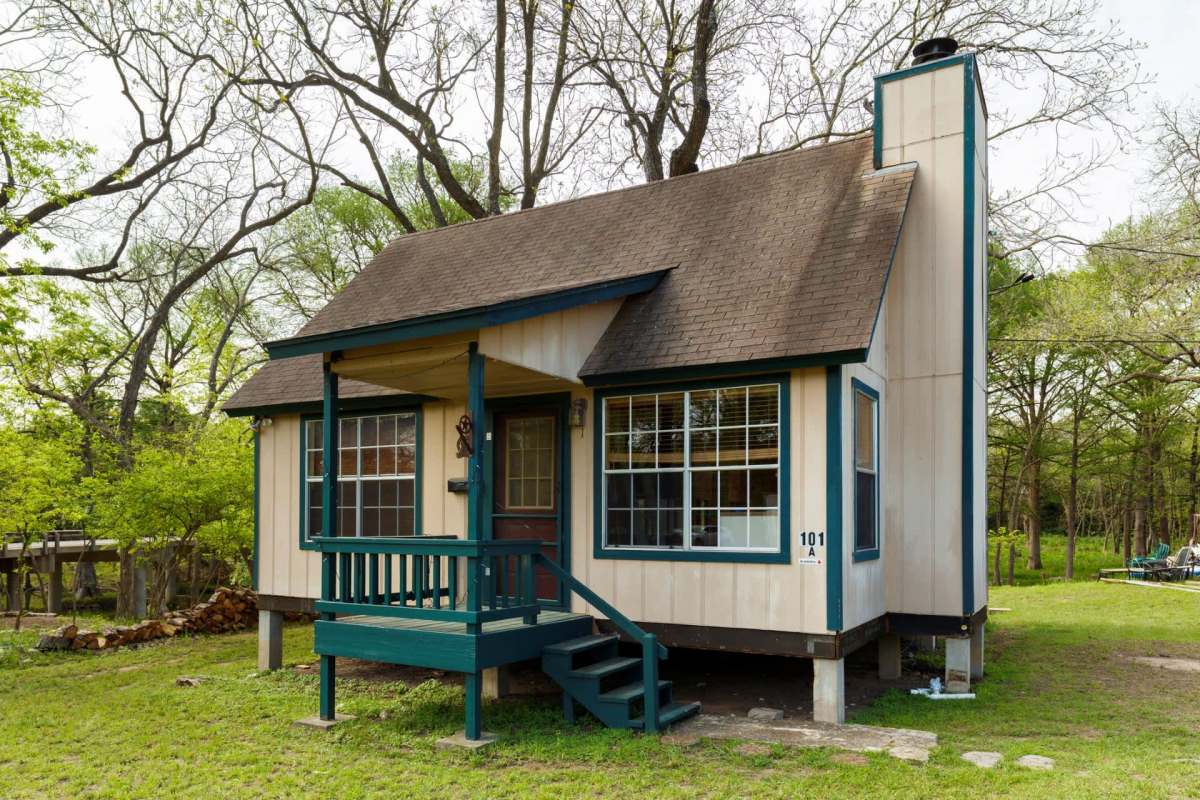
Bellingham officials are considering a change that could let tiny homes and other movable dwellings appear in more parts of the city, as rising housing costs push residents to seek cheaper places to live.
The local dispute is part of a wider effort to find housing options that cost much less than conventional construction while still offering a route to stable ownership.
What's happening?
At a July 27 City Council meeting, Bellingham council member Jace Cotton asked the city to temporarily broaden the areas where Movable Dwelling Units, or MDUs, are permitted. As The Sun reported, that term covers RVs, mobile homes, and tiny houses on wheels.
Bellingham already allows those types of homes, but only inside manufactured home communities. Under Cotton's interim ordinance, residents could place them in any residential zone, a shift aimed at widening access to lower-cost housing, according to the outlet.
To make the case, Cotton highlighted the price difference between movable units and more traditional small-home construction. He estimated a high-quality MDU at about $115,000, with site preparation adding roughly $10,000 to $25,000, compared with $300,000 to $500,000 for a foundation-built accessory dwelling unit.
Rather than make a final decision, council members said they wanted more information before revisiting the proposal, including another review of Bellingham's residential code by the Planning and Community Development Department.
TCD Picks » Quince Spotlight
💡These best-sellers from Quince deliver affordable, sustainable luxury for all




Why does it matter?
For many households, the appeal comes down to cost. If city leaders ultimately approve broader MDU placement, people who have been priced out of conventional homes could gain a more realistic path to homeownership or independent living.
At the same time, council members raised concerns that many homeowners would likely share. Those questions, as described by The Sun, focused on code rules, inspections, fire safety, and risks tied to owner modifications or older wiring.
Another concern involved how visible the units would be and where they would sit in residential areas. Even lower-cost housing options often face pushback when neighbors question how they will fit into an existing block or whether they will be held to the same standards as other homes.
What's being done?
Cotton argued that some protections are already in place. He noted that Washington state requires Labor and Industries to inspect MDUs used as residences, so the homes already fall under safety oversight, according to The Sun.
The proposed ordinance also includes rules governing where the units could go. According to Cotton, they would mainly be placed in backyards.
The plan would also require MDUs to be set 10 feet from any other structure. In addition, the units would need to follow the fire-access standards used for other residential structures.
In cities where home prices remain out of reach, policy changes like this can directly shape what kinds of homes are actually available.
"My motivation is affordability. A lot of folks my age are not seeing homeownership as a something that is available to them. I think we need to be creative and this is somewhat outside the box," Cotton told The Bellingham Herald ahead of the July 27 meeting, according to The Sun. "This is clearly a great housing solution for many folks."

Get TCD's free newsletters for easy tips, smart advice, and a chance to earn $5,000 toward home upgrades. To see more stories like this one, change your Google preferences here.






