


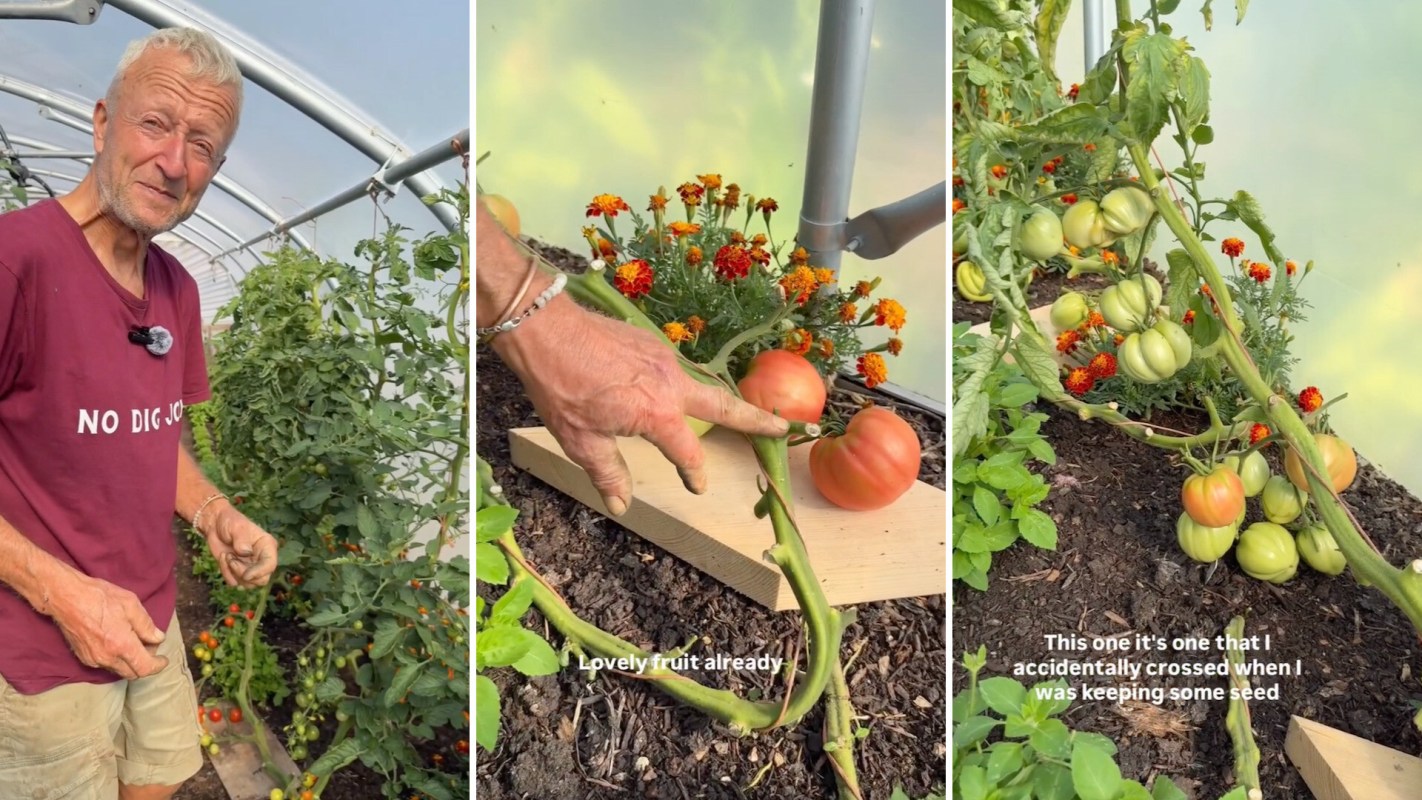
For tomato growers watching the season wind down, one late-summer snip can make the difference between ripe fruit and a pile of green ones.
In the U.K., content creator and no-dig gardening authority Charles Dowding (@charles_dowding) said August is the time to pinch back tomato plants so existing fruit can sweeten before darker autumn days set in.
What's happening?
On August 9, Dowding shared a video on Instagram showing heavy beef tomato trusses and vibrant cherry tomatoes in a polytunnel.
In the video, he explained that some plants had been lowered on strings as they got taller, allowing big tomatoes to develop from the lower trusses upward. He also pointed out fruit at the "breaking stage," when the first color starts to show and tomatoes can still be harvested.
"In our climate here, there's not much time ahead for new fruits to develop before say early October and sweeten," he said, explaining why he was preparing to pinch out the tops.
One commenter wrote, "I grow Sakura after a previous video you'd posted about them. They're an amazing cherry tomato, especially as I grow them outside where they're quick to crop."
TCD Picks » Quince Spotlight
💡These best-sellers from Quince deliver affordable, sustainable luxury for all




Why does it matter?
Larger tomatoes typically take longer to ripen than smaller cherry varieties. In cooler, lower-light climates, allowing plants to keep producing new growth late in the season can leave gardeners with plenty of hard green fruit by the time the plants need to be cleared.
A simple pruning decision can help households get more usable food from the plants they already have. That can mean saving money on produce, cutting down on food waste, and enjoying better-tasting tomatoes than many store-bought options, since homegrown fruit can be picked much closer to peak ripeness.
Tending crops can support physical health through regular movement, while the routine of watering, pruning, and harvesting can improve mental well-being. For many people, growing even a small amount of food is a practical way to eat fresher while spending less.
What can I do?
If you're growing tomatoes, especially beef varieties, snipping can help to stop the plant from making more top growth once your local season is too short for new flowers to turn into ripe fruit. In some climates, that may be August; in warmer regions, it may come later.
It can also help to watch for breaker-stage fruit and to prop up low tomatoes so they stay cleaner and are less likely to be damaged. Dowding showed some fruit resting on wooden blocks for that reason, and he also highlighted side shoots that would be removed to keep the plants manageable.
Even a few tomato plants can lower your grocery bill, cut packaging waste, and deliver the kind of flavor that makes home gardening feel worth the effort.
As Dowding put it, "This will mean that all these little baby fruits can swell and ripen before October."
Another commenter captured the hesitation many growers feel: "I've really got to be brave and pinch the tops off my tomato plants. So many green tomatoes!"

Get TCD's free newsletters for easy tips, smart advice, and a chance to earn $5,000 toward home upgrades. To see more stories like this one, change your Google preferences here.







