


A Bay Area renter's snapshot of a one-bedroom apartment electric bill sparked a wave of jealousy online after revealing an electricity rate of about 14 cents per kilowatt-hour.
For many readers, the most surprising part wasn't the total on the bill itself, but that the home was in a part of the Bay Area not served by PG&E.
Here's what to know
The image was shared in a Reddit post where the original poster wrote, "I thought people might want to see a non-PG&E electric bill for a 1 bedroom 1 bath apartment."
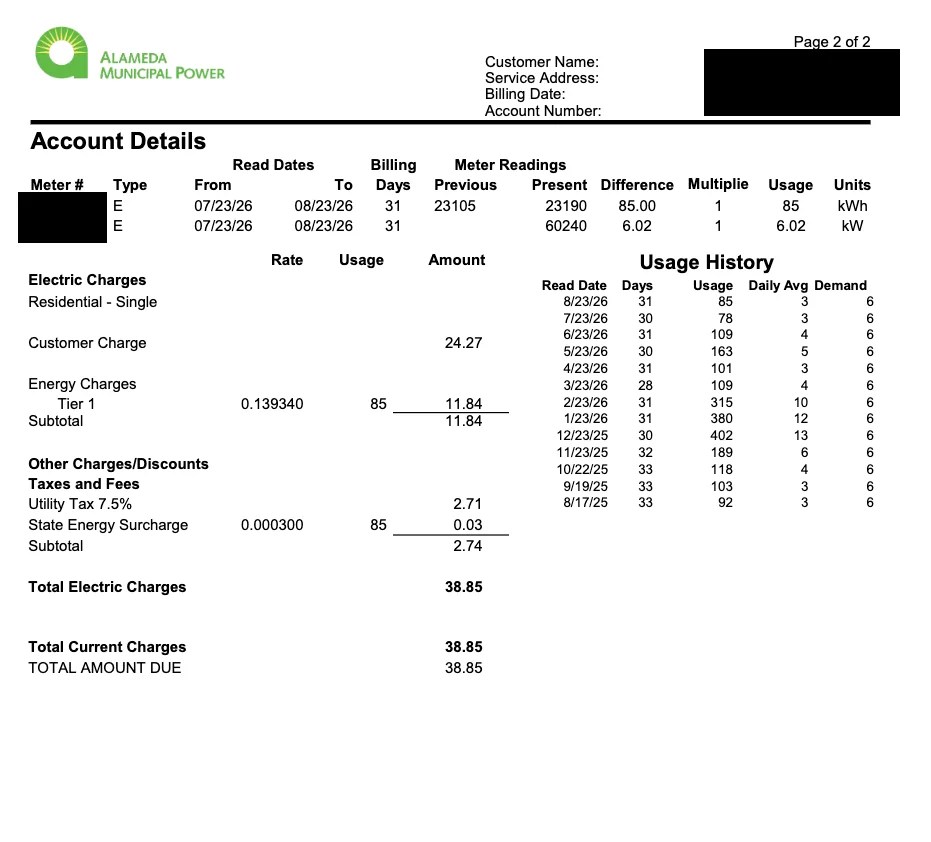
The total with fees, taxes, and other charges came to just $38.85, though the total kilowatt-hours the renters of the small unit used was just 85, which a unit running air conditioners would easily exceed in about two or three days. Still, the cost of $0.139 per kWh is very low, below the national average of $0.20 and well below the California average of $0.36, according to EnergySage.
"Congrats. Happy for you. Nice," wrote one commenter, referencing a popular meme with an upset-looking child seemingly trying to hold it together for a photoshoot.
The bill itself came from Alameda Municipal Power, a community-owned, public electric utility rather than a private utility company.
TCD Picks » Quince Spotlight
💡These best-sellers from Quince deliver affordable, sustainable luxury for all




"Keep in mind that PG&E has more than 100,000 miles of overhead electrical lines and Alameda Municipal Power has less than 100 miles," the OP further stated to help explain some reasons behind the gap beyond just the fact that AMP is set up more as a public social good rather than a profit-seeking enterprise.
"Man, I wish I had an option," one commenter wrote. The thread repeatedly returned to the per-kilowatt-hour price, with another commenter saying, "$0.13 in CA is wild," and others comparing the Alameda charges with what they pay each month.
More background
The contrast with PG&E bills came up again and again in the replies. One commenter wrote, "Meanwhile my bill was over $500 in SJ on PGE."
"All of my house's utilities (water, electric, gas & trash) cost less than my PG&E bill for my old condo," another added.
What can be done?
Most people cannot simply choose whichever electric provider they want. Utility access is generally determined by location, so geography is often the deciding factor.
The frustration in the thread also turned toward politics. One commenter asked, "For people who aren't happy with PGE, how can we influence politician to change it? We have the vote."
Where can I learn more?
The reaction to that Alameda bill reflects a broader California debate over electricity costs. These stories look at rising PG&E costs, renter access to shared solar, free bill-cutting programs, heat-driven spikes, and state discounts.
• PG&E customers across California could pay $840 more yearly by 2030.
• California renters could lose reduced electricity bills as shared-solar rules tighten.
• As triple-digit heat returns, PG&E says one free program can cut bills by $350.

Get TCD's free newsletters for easy tips, smart advice, and a chance to earn $5,000 toward home upgrades. To see more stories like this one, change your Google preferences here.






