


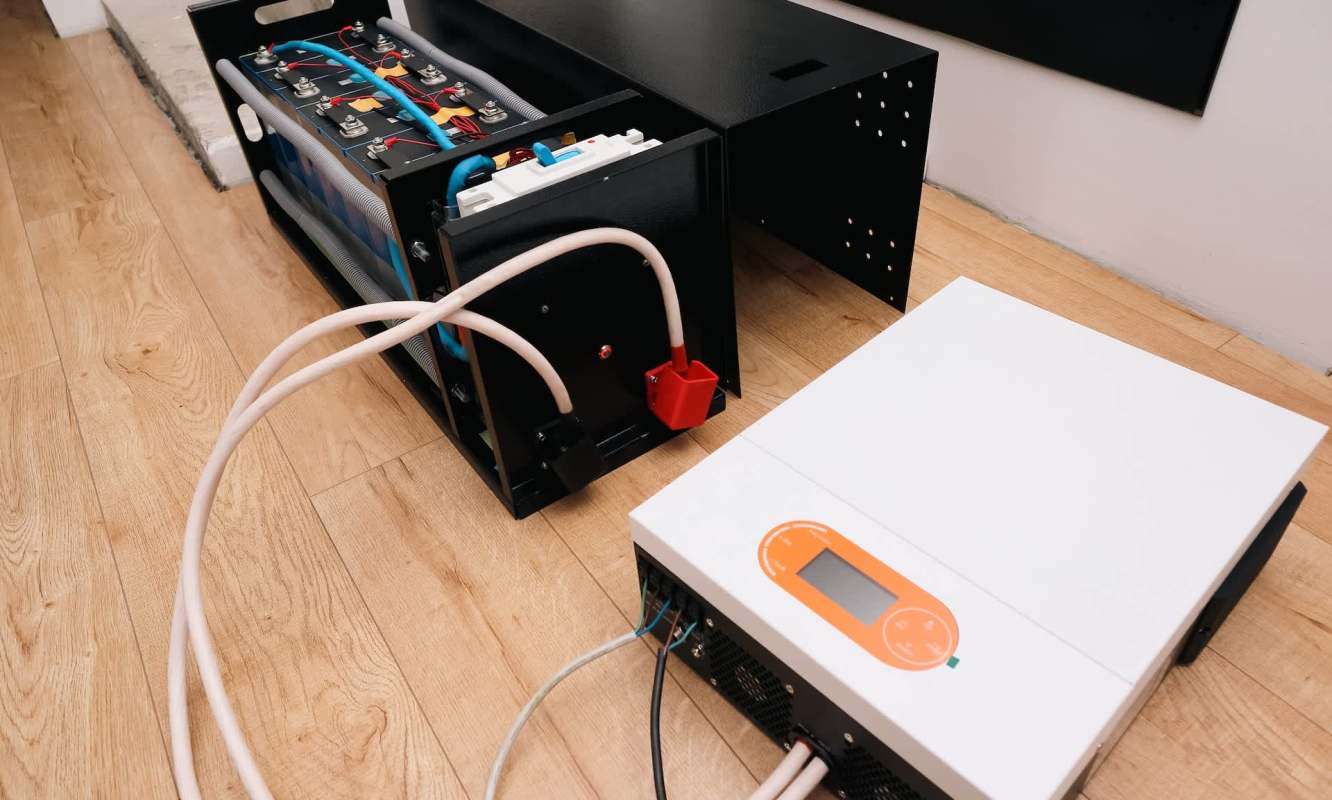
A homeowner found a way to cut back on generator use during power outages by pairing it with a battery, potentially saving money on gasoline while keeping nights quieter. The household ran on stored energy for 14 hours of a 20-hour outage, limiting generator use to six hours.
Here's what to know
In a Reddit post, the homeowner described adding a 5-kilowatt-hour Anker S5000 battery to a Westinghouse iGen4500 generator setup.
The homeowner asked other users for advice on fine-tuning the charging schedule, noting: "Still working out the right block length. Anyone else running this kind of combo? Do you have any tips for me?"
According to the homeowner, the battery handles household power overnight with the generator shut down. It also powers the house during the two- to three-hour afternoon recharge, when the generator runs at a steady load and feeds the battery's AC input.
The homeowner expected fewer operating hours to extend the time between oil changes. The arrangement also meant fewer trips to buy fuel and, by the homeowner's estimate, used roughly one-third of the gasoline needed to run the generator throughout the outage.
More background
Before adding the battery, the homeowner had used the Westinghouse for about 60 hours to get through three outages in one winter.
TCD Picks » Quince Spotlight
💡These best-sellers from Quince deliver affordable, sustainable luxury for all




"That meant an oil change in the middle of an ice storm and a lot of gas runs," the original poster wrote.
One commenter said the Anker S5000 costs $2,500, noting it was beyond their budget. They also questioned if the original poster was overdoing it with the oil change.
"There's no need to do an oil change in the middle of an outage," they wrote. "50 hrs is not a hard and fast rule. Other vendors with identical motors call for a 100 hr interval."
The same commenter expected the motor to last decades, even with more infrequent oil changes. Another suggested that a dual-fuel conversion and propane storage would be a better investment.
The responses raised the question of whether gasoline savings and fewer hours of generator use justify the upfront cost of a battery.
What can be done?
One commenter split household loads between two 1,024-watt-hour batteries. One handled AC power needs, and the other ran a computer and networking equipment.
They reported more than 80 hours of battery life with the networking battery's 220-volt outlets switched off and compatible devices connected directly to its 12-volt output.
"If anything happens, in economy mode with the ability to charge from a propane generator, I can easily survive for a day or two if there is a mega-storm with fallen trees," they concluded.
Another user recommended a Solar Lab YouTube video explaining how a similar setup can keep nights quiet. The approach involves charging a battery with several hours of generator operation, then drawing on stored power overnight.
One commenter raised a practical issue for scheduled charging periods. They wanted to know whether the Westinghouse operated automatically or required the homeowner to start and stop it manually.
Not everyone was sure the original poster was doing anything wrong.
"You've got the hot setup!" one wrote. "I basically do the same thing."
Where can I learn more?
Other homeowners are also looking at how batteries can work alongside generators during outages.
• A 12-hour blackout prompted a homeowner to pair batteries with a $5,000 generator.
• A Honda generator owner's 2 kWh battery powered a refrigerator for 21 summer hours.
• A homesteader considered battery backup for outages, while a four-day blackout highlighted generators' usefulness.

Get TCD's free newsletters for easy tips, smart advice, and a chance to earn $5,000 toward home upgrades. To see more stories like this one, change your Google preferences here.






