


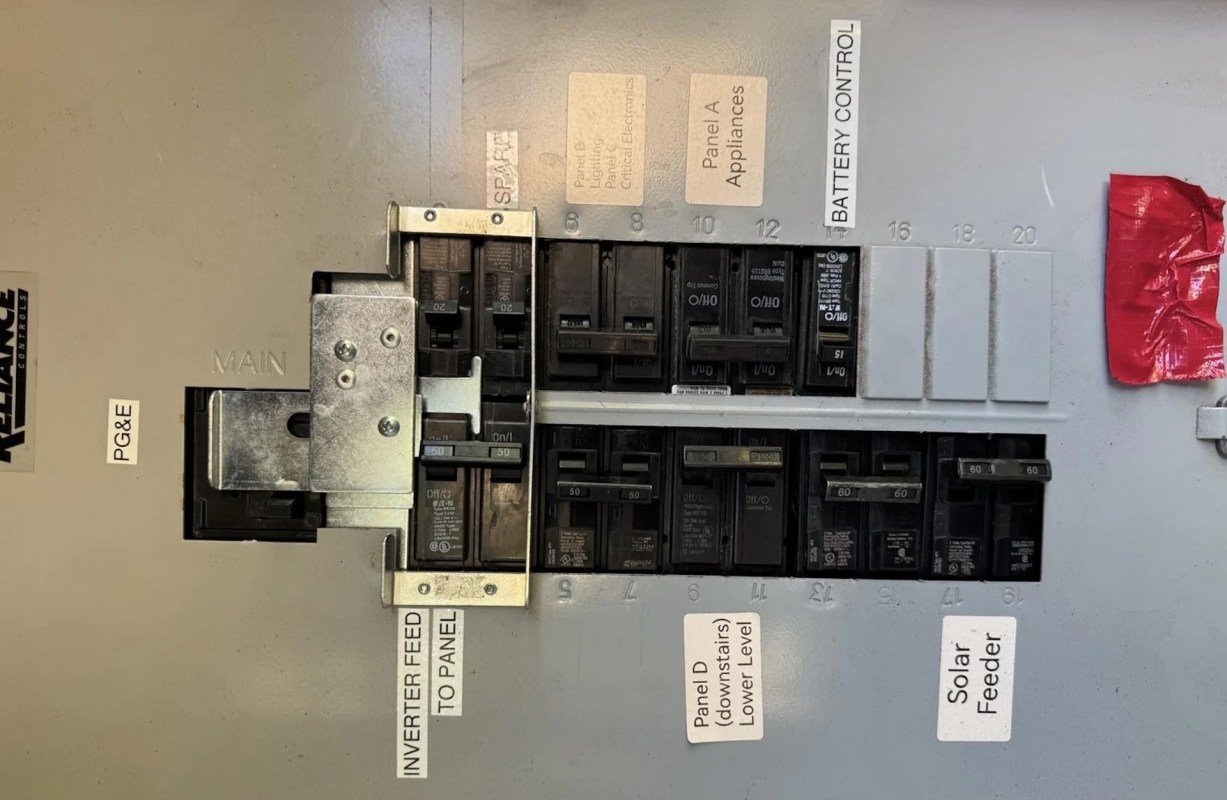
A homeowner planning a budget-friendly battery backup system discovered that the equipment was not the only expense standing in the way.
The homeowner did not intend to export electricity to the grid but said the city still called for drawings and UL-rated equipment plus an interconnection agreement and inspection costing $250.
Here's what to know
In a post on Reddit's r/SolarDIY community, the homeowner outlined plans for a system that would connect to a 200-amp service panel, automatically switch to batteries during outages, and allow for solar panels later.
The original poster initially understood that the city required only UL certification for permitting. The additional requirements complicated their efforts to keep costs down.
One user recommended checking the utility's requirements separately from the city's rules.
"Check with power company on what inverters you can use. Everyone is different. You really do not need 200 amps just for backup, unless you are backing up everything. If that's the case, you will need lots of battery storage," they said.
For homeowners considering that eventual solar addition, going solar is one of the best ways to save money on home energy, and solar leases in particular can deliver hundreds of dollars in monthly savings without any upfront costs. You can use EasyHome's free explorer tool to see potential savings from vetted installers in your area.
More background
EG4 and Sol-Ark were among the inverter brands on the homeowner's shortlist, while battery options included Docan NooN and Ecoworthy. The proposed storage capacity was 32 kilowatt-hours, supplied by two 16 kWh batteries.
Crushed by your bills? See instant solar savings from vetted installers in just a few clicks With energy prices through the roof, there's never been a better time to go solar — and EasyHome can help you find the best prices from the best installers in your area. EasyHome takes the guesswork and headaches out of energy upgrades by showing you estimated savings from a network of vetted local partners. To get started, just enter your ZIP and share a few details about your home — seeing your estimate is really that easy. |

The basement was the proposed installation site, with the new equipment going beside the electrical panels.
Cooking appliances and the dryer were among the home's biggest electrical loads; the furnace and water heater ran on gas. A soft starter was already installed on the four-ton heat pump, and a manual switch controlled the home's 50-amp generator hookup.
The cooktop, oven, washer, and dryer would remain off during outages as part of the household's plan to conserve power.
A battery charge level of 25% would be the cue to manually start a 15-kilowatt tri-fuel inverter generator during a long outage. Recharging the batteries from the generator would keep the household from depending entirely on stored energy.
What can be done?
The discussion covered whether to back up the entire electrical panel or separate selected circuits as well as how to choose equipment that could accommodate solar panels in the future.
The homeowner also wanted to know if a 200-amp pass-through inverter would still be needed with a separate subpanel.
Whether a fire-related insurance claim could be denied was not established in the thread, but the OP worried that equipment without a UL rating might create that risk. Users urged the use of UL-listed equipment, especially for an installation in the basement.
If you're comparing solar and storage, EasyHome's free explorer tool can help you evaluate potential savings through vetted local installers and explore backup battery storage options. Pairing solar with a battery allows homeowners to maximize savings and power their homes with solar when the grid goes down, with backup capabilities depending on the system's configuration.
Where can I learn more?
Planning a DIY battery backup also means sorting out installation rules and equipment limits.
• A homeowner planning a Franklin battery add-on learned that commissioning requires certified installers.
• In California, a DIY solar owner encountered battery upgrade rule hurdles after reporting substantial savings.
• A homeowner considering an outdoor 5-kWh battery learned about spacing and heat.
• A DIY solar owner testing a 48V battery bank received warnings about installation safety.

Get TCD's free newsletters for easy tips, smart advice, and a chance to earn $5,000 toward home upgrades. To see more stories like this one, change your Google preferences here.






