


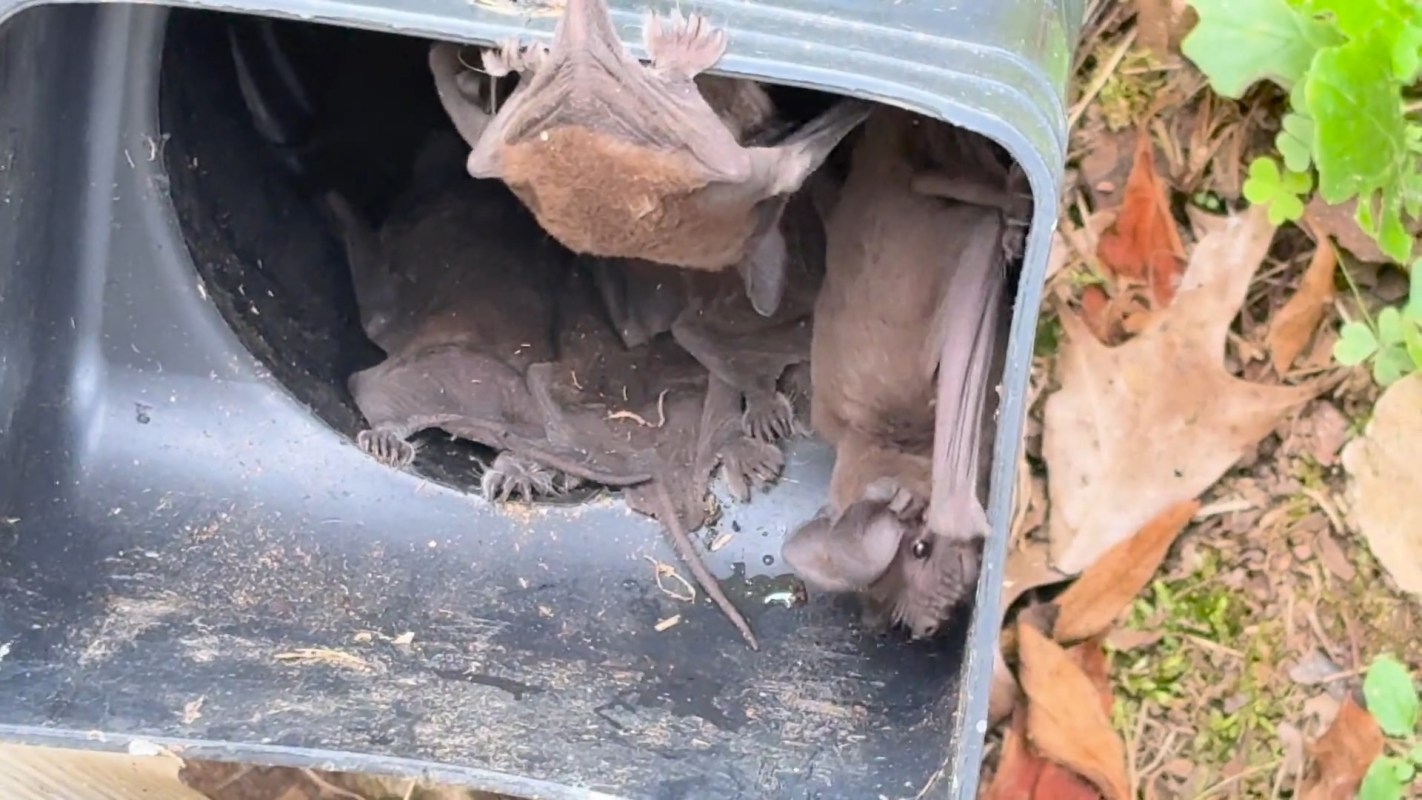
Finding bats in your home might sound like a horror story, but for one Atlanta resident, it actually helped them learn why humane wildlife removal sometimes means waiting rather than acting fast.
A post described in Reddit's r/bats that the original poster's home's drain pipe ran about 75 feet underground before it emptied. Bats were repeatedly using the connected downspout as a roost.
Here's what to know
Before asking for advice, the homeowner had already purchased a bat barn and intended to mount it about 15 feet up in a big oak roughly 50 feet from the downspout.
"Must be getting in through the top but how on earth do they get out? How do I get them into the bat house??" the OP asked, adding a video to show the predicament (click here to see it if the embed does not appear).
Commenters urged caution.
One person advised, "Heads up before you do anything: it's pup season in Georgia right now (roughly May through mid-August). There's a very good chance the bats in that downspout have babies that can't fly yet, so if you block it off now you'll seal pups inside. … Wait until late August, then evict them."
TCD Picks » Quince Spotlight
💡These best-sellers from Quince deliver affordable, sustainable luxury for all




They also recommended looking at BatCon.org and BatWorld.org for more info.
For the actual exclusion, that commenter described a temporary flap made from mesh or screening, fixed on just three sides, allowing bats to get out but preventing them from re-entering.
After about a week of warm nights, the opening could then be sealed more permanently.
More background
This kind of encounter shows how wildlife often adapts to human-built spaces.
A downspout is not a natural cave or hollow tree, but it can mimic the narrow, sheltered roosts bats seek out.
In cities and suburbs, animals often end up using attics or sheds because those structures are available. Human development and construction can also reduce or disrupt natural habitat.
As this BBC report on human-wildlife encounters noted, human expansion and environmental pressures can increase contact between people and wildlife.
Humane removal helps prevent injuring protected wildlife or creating other problems inside the home during storms or extreme heat.
What can be done?
In addition to the above advice, the same commenter noted, "You can't really lure them into the bat house roost and make the new one the best option nearby."
They noted that trees can interfere with flight paths and leave bats more vulnerable to predators.
After reading the advice, a Reddit user praised the OP's approach and commented, "Those bats are so precious. I hope for the best for all of them."
Where can I learn more?
If you'd like to see how other people contend with wildlife around their homes, these stories examine that tension from a few different angles.
• In Snohomish County, Washington, three residents needed urgent treatment after a rabid bat flew indoors.
• In Brazil, pesticide use is driving troubling bat deaths that could ripple outward to people.
• In the Bay Area, encounters can be pretty scary as wild boars enter neighborhoods.
Even though wildlife management in this sense can be a little terrifying, taking a slow and intentional approach to figuring out a solution can make things less daunting.

Get TCD's free newsletters for easy tips, smart advice, and a chance to earn $5,000 toward home upgrades. To see more stories like this one, change your Google preferences here.






