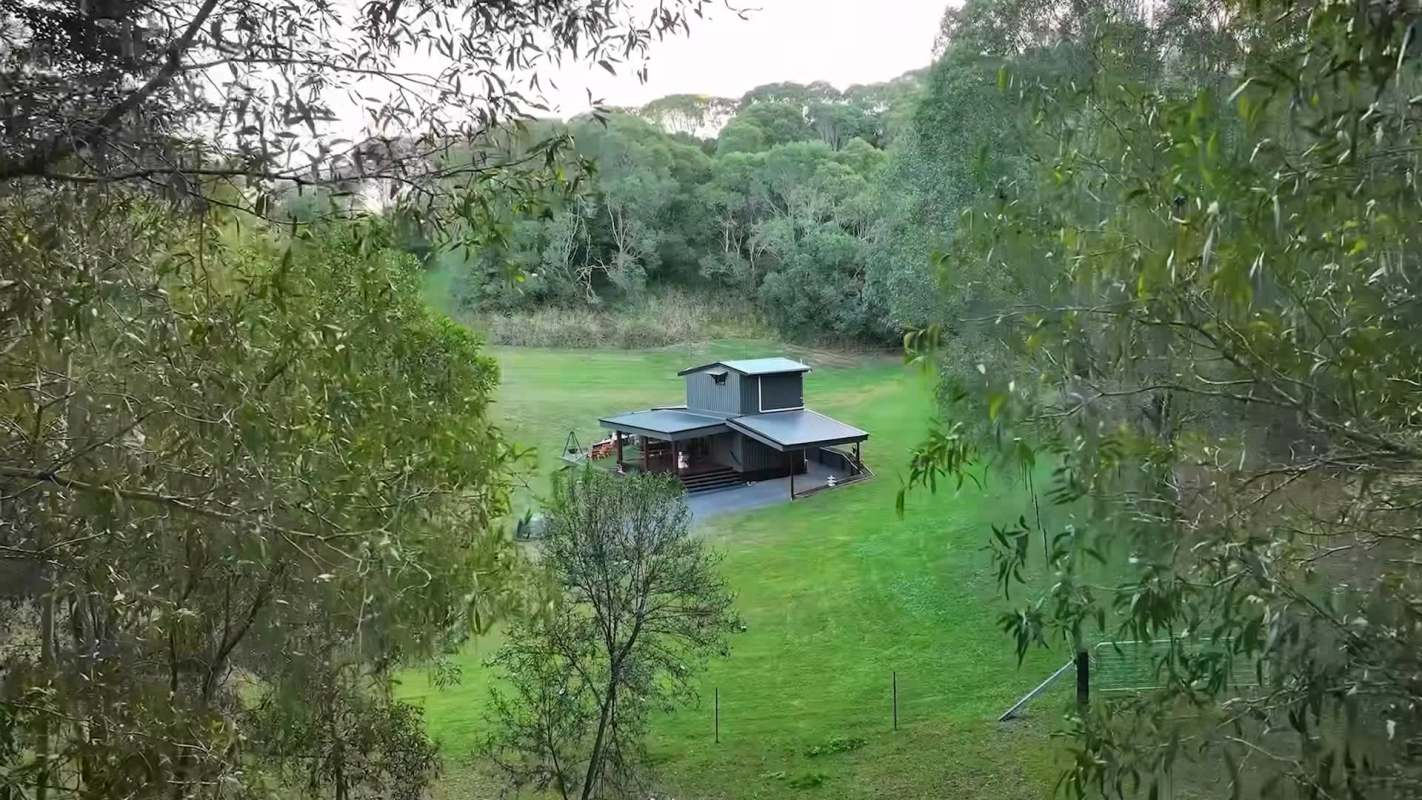
What happens when a builder stops designing for clients and goes all out on a place of his own?
In this case, Australian builder Shaun and his partner, Tegan, created a timber-rich country cabin from roughly 40 rescued logs that had nearly been burned.
Despite the substantial woodwork, the retreat is designed to come apart into transportable sections, making it an unusual mix of craftsmanship, reclaimed material, and mobility.
Here's what to know
Shaun and Tegan built the cabin after buying a mill and turning salvaged wood into a home.
In a YouTube home tour posted by Living Big In A Tiny House (@livingbig), Shaun said he came across rose gum logs that were about to be burned while he was with the fire brigade and decided to save them.
"No, don't do that," he recalled saying. "I shipped them all back home and milled them all up and created this whole thing."
TCD Picks » Quince Spotlight
💡These best-sellers from Quince deliver affordable, sustainable luxury for all




Inside the cabin, that reclaimed timber shows up across the structure and fit-out, from visible framing and large beams to shelving, furniture, and live-edge cabinetry.
The footprint is about 29.5 feet by 14.8 feet (9 meters by 4.5 meters), and its loft is built to lift off when the cabin needs to be moved.
The video description calls the project "an exceptional example of cabin design, timber craftsmanship and what can happen when a builder finally gets the chance to create something entirely for himself."
One commenter wrote: "A great example of one person's trash is another person's treasure. That wood found Shaun."
More background
What makes the build especially notable is that it treats salvaged material not as an accent detail, but as the backbone of the home.
Rather than relying on entirely new finish materials, Shaun used hardwood he had rescued and milled himself throughout the interior, keeping its natural edges and imperfections on display.
Repurposing usable wood keeps material out of burn piles and waste streams, and it can reduce demand for newly processed products.
Reclaimed materials can also help control costs when sourced locally, though the labor involved can remain significant.
Another choice that matched the cabin's low-impact sensibility was cork flooring, which Tegan described as "one of the most sustainable floorings that you'll find."
Beyond its sustainability appeal, cork is also softer underfoot and can help with insulation and sound.
The result is a compact home that still feels spacious, with warmth, storage, and function.
What can I do?
Most people are not going to rescue 40 logs and mill them into a custom, movable house.
Homeowners planning a renovation can ask contractors or local salvage yards about reclaimed wood for shelving, countertops, trim, or furniture instead of buying everything new.
It can also help to think about materials that do more than one job.
In this cabin, cork flooring adds comfort, insulation, and acoustic benefits.
Similar choices in a conventional home can lower maintenance needs and improve day-to-day livability.
The cabin doubles as a rental and is intended as a future retirement home, showing how flexible, compact spaces can create extra income or adapt to changing family needs over time.
And for anyone building new, designing for disassembly or relocation — even partially — can add resilience and lasting value, especially in areas where land use or lifestyle needs may change.
Tegan said the project still leaves an emotional mark: "It's heartwarming to see Shaun's creativity fully expressed. You know, he's just got all these ideas and ... they can be completely magical, and you think it would be impossible, but he manages to do it."

Get TCD's free newsletters for easy tips, smart advice, and a chance to earn $5,000 toward home upgrades. To see more stories like this one, change your Google preferences here.