


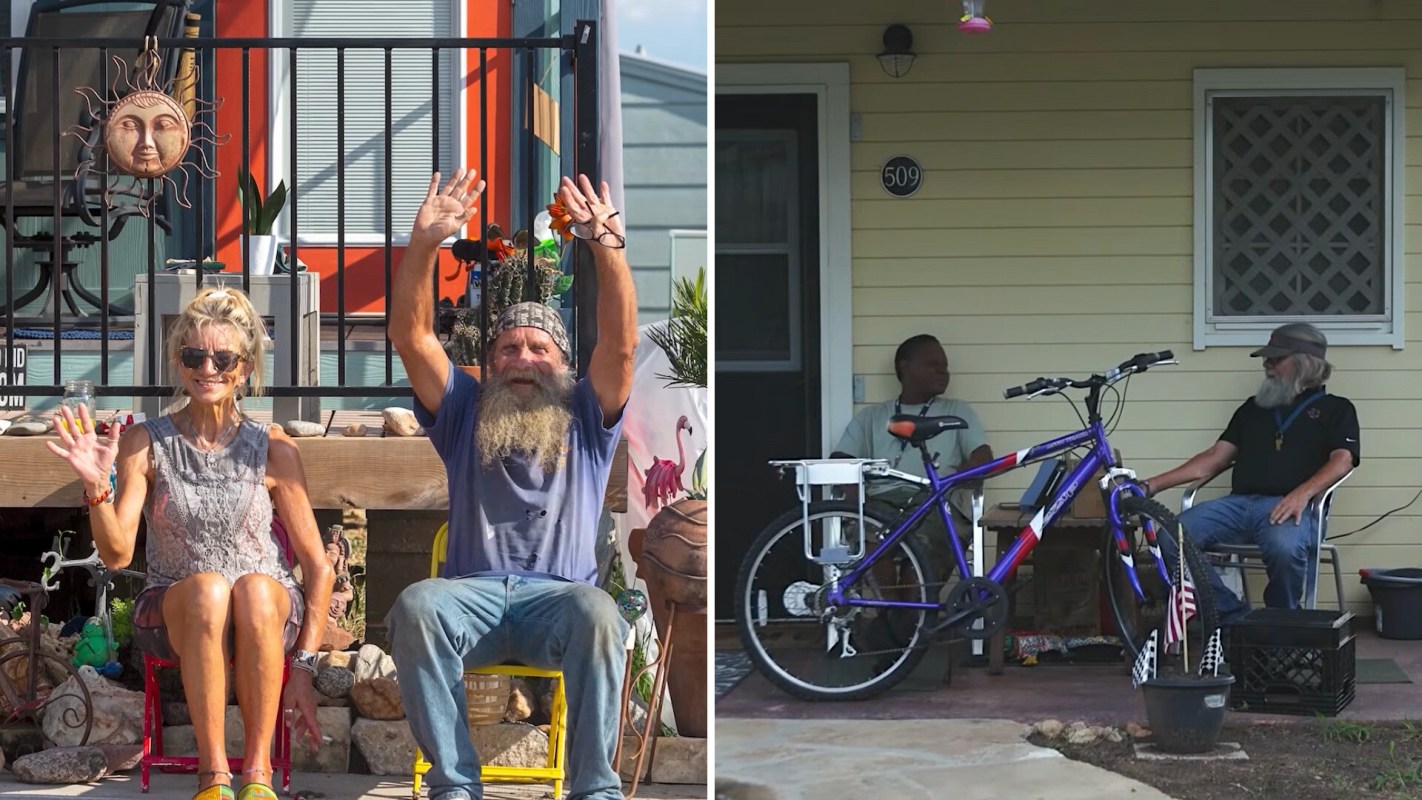
A Texas community is helping people move beyond homelessness with compact homes and something just as important — a sense of belonging.
At Community First! Village in Austin, a 200-square-foot home costs $350 a month.
Here's what to know
The Tiny House Revival (@TinyHouseRevival) account toured the village in a YouTube video. In the community, formerly chronically homeless residents live alongside "missional neighbors" who choose to help support the community. Village leader Alan Graham, his wife, and village architect Sarah Satterlee also call the neighborhood home.
Homes are arranged in inward-facing groups of 40 to 50 along pedestrian paths. Each micro-neighborhood features four housing styles, including roughly 25 to 30 micro-homes under 200 square feet.
The larger units give couples a front porch, plus lounge and dining space, a full bathroom and kitchen, and a separate bedroom. Working and paying their own way are part of residents' lives in what the tour describes as permanent housing.
More background
Among the village's most distinctive buildings are 3D-printed homes created through a partnership with ICON, an Austin-based construction technology company. The tour connects ICON's work to its NASA projects developing technology for Moon-based living spaces, roads, protective blast barriers, and launch areas.
TCD Picks » Quince Spotlight
💡These best-sellers from Quince deliver affordable, sustainable luxury for all




Adobe was the comparison the creators used to describe the printed homes' interiors. They also noted the curved walls.
They reacted: "Is this the future of housing? I don't know, but could this lead to another unlock? Does it get people thinking in a different way? Probably. And I think there's power in that."
Units designed for couples, which account for about a quarter of each neighborhood's homes, also feature high ceilings and abundant natural light.
What's being done?
Local parties, pickleball courts, and shared gardens offer neighbors opportunities to get together. Residents also have outlets for their work. The tour shows art studios, places to sell handmade goods, and galleries.
Graham also described a personal benefit of moving into the village. Instead of living 23 miles away, he and his wife could have coffee together and spend time in the community where they worked.
Viewers on YouTube welcomed the emphasis on connection.
"We can't just give up on people. It's so good to see an alternative," one commenter wrote.
People interested in applying for a home, volunteering, or donating can visit mlf.org, the website identified in the tour, to explore those options.
"Housing alone will never solve homelessness, but community will," Graham declared.
"All states should allow for communities like this with tiny homes to help keep people off the streets," a viewer added.
Where can I learn more?
The compact homes at Community First! Village are one approach to more affordable housing.
• In a Colorado town of 202, tiny homes carry hopes for local revival.
• Americans are turning $5,000 sheds into homes as rents and mortgages slip beyond reach.
• In Florida, low-income families help build their own homes, cutting costs through sweat equity.
• A Texas woman left a $3,000 rental and bought a $98,000 tiny home.

Get TCD's free newsletters for easy tips, smart advice, and a chance to earn $5,000 toward home upgrades. To see more stories like this one, change your Google preferences here.






