


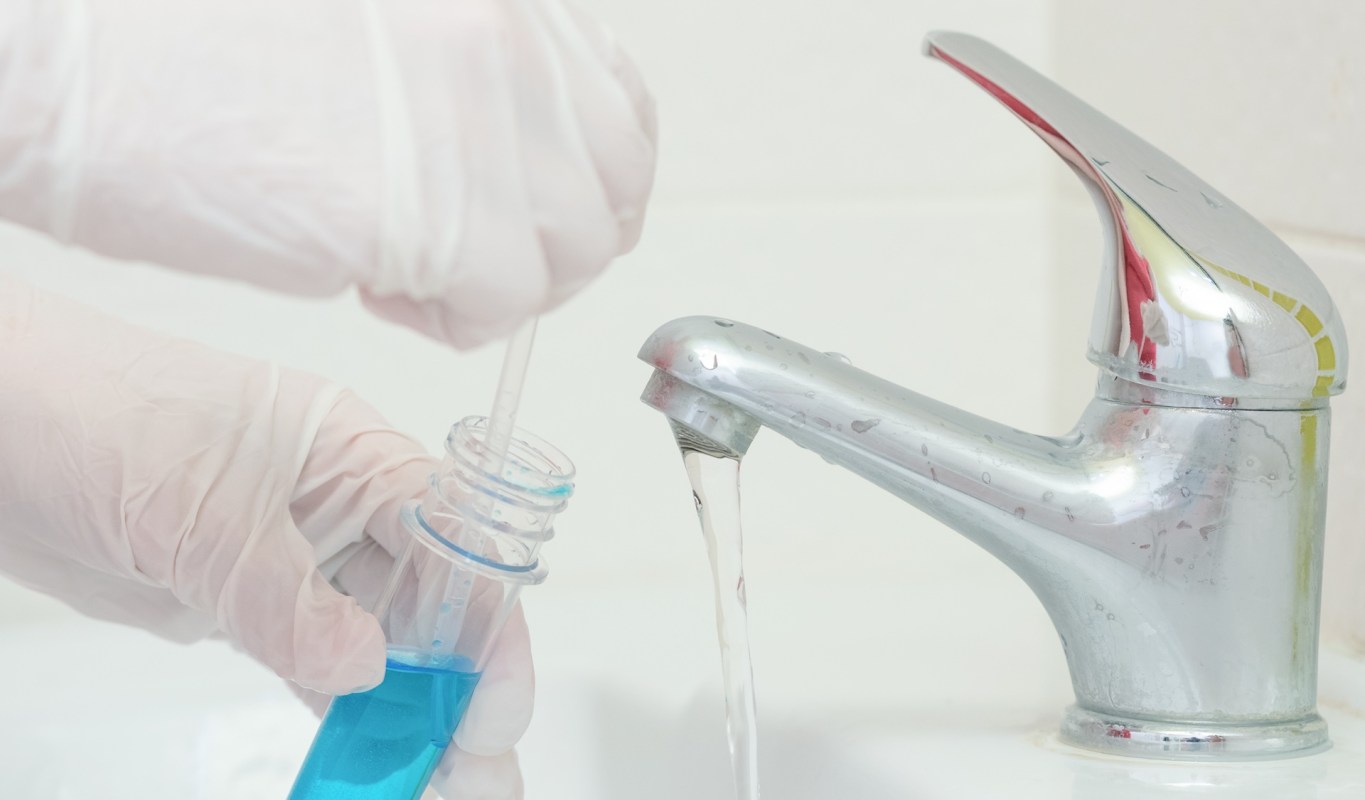
A reading below the federal arsenic limit in drinking water still left one private-well homeowner uneasy. After a test showed 8 parts per billion of arsenic in the household's drinking water, the resident — who said they have a wife and an 18-month-old at home — began evaluating filtration options.
Here's what to know
Posting on r/WaterTreatment, the homeowner said their well sits near an area with elevated arsenic and that a test came back at 8 ppb. They said they did not know the exact form of arsenic, known as a species in chemistry, but suspected As3 because of the well depth and dissolved iron in the water.
In the Reddit thread, they identified an AdEdge AD2710S unit as one option, describing it as a filter that converts As3 to As5 and then traps it.
The decision was harder because of the iron in the water. The homeowner said the same filter would also oxidize and capture ferrous iron, potentially contaminating the system sooner than expected.
Their estimate for getting started was about $350 to $400. They also broke down ongoing costs as $80 per year for the arsenic filter and $160 every three years for the iron filter.
More background
While municipal water systems are already subject to regular testing for substances, including arsenic, and keep them below EPA levels, Dartmouth College noted that "EVERYONE should test their well water for arsenic and other contaminants."
TCD Picks » Quince Spotlight
💡These best-sellers from Quince deliver affordable, sustainable luxury for all




According to the resource, if well owners do detect arsenic in their water, they should use bottled water until they have an arsenic-removal system up and running.
As for this poster, they explained their motivation for taking the issue seriously, noting: "I got a wife and a 18 month old at home. I just feel like it's the responsible thing to do."
Most replies treated 8 ppb as close enough to the EPA's 10 ppb limit to warrant concern, even if the test result was still technically compliant.
"Arsenic can cause all kinds of digestive problems and long term exposure can lead to cancer and a variety of other health issues," one commenter warned.
Another user pushed for a cheaper under-sink reverse-osmosis system instead of buying separate filters for arsenic and iron. "At ~70% removal you'll be down around 2-3 ppb which is better than many public sources," they advised.
The homeowner said under-sink RO had already been on the table but was ruled out because "Clearwater iron appears to clog the membranes," making the choice a tradeoff between simpler initial installation and membrane maintenance.
Ultimately, the homeowner wrote, "Yeah, I just pulled the trigger and ordered the filters + housings. No need to drink excess arsenic. And it's not like it's a $5000 setup. Just a couple targeted filters."
Where can I learn more?
If an arsenic reading has you thinking about treatment options, these stories show how similar water concerns are playing out elsewhere.
• In Colorado, drought has raised fears about arsenic in remaining water supplies as reservoirs shrink.
• In Bangladesh, rising seas are leaving millions vulnerable to arsenic poisoning from well water.
• In Austin's Colony, Texas, residents dealt with lead and arsenic in taps for years.
• University of Texas testing found lead, iron, and other metals in Texas neighborhood taps.
• Across the U.S., contaminated private wells may expose families to toxic PFAS in drinking water.

Get TCD's free newsletters for easy tips, smart advice, and a chance to earn $5,000 toward home upgrades. To see more stories like this one, change your Google preferences here.






