


In Taos, N.M., architect Michael Reynolds has spent over 50 years showing that discarded tires, cans, and bottles can become housing instead of waste.
The Earthship concept centers on homes that can produce electricity, capture rainwater, treat wastewater, and grow food on the property.
Here's what to know
According to El Cronista, Reynolds, 81, began developing the idea after graduating with a degree in architecture from the University of Cincinnati in 1969.
He was responding to two problems at once — growing amounts of trash and the difficulty of finding affordable housing — so he began testing materials that would usually be discarded.
One of his first concepts was a block made from empty steel and tin cans fastened together with wire. In 1973, he received a patent connected to one of those elements and kept refining the approach.
As the designs evolved, they became stronger and more suited to different conditions. Current versions use tires packed tightly with earth to form key walls, a method that can also help keep indoor temperatures more stable.
TCD Picks » Quince Spotlight
💡These best-sellers from Quince deliver affordable, sustainable luxury for all




These components are described as "structural, load-bearing and retaining walls made with rammed earth clad with steel-reinforced recycled tires," per El Cronista.
More background
El Cronista noted the homes are organized around six core ideas: recycled and natural materials, passive heating and cooling, solar or wind power, food production, water harvesting, and wastewater treatment.
That means the structure covers several everyday household functions that many homes rely on outside utility systems for. For some homeowners, that could mean more control over electricity, water, and food production in one place.
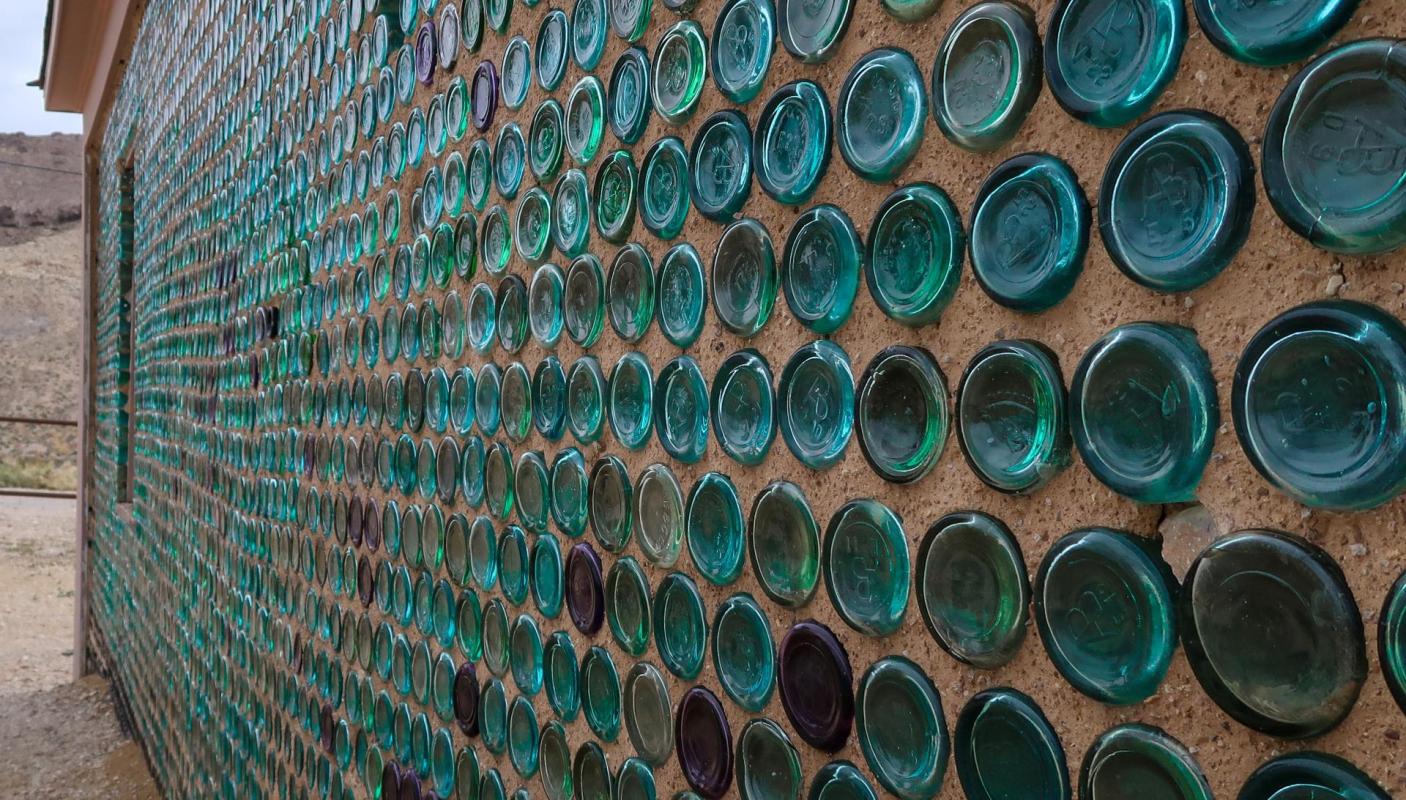
The salvaged materials also affect how the homes look, not just how they work. Cans and glass bottles can be built into wall sections, and bottle pieces can form decorative surfaces that still let light pass through.
Reynolds' concept may appeal to those seeking more self-sufficiency, but it can also make homes more specialized than standard construction.
What's being done?
Reynolds has developed the idea from an experiment into a more established set of Earthship models with published reference prices.
According to El Cronista, final costs vary by model, square footage, location, and project features.
The Refuge and Encounter models are around $350 per square foot, the Unit model is near $400 per square foot, and the Global Earthship comes in at roughly $425 per square foot.
A home that generates power, harvests water, and supports food growing could reduce reliance on outside services, but the upfront planning and price point make it less a simple upgrade for the average homeowner than a major custom home decision.

Get TCD's free newsletters for easy tips, smart advice, and a chance to earn $5,000 toward home upgrades. To see more stories like this one, change your Google preferences here.






