


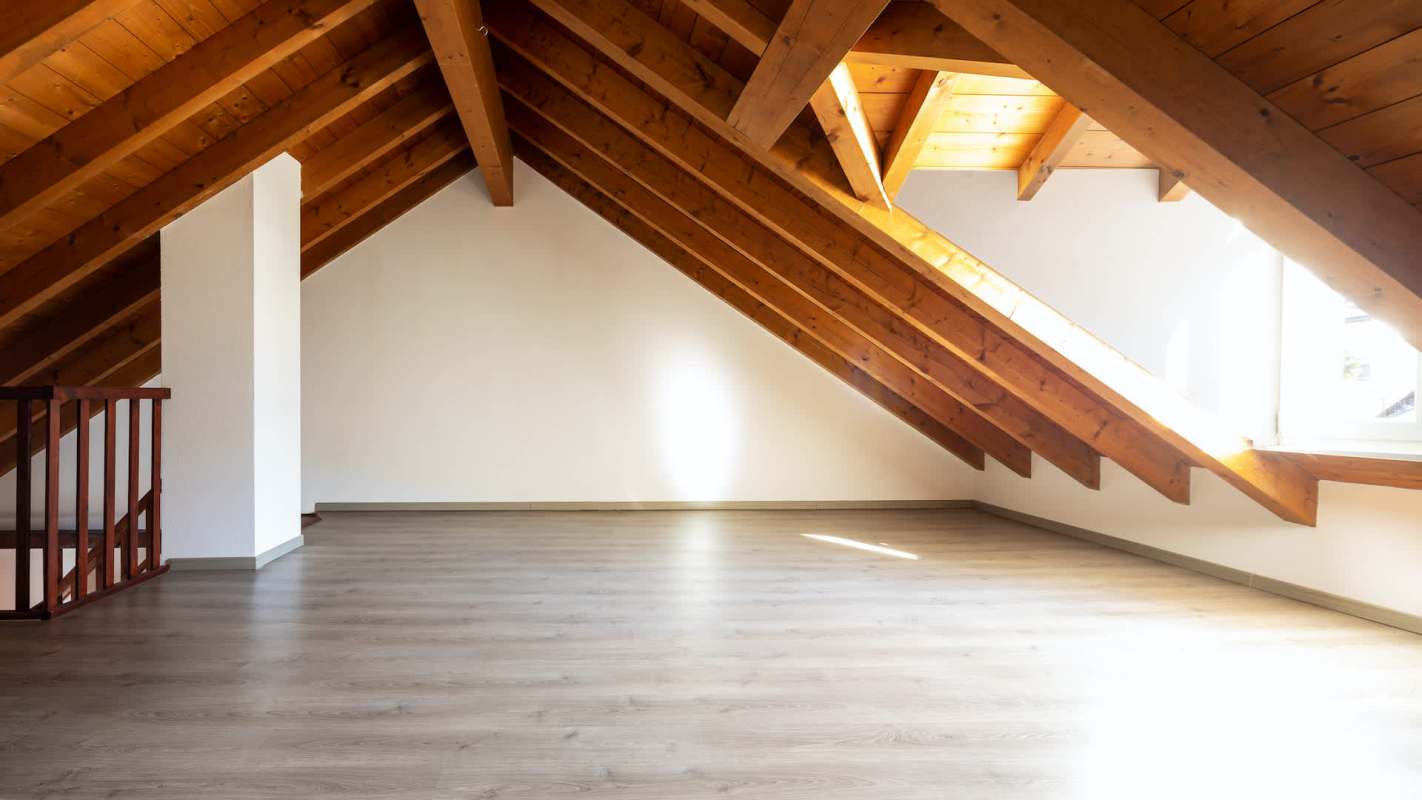
Amherst, Massachusetts, is revisiting its accessory dwelling unit rules after a dispute over how one property's upper floor should be measured. The debate focuses on whether space that seems suitable for living can instead be treated as an attic area and left out of a square-footage total.
The case involves a Newell Court ADU whose attic reportedly has room for two bedrooms and a bathroom even though some units covered by state law cannot exceed 900 square feet.
Here's what to know
After a Land Court challenge to a Zoning Board of Appeals decision involving the ADU, Amherst is weighing changes to its bylaw, the Daily Hampshire Gazette reported. The proposed updates are meant to align the town's gross floor area calculations with the state's 2024 Affordable Homes Act.
If approved, the changes would keep the town's protected, by-right ADUs capped at 900 square feet, according to the Gazette. Local ADUs could still be up to 1,200 square feet when the owner lives in either the main house or accessory unit.
Jeff Bagg, Amherst's director of planning and economic development, said the key factor is ceiling height since space that meets code would count toward gross floor area.
Another proposed change would formally define an attic as non-habitable storage space that is typically reached by a pull-down staircase.
TCD Picks » Quince Spotlight
💡These best-sellers from Quince deliver affordable, sustainable luxury for all




"We're trying to define what was undefined previously," Bagg said, per the Gazette.
More background
A central issue in the Newell Court dispute is whether the unit's upper-level area should be included in its total size or left out under Amherst's reading of attic space.
Building Commissioner Rob Morra left the area out of his calculation by relying on what the Gazette described as the building code's "attic exclusion approach." Under that method, upper-floor space does not count if it measures under a third of the square footage directly below it.
That interpretation has faced questions because the Newell Court attic reportedly has enough room for two bedrooms and a bathroom, which makes it more like living space than storage.
District 4 Councilor Pam Rooney said she appreciated staff's effort to bring Amherst's rules in line with state law and guidance from the Office of Housing and Livable Communities. Her district includes neighborhoods where ADU construction has become common, with many units built to house local college students.
Residents also told the Town Council that the pace of ADU construction has affected neighborhood life. Eunice MacAllister of Newell Court said, according to the Gazette, that an ADU built on formerly open land has cost her some privacy.
"I feel invaded, and I think probably a lot of other people feel the same way," she said.
What's being done?
Town staff are proposing several technical changes. "Taken together, the intent of these changes is to ensure that all livable spaces in an ADU are included as part of the size calculation," Bagg and Town Manager Paul Bockelman wrote in a memo. "These changes draw a clearer line between floor area that counts toward an ADU's size and attic space that does not. This will help applicants and town staff apply the size limit for a protected-use ADU consistently."
Under the proposed revisions, only floor area that satisfies the building code's ceiling-height standard would count toward an ADU's size. The draft would also revise the definitions of floor, story, and half-story to reduce confusion about attic areas and about spaces in upper or basement levels.
The amendments go next to a joint hearing of the Town Council's Community Resources Committee and Planning Board on Oct. 22, the Gazette reported. From there, councilors could take up the matter again, acting on the committees' recommendation and deciding whether to approve it.
Residents have also called for more oversight as ADUs continue to be built. Lois Barber of Taylor Street said several ADUs are under construction in her neighborhood, though Bagg said it remains unclear whether a separate public notification system would be allowed under state rules that make ADUs a by-right use.
"This is an issue you need to look at carefully," Barber said. "It's happening so fast without proper scrutiny, without proper definition of words."
Where can I learn more?
Similar questions have come up elsewhere as communities debate what homeowners can build and how much control local authorities should have.
• Boston certified its first single-family passive house in the Brucewood neighborhood.
• In Florida, lawmakers approved a homeowners' Bill of Rights limiting some HOA powers.
• Residents debating development called for regulations for housing developers despite long odds.

Get TCD's free newsletters for easy tips, smart advice, and a chance to earn $5,000 toward home upgrades. To see more stories like this one, change your Google preferences here.






