


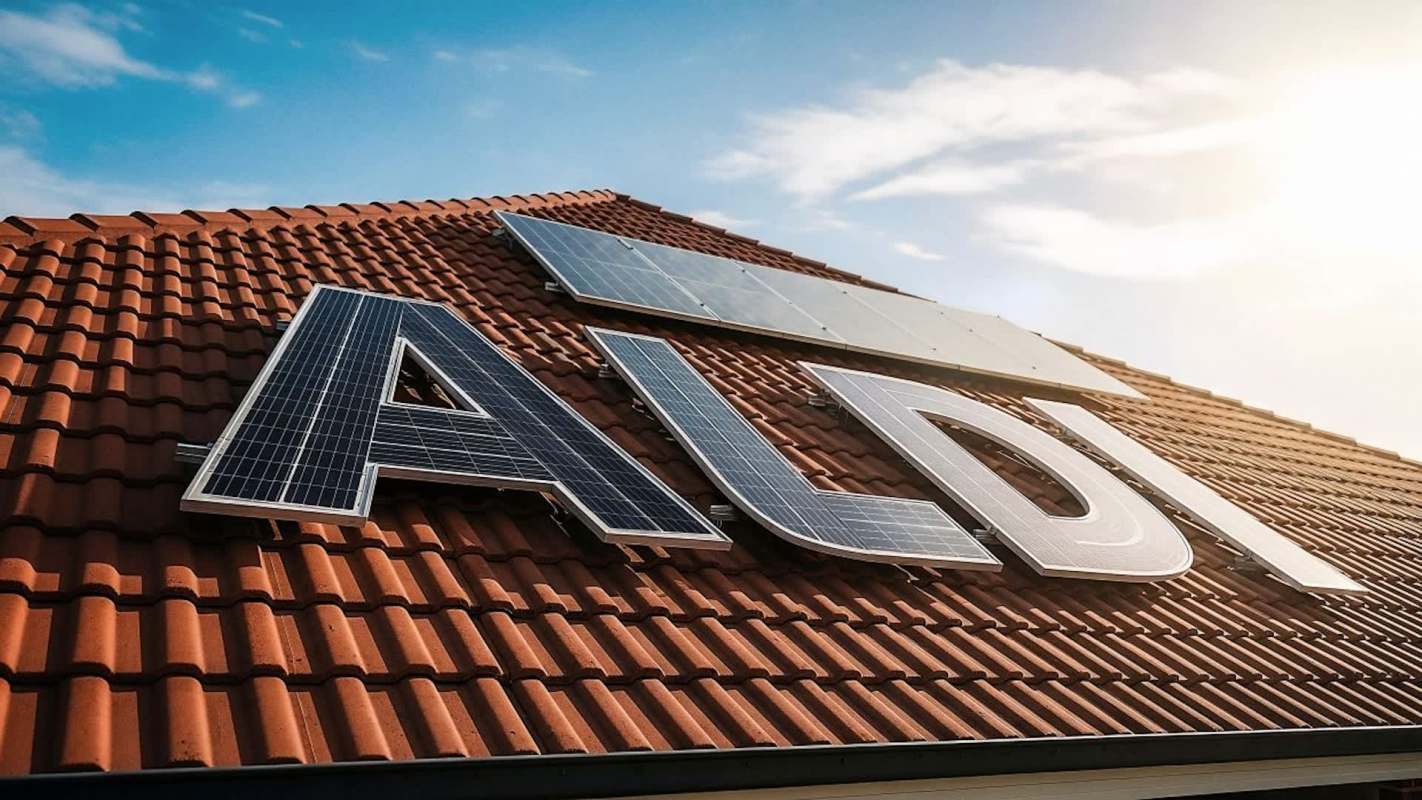
A Reddit user in Queensland, Australia, shopping for rooftop solar thought Aldi's $10,999 package looked almost impossibly cheap, especially alongside a cheaper $7,499 option (in Australian dollars). But a Reddit discussion about the offer quickly zeroed in on a less obvious detail that could make a major difference in day-to-day use.
Here's what to know
In a post on r/AusRenovation, the original poster wrote that "the pricing almost seems too good to be true" and asked, "Am I missing something?" about the 7.9-kilowatt solar plus 20-kilowatt-hour battery bundle.
Aldi Solar's advertised bundles run from $7,499 to $10,999, with the highest-priced option pairing nearly 8 kilowatts of panels with a 20-kWh battery. Reddit commenters argued that those headline prices leave out some of the details that matter most.
"Most of these cheap deals also have a small inverter," a Reddit user wrote. "Turn on your A/C and a few other things in the house and you're already pulling from the grid."
Bigger panel capacity and battery storage do not necessarily mean stronger backup performance.
SolarQuotes also flagged questions about both responsibility and the final bill, as one commenter pointed out. SolarQuotes did some digging and said the Aldi-branded systems are actually supplied and installed by Tempo (Aust) Pty Ltd, and that some households can face added charges for fire-resistant panels, two-story properties, longer inverter runs, and certain three-phase upgrades.
More background
According to SolarQuotes, the rollout reached metropolitan Western Australia and South Australia on Aug. 5. Aldi presented the expansion as a bet on consistency, per the outlet.
Announcing it, Aldi Australia Group Director Simon Padovani-Ginies said, "It's a simple shopping experience with fewer options, a clean store layout and the best value in the market. And we're making sure that we carry that through with our services, and Aldi Solar is no different."
Save $10,000 on solar panels without even sharing your phone number Want to go solar but not sure who to trust? EnergySage has your back with free and transparent quotes from fully vetted providers that can help you save as much as $10k on installation. To get started, just answer a few questions about your home — no phone number required. Within a day or two, EnergySage will email you the best local options for your needs, and their expert advisers can help you compare quotes and pick a winner. |

That pre-fabricated-style approach can help to drive down the price, and it may work for many homes. The challenge is that roofs, shading, household energy demand, and outage needs can differ dramatically from one home to another.
"I haven't worked for them, but I'd be surprised if a few stock-sized systems can be made to fit so many different Australian houses," SolarQuotes' in-house installer Anthony Bennett assessed.
If the fit is off, homeowners may end up with lower savings, backup power that is less useful in practice, or extra costs that were not obvious from the promotion.
What can be done?
As a starting point, SolarQuotes urged shoppers to remember that Tempo, not Aldi, supplies and installs the system, to confirm the individual installer's Solar Accreditation Australia credentials, and to get at least one competing quote.
More From EnergySage
💡Go deep on the latest news and trends shaping the residential solar landscape


Back in the U.S., there are other places to look. With EnergySage, the average person can save up to $10,000 on solar purchases and installations. Its quote-comparison tools can make it easier to determine whether a flashy low-price bundle is actually the best deal.
For a broader pricing snapshot, EnergySage's solar map shows the average cost of a home solar panel system by state, along with details on solar panel incentives for each state. Together, those resources can help homeowners get the best price for rooftop solar panels and access available incentives.
Adding battery storage to a solar setup is one of the best ways to protect your home during outages, save on energy costs, and go off-grid. It can also help you use more of your own solar power instead of relying on the grid. Explore EnergySage for information about home battery storage options, including competitive installation estimates.
Where can I learn more?
Multiple factors go into whether a solar deal is too good to be true, and when the best time to pursue an installation.
• Former EnergySage COO Charlie Hadlow says interconnected factors shape solar costs far beyond any sticker price.
• In the Philippines, trustworthiness of providers still stands between many households and rooftop solar.
• In Australia, households can save thousands by waiting on solar until draft fixes come first.

Get TCD's free newsletters for easy tips, smart advice, and a chance to earn $5,000 toward home upgrades. To see more stories like this one, change your Google preferences here.






