


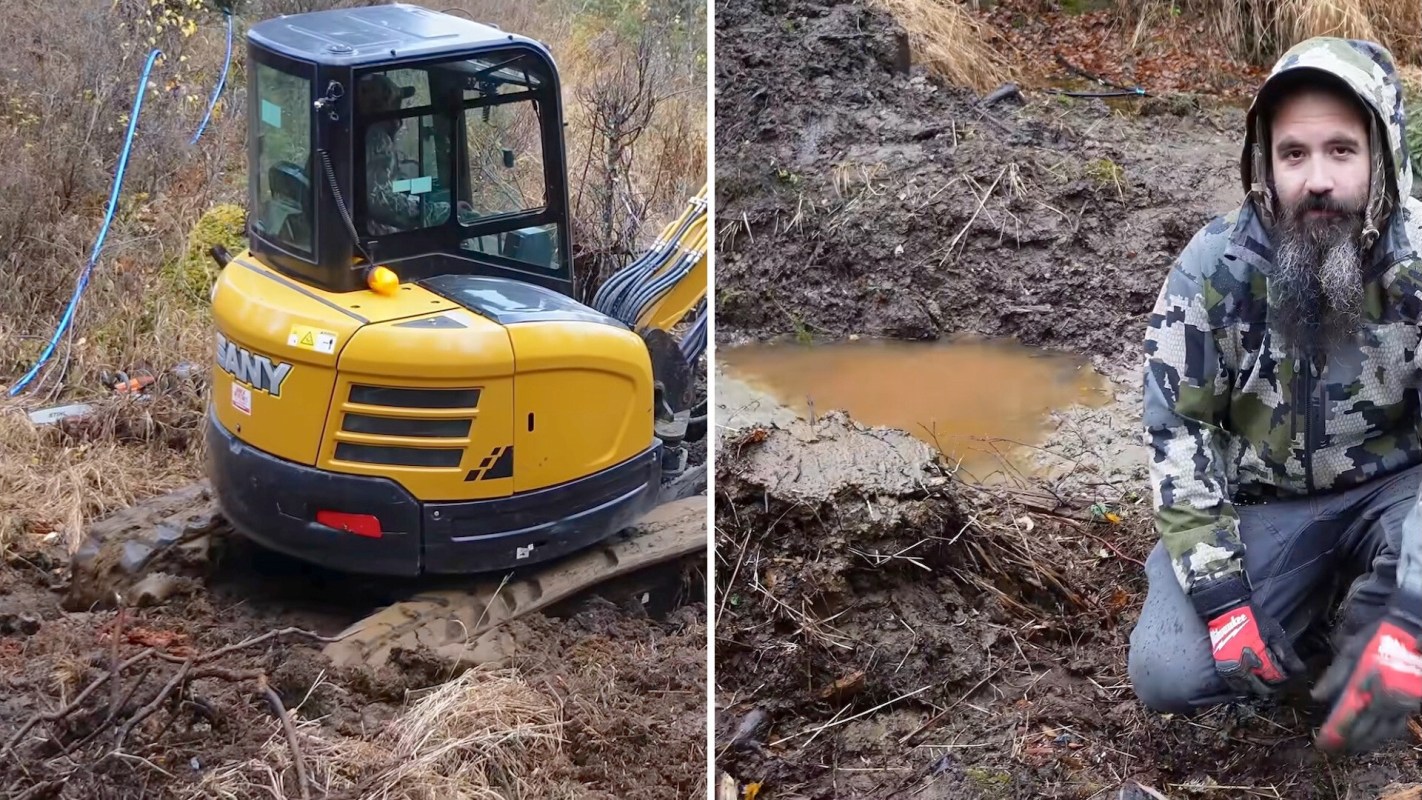
With a long, cold Alaska winter creeping closer, off-grid couple Katie and Chris, creators of North To Alaska (@northtoalaska2022), began racing to install a 1,500-gallon underground water tank before the ground froze. However, the weather upended their plans.
Here's what to know
Relentless rain turned the water-tank site into a muddy mess. As Chris explained in a YouTube video, the rental excavator kept losing traction on a steep slope, the trench for the water lines collapsed, and they had to give up and focus on other winter preparations.
The excavator ultimately went back before the tank could be buried below Alaska's frost line, which Chris said is at least 4 to 5 feet without insulation.
Off-grid living isn't for everyone, but the reward can be lower bills, a renewed connection with nature, and the satisfaction of growing food and building from scratch.
For Chris, the depth of the excavator tracks made it clear how soft the site was: one track, from trying to climb a hill, went more than 16 inches down, while another measured 30 inches.
After disturbing the clay soil, Chris concluded it had "no load bearing capacity."
TCD Picks » Quince Spotlight
💡These best-sellers from Quince deliver affordable, sustainable luxury for all




Chris also worried that the work had opened up a spring, saying, "I'm sure it's the same spring system as the one that we're using. It just was sealed off by this clay until we broke through."
What can be done?
Rather than continue forcing the project in unsafe conditions, the couple redirected the rental excavator toward work it could still handle, including clearing timber, pulling old beetle-killed stumps, and improving access on higher ground.
From that experience, they concluded the next attempt will require an excavator with "at least double the reach," so it can stay farther back instead of making the trench collapse under its own weight. Chris also said he'd create a drainage ditch to clear water from the newly opened spring, and he'd bring in stone as backfill so he wouldn't be working with slimy clay.
"We still might have a few weeks of warm enough weather. With a big enough machine, even if the top layer of soil is frozen, we can still dig through," he concluded.
Commenters praised Chris for his perseverance and his wisdom.
"Like how you use logic to stop a project and move onto another. All [too] often I've seen someone dig their heels in and be stubborn about something which will only eat up time," one said.
"Adapt, improvise, overcome," another remarked.
Where can I learn more?
Off-grid challenges can involve buried cisterns, rainwater systems, solar pumping setups, and the trade-offs between hauled water and drilling a well.
• A 1,700-gallon cistern went underground, and spring now fills the tank with no pump.
• A prepper learned 25 water barrels will crack garage floors and switched to a cistern.
• Weekend homeowners went solar and were told to add a storage tank.
• One family weighing hauled water heard blunt advice to spend the money and drill.
• After losing water twice, an off-grid homesteader captured 10,000 gallons from one storm.

Get TCD's free newsletters for easy tips, smart advice, and a chance to earn $5,000 toward home upgrades. To see more stories like this one, change your Google preferences here.
Cool Picks






