


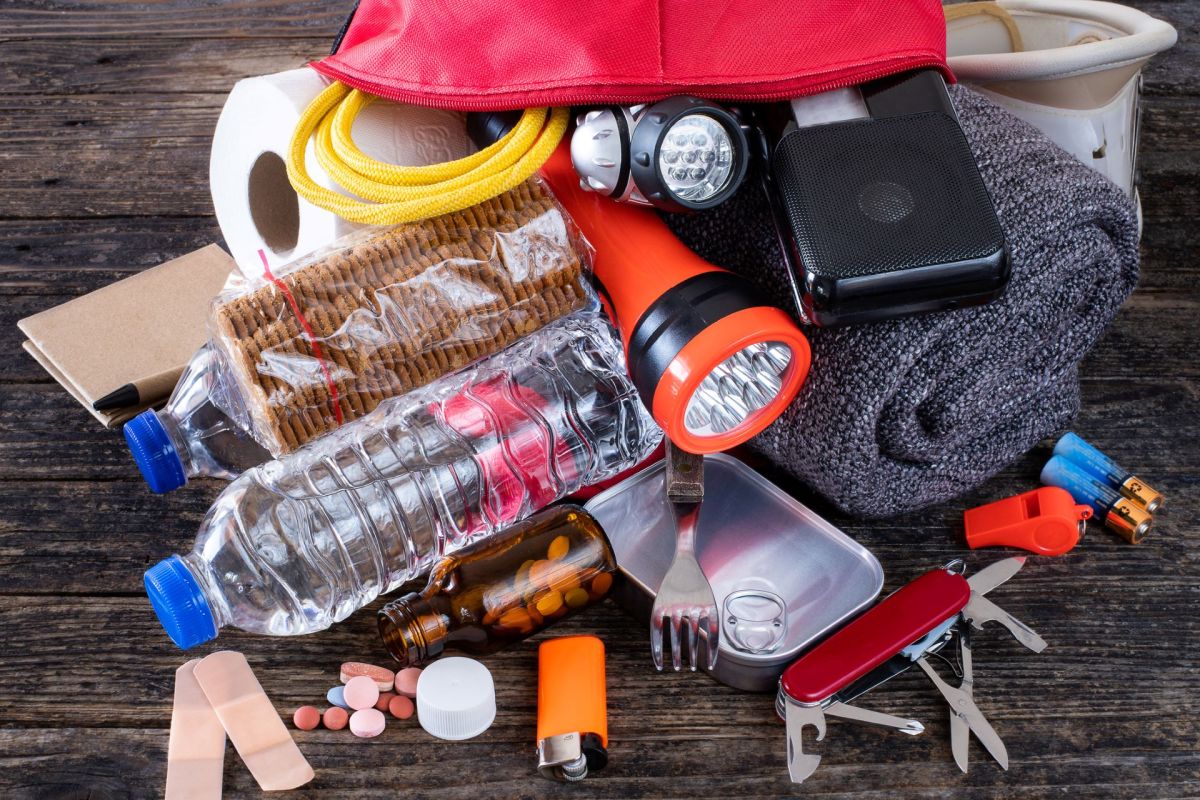
Experts recommend that households plan to last three days without electricity in case ice storms bring down trees and utility lines. Communities in states like Alabama are preparing as winter approaches.
Here's what to know
The Federal Emergency Management Agency — or FEMA — recently reiterated its recommendation that families stock enough supplies to cover everyone at home for at least three days. These supplies should include at least one gallon of drinking water per person per day, along with nonperishable food and a manual can opener.
Other useful items include flashlights, extra batteries, charged phones and power banks, a first-aid kit, and any needed prescription medications. Families with babies or pets should also set aside formula or pet food, plus cash in small bills.
People who depend on electrically powered medical equipment should line up backup power or a safe place to stay before severe weather hits. And even southern states like Alabama are being encouraged to prepare.
"Although Cullman County may see more chilly rain than snow most winters, it only takes one significant cold snap or ice storm to disrupt everyday routines," the local Cullman Tribune underscored in advance of the season.
Residential solar may lower electricity bills, and some households could save hundreds of dollars per month through $0-upfront solar leases, depending on their circumstances. EasyHome's free explorer tool helps estimate potential savings and find vetted local installers.
More background
Experts also warn that homeowners can face costly water damage from ruptured pipes when water freezes and expands inside them. Homeowners should locate the main water shutoff valve so they can respond if a pipe breaks. Insulation can help protect exposed plumbing, especially vulnerable pipes in attics, crawl spaces, garages, and along outside walls.
Residents should also keep curtains, bedding, furniture, and other combustible items at least 3 feet from any space heater in use and set the heater on a sturdy, level surface. You'll want to switch off space heaters before you leave the room or go to sleep and plug them straight into wall outlets instead of extension cords.
Crushed by your bills? See instant solar savings from vetted installers in just a few clicks With energy prices through the roof, there's never been a better time to go solar — and EasyHome can help you find the best prices from the best installers in your area. EasyHome takes the guesswork and headaches out of energy upgrades by showing you estimated savings from a network of vetted local partners. To get started, just enter your ZIP and share a few details about your home — seeing your estimate is really that easy. |

What can be done?
Portable generators can provide backup electricity, but they must run outside, at least 20 feet from windows, vents, and doors, to mitigate the risk of carbon monoxide poisoning, according to the Cullman Tribune.
Don't run them in a garage, basement, or enclosed porch. Charcoal grills and camp stoves should never be brought indoors, either.
EasyHome also offers battery-storage exploration options for households considering how to keep essential equipment powered through an outage. Pairing solar with batteries can help manage electricity costs while providing backup power when storms interrupt utility service.
Residents should check on neighbors who may need help obtaining food, water, or medications. According to the U.S. Department of Agriculture, refrigerated food typically remains safe for about four hours during an outage if the door is kept shut as much as possible. A half-full freezer can often keep food cold and safe for one day while a full freezer may be able to keep food safe for two.
Where can I learn more?
Households elsewhere have also gone days without power:
• In Maryland, an outage prompted calls for three days of water after 1.9 million faced conservation measures.
• In Massachusetts, a home backup setup ran 80 hours during a blizzard before adding propane generation.
• A North Carolina couple cut off for 80 hours after Hurricane Helene now recommends buying a generator.
• In South Carolina, a 75-hour outage wasn't enough to justify a $10,000 standby generator.

Get TCD's free newsletters for easy tips, smart advice, and a chance to earn $5,000 toward home upgrades. To see more stories like this one, change your Google preferences here.






