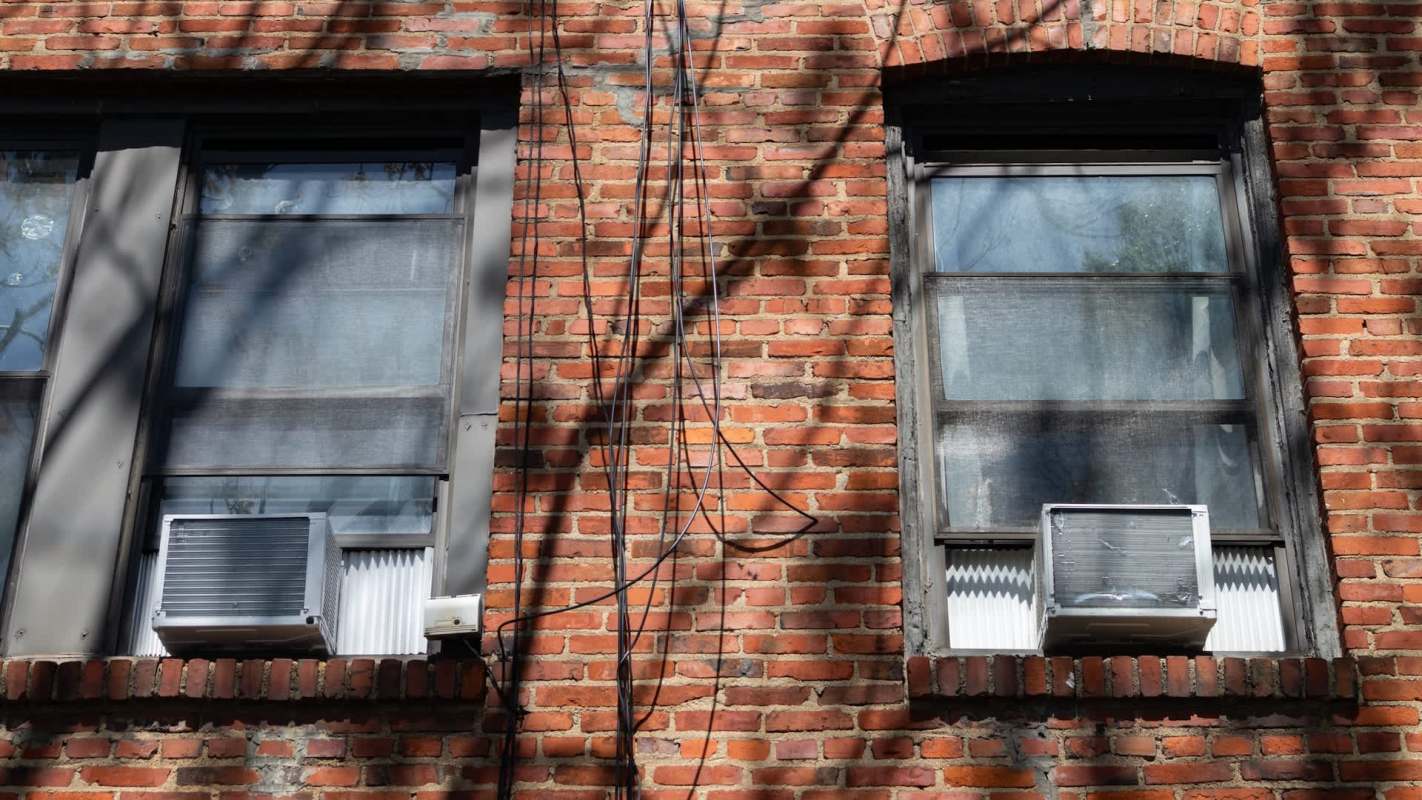
Despite having air conditioning at home, millions of Americans are having a hard time staying cool.
Here's what to know
According to an analysis from the Harvard Joint Center for Housing Studies, more than 13 million households said their homes were uncomfortably hot for at least a day in 2023, and many of those homes had cooling equipment.
Breakdowns stood out as the biggest culprit, with 42% of households facing excessive indoor heat because the cooling system had stopped working. Researchers also found that affordability shapes indoor comfort, with older equipment, poor insulation, and delayed maintenance also making it much harder to keep a home safely cool.
A separate 2025 analysis from the Federal Reserve Bank of Philadelphia found that close to 8 million households faced one or more cooling-related repairs in 2023, costing an estimated $2,200 per unit on average. At the same time, Federal Reserve data showed that 50% of U.S. adults could cover an emergency expense of under $2,000 using savings alone.
If you're trying to avoid that kind of financial shock, upgrading your heating and cooling system can be one of the best ways to save money on utility bills and protect yourself against rising energy prices.
Palmetto can help homeowners understand their options and slash their energy bills with new HVACs and heat pumps, and Palmetto's Comfort Plan network can help you find efficient heating and cooling solutions for your home and connect you with vetted installers.
More background
Harvard's analysis found renters reported uncomfortable indoor heat more often than homeowners in 2023 at 13.7% versus 8%, showing the impact is not evenly distributed. Renters with AC were also more likely to say their systems lacked enough cooling power.
Income also appears to shape who can keep up with replacements and upgrades. Harvard's analysis found that homeowners making over $172,000 spent almost triple what homeowners making under $37,500 did. Households with fewer financial resources are often left relying on aging units that may be less efficient, more expensive to run, and more likely to break down.
Save $10,000 on solar panels without even sharing your phone number Want to go solar but not sure who to trust? EnergySage has your back with free and transparent quotes from fully vetted providers in your area. To get started, just answer a few questions about your home — no phone number required. Within a day or two, EnergySage will email you the best options for your needs, and their expert advisers can help you compare quotes and pick a winner. Solar panels can save you more than $50k over their 25-year lifespan, and EnergySage can help you save as much as $10k on installation. Which begs the question — isn't that worth an email or two? |

Dangerous heat can increase the risk of illness and death, strain power grids, disrupt work, and make homes unsafe for children, older adults, and people with health conditions. When households cannot afford repairs or rising utility bills, extreme heat becomes a threat to public health, community safety, and family finances.
What can be done?
If your system is unreliable, exploring an efficient HVAC or heat pump could lower your monthly bills while making your home more resilient during heat waves. For homeowners who aren't ready to spend up front, Palmetto's Comfort Plan includes $0-down options that can lower your heating and cooling costs by up to 50% and include 12 years of free maintenance.
That kind of upgrade can be especially useful in homes that struggle with both summer heat and winter cold, since heat pumps can provide heating and cooling while using less energy than older systems. If your equipment is aging, replacing it before it fails could help you avoid an emergency repair bill during the hottest stretch of the year.
You can also drive utility costs down further by pairing solar panels with electric appliances such as efficient HVAC systems. EnergySage makes it easy to find the best solar panel system and installer for your home and budget, saving you up to $10,000.
Hotter summers come with the reality that household safety and comfort depend not just on having AC, but on whether it works well, cools effectively, and stays affordable to run.
Where can I learn more?
Extreme heat gets a lot more dangerous when homes and basic infrastructure can't keep people safe indoors. These articles explore the design flaws, health risks, and post-storm conditions that can leave households vulnerable even when air conditioning is expected to provide relief.
• Researchers say modern homes are failing to protect residents during extreme weather.
• During heat waves, knowing heat stroke symptoms can help families act before illness turns deadly.
• After catastrophic storms, communities face dangerous heat in the aftermath as outages compound recovery.
When homes, power grids, or emergency response systems fall short, extreme heat can quickly turn into a life-threatening problem for households.

Get TCD's free newsletters for easy tips, smart advice, and a chance to earn $5,000 toward home upgrades. To see more stories like this one, change your Google preferences here.