


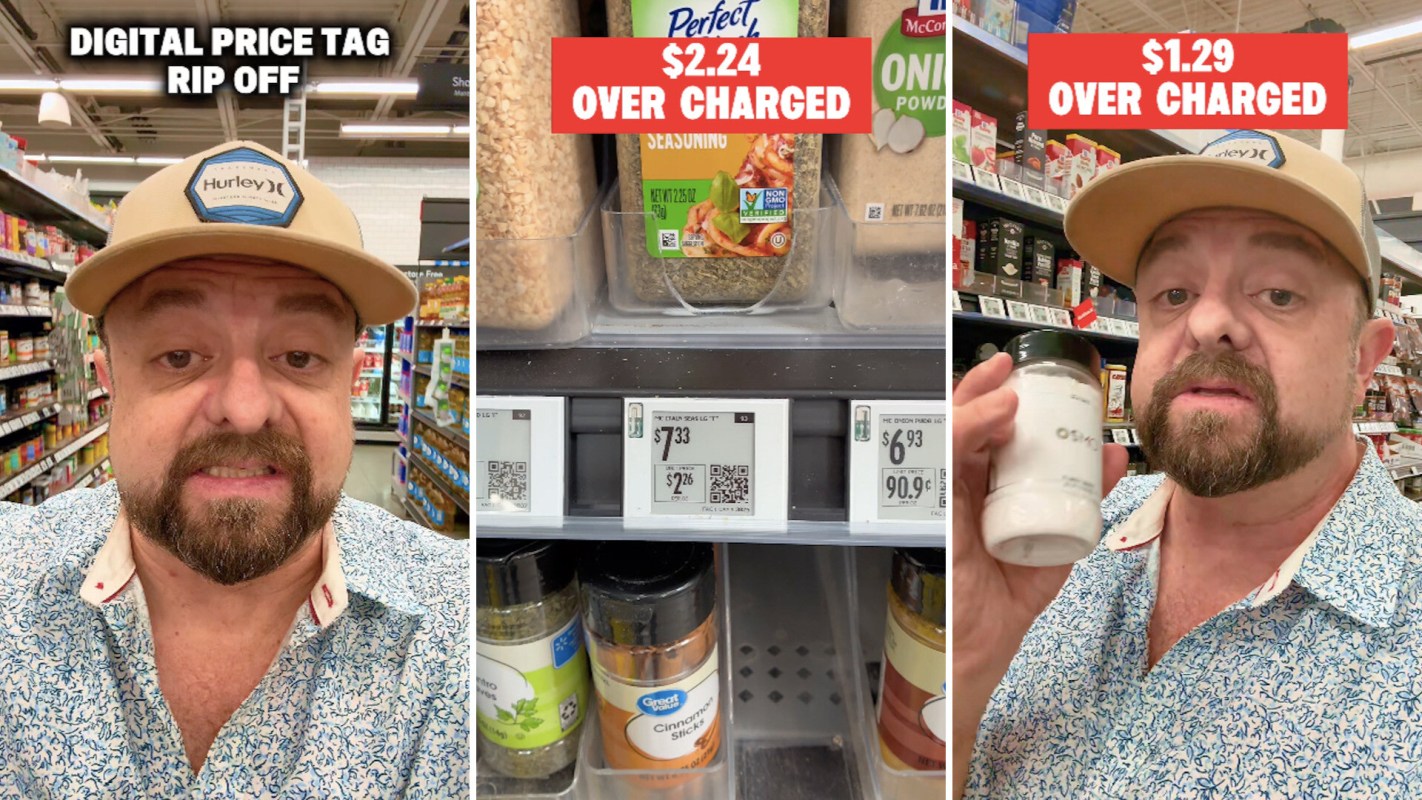
Digital shelf labels are supposed to make shopping easier. But one Walmart shopper says the numbers on multiple tags did not add up, raising concerns that the technology may be making pricing mistakes harder for everyday customers to spot.
Here's what to know
A TikTok video from Jimmy Wrigg (@james_wrigg) of the Coalition of Consumer Advocates
pointed to several electronic shelf labels at Walmart where the unit price on the tag didn't seem to match the full price listed for the item.
@james_wrigg Digital Price Tag Rip Off! #digitalpricetag #dynamicpricing #scam ♬ original sound - Jimmy Wrigg / C.O.C.A
For the sea salt, the discrepancy stood out on a 5.1-ounce container priced at $5.97. The same tag listed the cost as 91.8 cents per ounce, which led the creator to calculate the item should have cost about $4.68 instead — roughly $1.29 less.
A similar mismatch appeared on a 2.25-ounce container of McCormick Italian seasoning. Based on the per-ounce amount shown on the tag, Wrigg said the total should have been around $5.09, but the displayed shelf price was $2.24 higher.
According to Wrigg, a viewer had already pointed out the salt label, which suggested the problem may have lasted beyond a single pricing error.
TCD Picks » Quince Spotlight
💡These best-sellers from Quince deliver affordable, sustainable luxury for all




More background
Unit pricing is meant to help shoppers compare options quickly. When customers choose between brands or package sizes, the per-ounce or per-pound figure is often the simplest way to tell which option is the better value.
If that number is wrong — or if it conflicts with the listed total price — the tool designed to improve transparency can end up doing the opposite. Rather than helping people save money, it can create confusion in the aisle and make it easier to miss a higher price.
Digital shelf tags also let retailers update pricing much faster than traditional paper labels. While that can be convenient, it also puts more pressure on stores to make sure the information is accurate every time it changes.
Commenters focused not only on the math but also on how difficult it can be to challenge a discrepancy in the moment.
One TikTok user asked: "How do you fight this at the check stand?"
Another commenter wrote: "Call weights and measures and report the store too many violations, and they'll be fined heavily and be shut down."
What can be done?
Taking a photo of the shelf tag and checking the receipt before leaving the store can help if there is a dispute. If the posted unit price and total price do not line up, customer service or a store employee may be able to confirm which number is correct.
Retailers, meanwhile, are responsible for accuracy in digital pricing systems, especially when mistakes can shift the cost burden onto customers already facing high grocery bills.
"That math ain't mathin'," one person commented, while Wrigg said: "This is what digital pricing is gonna be about. We're gonna have big problems."
Where can I learn more?
As Walmart rolls out digital shelf labels in more stores, similar concerns have surfaced in other reports.
• At Walmart, malfunctioning digital price tags added to worries about checkout accuracy.
• Walmart workers said the digital price tag system has been a complete disaster.
• At Goodwill, shoppers called the method of price tagging confusing and wasteful.

Get TCD's free newsletters for easy tips, smart advice, and a chance to earn $5,000 toward home upgrades. To see more stories like this one, change your Google preferences here.






