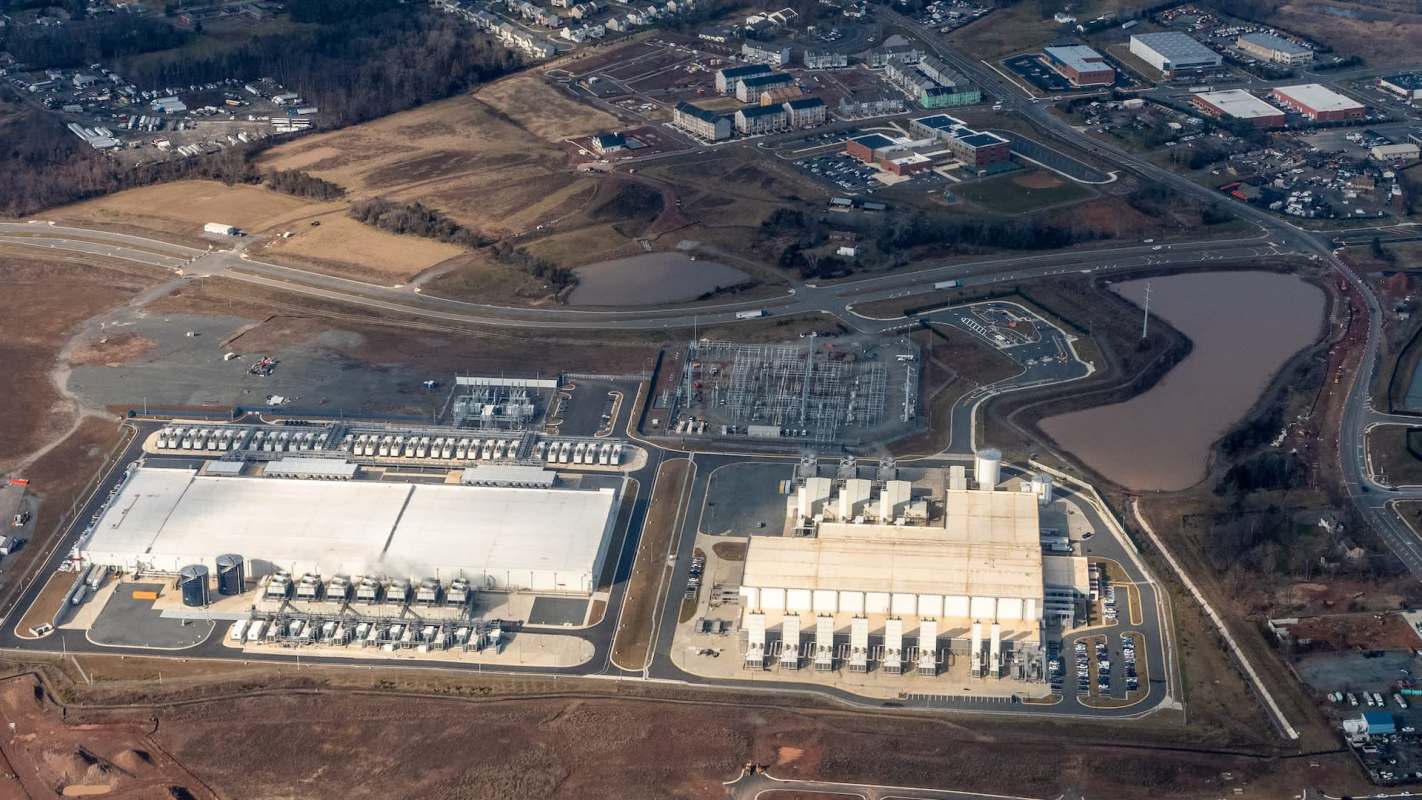
Virginia lawmakers are reopening one of the state's biggest economic fights: how much the booming data center industry should pay for the power, water, and public resources it uses.
The debate reaches well beyond the tech sector. If massive energy users don't cover enough of the costs of grid expansion and infrastructure, those expenses can ultimately fall on households and local communities through higher utility bills, taxes, and land-use trade-offs.
Here's what to know
Before the January 2027 legislative session, Virginia's revived Joint Subcommittee on Tax Policy is expected to weigh data center tax incentives and a proposed tax on the industry's electricity use, according to Cardinal News.
The immediate flashpoint is a budget compromise. Instead of ending a major sales and use tax exemption for qualifying data centers in 2027, eight years before it is currently set to expire, lawmakers chose to impose a 1.1-cent-per-kilowatt-hour tax on operators' energy use.
State estimates put the tax at up to $600 million per fiscal year, or about $1.2 billion over the two-year budget cycle. Any money collected above $600 million in a fiscal year would be refunded to operators, and the tax would end after two years unless lawmakers extend it.
Louise Lucas, the Senate president pro tempore and the subcommittee's vice chair, said public frustration has become a major driver of the issue.
TCD Picks » Quince Spotlight
💡These best-sellers from Quince deliver affordable, sustainable luxury for all




"Citizens everywhere are saying they feel like they're being steamrolled by their local governing bodies and the state, that they're being kept completely in the dark," she said.
More background
The tax exemption dates back to 2010 and helped Virginia earn its reputation as the "data center capital of the world." Companies typically qualify by investing $150 million and creating 50 jobs, though the thresholds are lower in economically distressed areas.
Backers of the incentive say it has produced jobs and tax revenue. Nicole Riley, the Data Center Coalition Virginia's government affairs director, called the hearing a "valuable and important reminder of the thousands of good paying jobs, billions in tax revenue, and responsible operations that are associated with Virginia's data center industry."
As the industry has expanded, however, concern has grown in communities facing rising energy demand, water use, air quality questions, noise, and questions about whether residents have enough influence as projects move beyond Northern Virginia into more rural parts of the commonwealth.
Serving those facilities can also require utilities to add grid capacity. If data center companies are not contributing enough to cover that demand, ordinary ratepayers could end up absorbing the impact through future utility costs.
What's being done?
For now, lawmakers are in study mode rather than making lasting changes. The subcommittee heard presentations on the current exemption, environmental rules related to data centers, and the process for collecting the consumption tax through monthly energy bills.
Members and local officials say they are trying to balance economic growth with public unease.
Delegate Terry Austin said, "We're looking for a path forward that satisfies some of the concerns, and that's going to be difficult because I think we've got to be very careful."
In Southside Virginia, local leaders say communities should keep the authority to decide whether data center projects make sense for them.
Pittsylvania County economic development director Matt Rowe said the centers "can be good" for regions that want them.
Danville City Manager Ken Larking said, "We agree that the [Stack Industries] project is a good project for our community."
Lucas also said, "I don't intend to back down on this issue, Mr. Chairman."

Get TCD's free newsletters for easy tips, smart advice, and a chance to earn $5,000 toward home upgrades. To see more stories like this one, change your Google preferences here.