


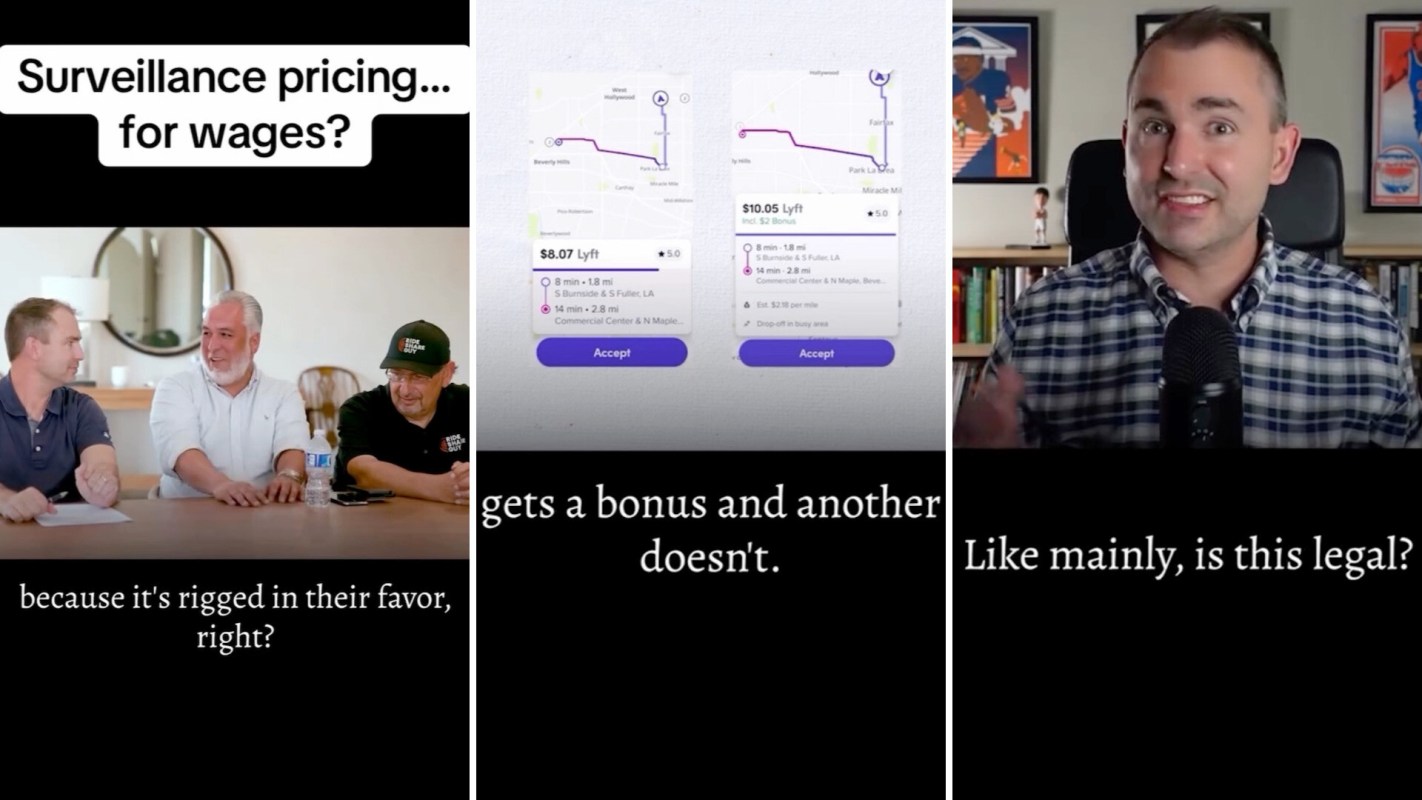
When seven Uber and Lyft drivers opened their apps side by side in Los Angeles, they did not all see the same pay offer for the same trip.
The finding is raising new questions about how much control gig companies have over workers' earnings — and how little visibility drivers have into the process.
Here's what to know
In a Sept. 13 Instagram post, More Perfect Union (@perfectunion) said: "We found Uber paying different drivers different amounts for the same ride. Lyft too."
More Perfect Union conducted the test with Sergio Avedian — identified in the video as a veteran driver and senior contributor at The Rideshare Guy — by bringing seven experienced drivers to a busy area of Los Angeles.
To make the comparison under nearly identical conditions, the drivers put their phones inches apart, turned on screen recording, refreshed their apps, and checked the ride offers that came in. The idea was to control for location and other visible variables, then see whether the same trip would still appear at different pay rates.
The video said Uber sent the same ride to multiple drivers 46 times, and in 63% of those instances, at least one driver was shown a lower offer for that trip. For Lyft, the video said, the spread was larger, with gaps after bonuses of about $3 to $4.
TCD Picks » Quince Spotlight
💡These best-sellers from Quince deliver affordable, sustainable luxury for all




Before upfront pricing replaced it, Avedian said, drivers were paid under a clearer "rate card" tied to time and distance, but "the transparency vanished." He argued the algorithms are set up "to charge the rider as much as it's possible and to pay the driver as little as possible."
More background
Many gig workers rely on rideshare driving as a major source of income. If one driver is quietly offered less for identical work, those small differences can add up quickly over a day or month.
More Perfect Union framed that concern as "algorithmic wage discrimination": using opaque systems to decide pay in ways workers cannot readily inspect or contest.
When asked how fares are calculated, Uber referred More Perfect Union to a blog post about reasons offers can differ, while Lyft did not respond.
Critics say that if platforms can tailor what they pay drivers, they may also be able to tailor what they charge riders and extend the same approach into other parts of the economy. The post said this type of technology is already being explored beyond rideshare.
Other Instagram users described similar frustrations. One commenter wrote: "Last year, an Uber driver asked me how much my trip was. ~$21. Of that amount, he was getting $9. Not even 50%?!"
What's being done?
Legal advocates are already calling for closer scrutiny. David Seligman, executive director of Towards Justice, said the nonprofit's 2022 lawsuit, filed on behalf of three rideshare drivers, argued that workers treated as independent contractors should still have "true economic independence" — including the power to set their own prices.
He said forced arbitration clauses do not prevent federal or state regulators from investigating whether those pay systems violate competition laws.
The video also cited the Federal Trade Commission's July investigation into surveillance pricing as a sign that regulators are examining hidden algorithmic pricing more closely.
Without transparency, drivers cannot easily know whether they are being paid fairly, compare offers accurately, or challenge practices that may be cutting into their earnings. "If these drivers are, as you say, independent, then they need to have true economic independence," Seligman said.

Get TCD's free newsletters for easy tips, smart advice, and a chance to earn $5,000 toward home upgrades. To see more stories like this one, change your Google preferences here.






