


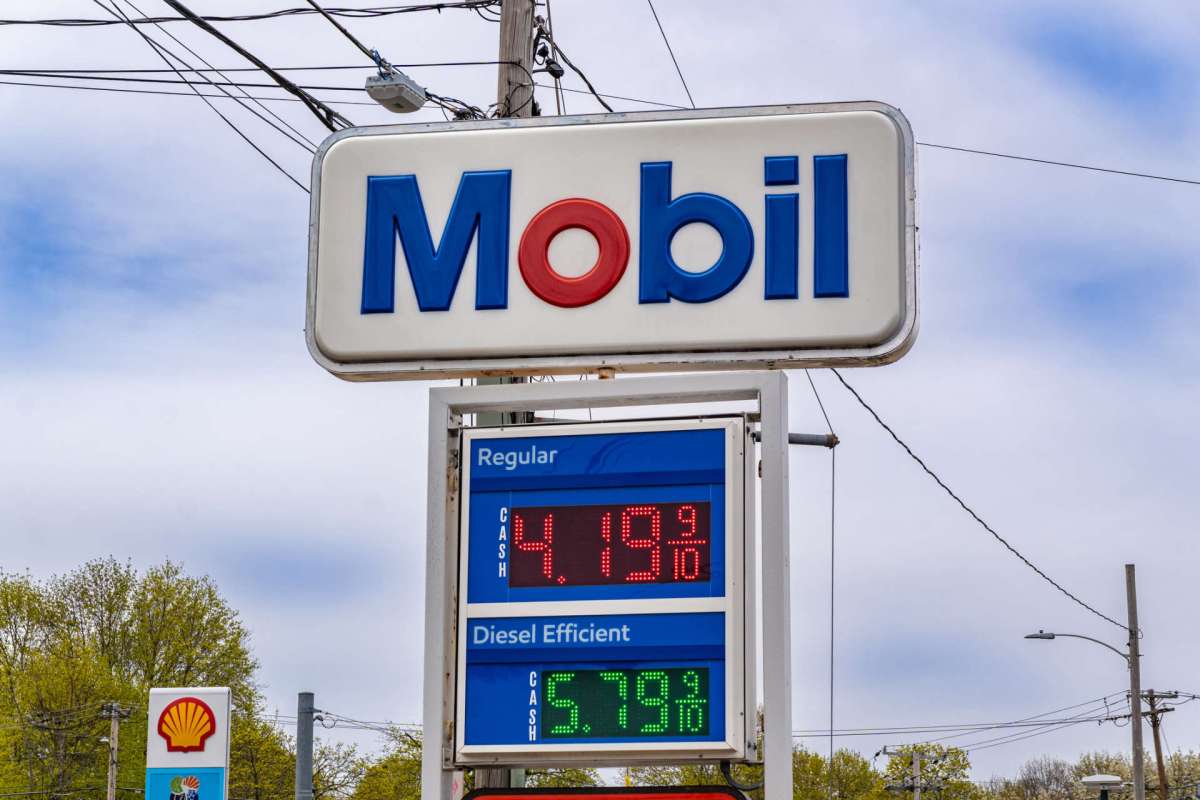
Gas prices in the United States are climbing again, with the national average for regular reaching $4.27 a gallon Thursday. The increase came as oil markets reacted to the widening military conflict involving Iran.
Here's what to know
As USA Today reported, Trump said Wednesday he hoped that "right after the election, oil prices are going to be tumbling downward." The national average was $4.14 on Sept. 3 and $3.19 on Sept. 10, 2025, according to AAA.
The jump in gas prices came after joint U.S. and Israeli military action against Iran. On Thursday, Brent crude climbed to roughly $105 per barrel, while West Texas Intermediate traded near $99 per barrel.
"The two-day rise in the national average price of gasoline, 17.6c/gal, is the largest two-day rise since April," GasBuddy head of petroleum analysis Patrick De Haan (@GasBuddyGuy) wrote in a post on X.
In a separate post, De Haan warned that diesel could reach a record national average.
"BREAKING: Diesel history is about to be made," he said Wednesday. "$6/gal nationally — never seen before, days away."
TCD Picks » Quince Spotlight
💡These best-sellers from Quince deliver affordable, sustainable luxury for all




Trump said any drop in prices may take a while, per USA Today.
"I think it's going to take a little bit longer than the midterm," he said, referring to the Nov. 3 nationwide election date.
More background
State-by-state price differences remain significant. USA Today showed Thursday averages ranged from $3.56 in Indiana to $5.89 in California. The Energy Information Administration says taxes, distance from supply, disruptions, competition among retailers, and environmental programs can all play a role.
It may not be possible for gas prices to come down unless the military conflict is resolved and shipping activity ramps back up in the Strait of Hormuz.
If refineries, tanker traffic, or fuel distribution are disrupted, households can feel the effects through higher commuting costs, more expensive deliveries, and rising prices for goods transported by truck.
The effects of the fossil fuel industry also extend far beyond what drivers pay at the pump. Oil and gas extraction, refining, and burning worsen extreme weather disasters that destroy homes, livelihoods, and local economies.
They also contribute to air and water pollution linked to asthma, heart disease, cancer, and premature death while keeping household energy costs high even as corporate profits soar. Industry lobbying has further slowed cleaner, cheaper energy solutions.
What's being done?
USA Today noted Trump has pressured gas retailers to lower pump prices, accusing some of price gouging when oil prices had fallen.
It also said Trump has been pushing Congress to pass legislation to allow sales of higher-ethanol gasoline. In a revised 2026 budget request sent to Congress on June 24, the White House asked for a new law to codify the "permanent, year-round sale" of E15 gas, a blend containing 15% ethanol.
Where can I learn more?
Gas price spikes are one of the ways people feel the country's reliance on fossil fuels. But the fallout doesn't stop at the pump as turmoil in energy markets can also bring climate damage, health risks, and higher costs across the board.
• New analyses suggest LNG's climate footprint may exceed that of coal, complicating fuel switches.
• Across oil and gas communities, health burdens keep mounting, including asthma and premature deaths.
• Old coal plants are costing American ratepayers hundreds of millions of dollars.
Those broader costs can be easy to miss when the focus is on the price of gas. Looking at the bigger energy picture helps explain why any relief at the pump may tell only part of the story for household budgets.

Get TCD's free newsletters for easy tips, smart advice, and a chance to earn $5,000 toward home upgrades. To see more stories like this one, change your Google preferences here.






