


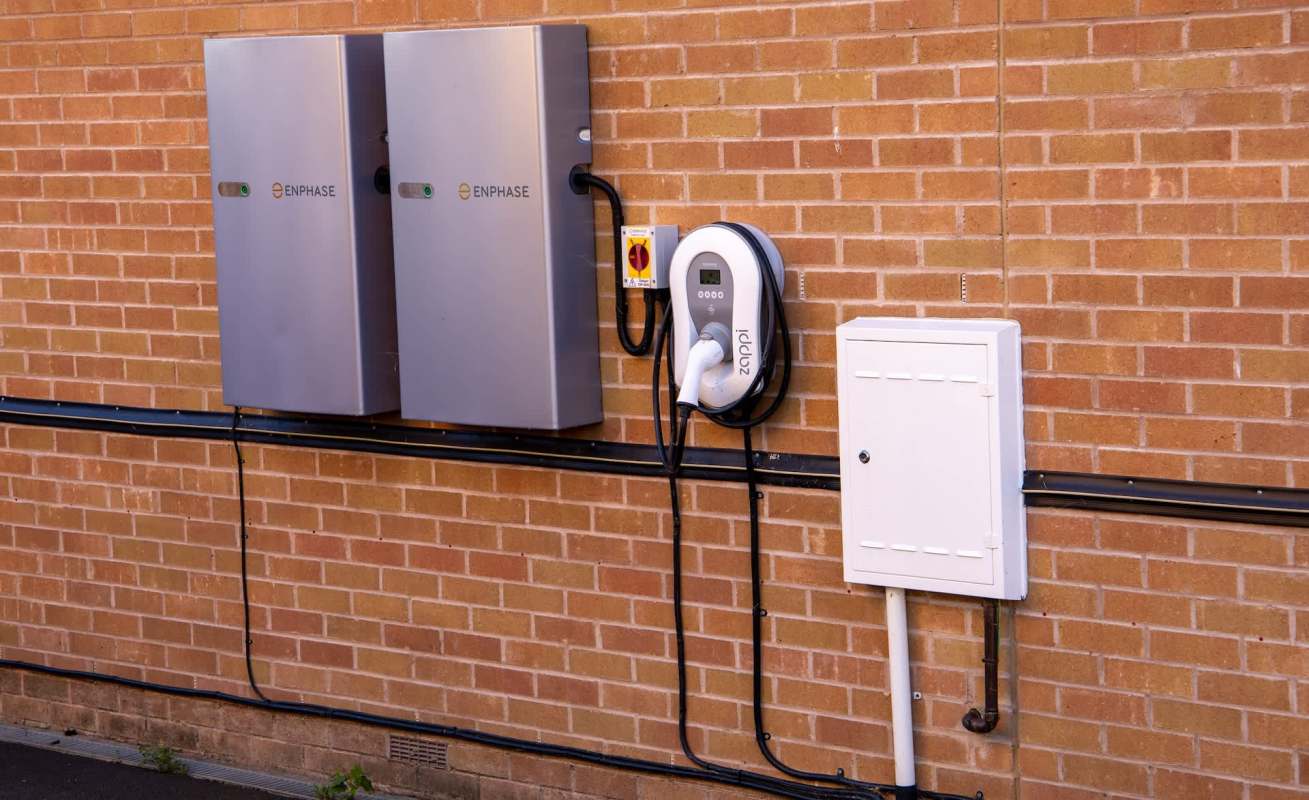
An executive order from the White House intended to protect the U.S. power grid from foreign cyber risks has led to uncertainty in the domestic energy storage market.
Here's what to know
In the Aug. 26 order, the administration declared a national security emergency based on concerns that foreign-made grid technology could be used to disrupt the U.S. power system. According to Canary Media, it banned the "acquisition, importation, transfer, or installation" of foreign-produced bulk-power system equipment.
One of the 24 "foreign entities" encompassed by the executive order is China, which now produces about 60% of the lithium-ion batteries used in U.S. grid installations.
It is not yet clear how far the restrictions go, however, raising questions for U.S. companies that buy components from outside the country.
The order reaches a wide range of grid hardware, communications tools, and control software, and it may be enforced retroactively. It also allows federal agencies to require utilities and project owners to remove or replace equipment already in use.
Keith Martin, an attorney and energy expert with Norton Rose Fulbright, said the central unresolved issue is whether the order is limited to software and control systems that could enable remote tampering or whether it also extends to "dumb" battery cells and modules.
TCD Picks » Quince Spotlight
💡These best-sellers from Quince deliver affordable, sustainable luxury for all




More background
Grid batteries have become a key part of building a cleaner, more affordable, and more resilient power system. They store electricity when production is high and release it when demand rises, helping reduce stress on the grid while limiting the need for costly, more polluting backup power.
Delays to battery projects would not only affect developers and utilities. Slower storage growth could make it harder to add renewable energy, manage peak demand, and protect customers from price spikes that eventually show up on monthly electric bills.
A report from the Solar Energy Industries Association and Benchmark Mineral Intelligence found that battery deployments reached a record in the second quarter of 2026, with 20.2 gigawatt-hours installed — about 10% of the country's total energy storage capacity.
Ravi Manghani, senior director of strategic sourcing at Anza Renewables, told Canary Media the order has forced battery project developers to re-examine their supply chains, and that "things have slowed down a bit, particularly on the energy storage side."
What's being done?
More precise guidance is pending. The Department of Energy has 120 days from the order's issuance — until December 24 — to publish rules defining what is covered, leaving developers, utilities, and lenders to make major financial decisions without clear direction.
Martin said the uncertainty is likely to make financing battery storage projects harder. He gave developers blunt advice: "If you haven't signed a contract to purchase Chinese equipment, don't do it."
A note by research firm BloombergNEF dated August 28 said battery projects "face near-term delays or cancellations as developers await guidance, reconsider existing contracts, or shift suppliers."
"The industry can't just stop while we're waiting for information to come out of the DOE," Manghani said.
Where can I learn more?
Delays to battery deployment matter beyond manufacturers, especially as regulators and utilities juggle reliability, affordability, and cleaner energy, which is why the administration's pending guidance could shape far more than battery contracts.
• Across the U.S., giant batteries are transforming how solar and wind power reach the grid.
• A government proposal could raise electricity bills while deepening long-running fights over grid access.
• Federal Energy Regulatory Commission officials moved to speed grid approvals for solar, storage, and transmission.
• Reliability disputes keep intensifying as green power grid debates shape storage and energy policy.

Get TCD's free newsletters for easy tips, smart advice, and a chance to earn $5,000 toward home upgrades. To see more stories like this one, change your Google preferences here.






