


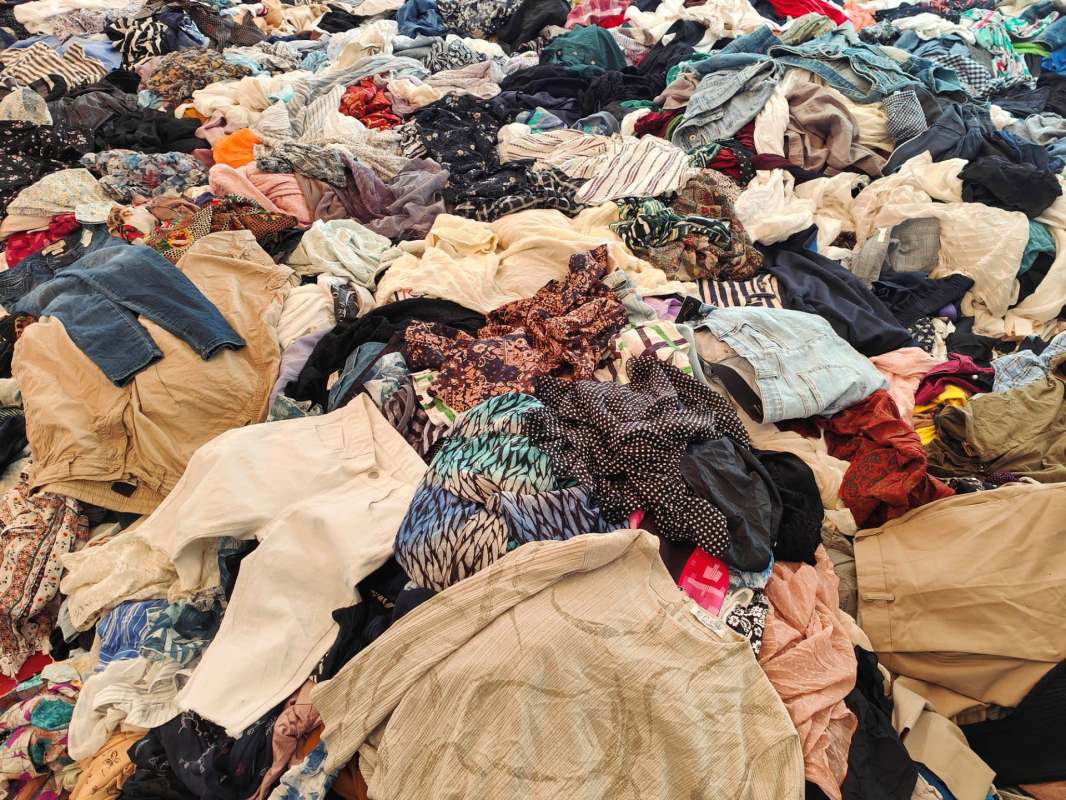
A cross-border waste investigation in Europe has focused on thousands of tons of textiles sent from Italy to Turkey in what authorities say was an illegal scheme.
The case is bringing fresh scrutiny to a fashion system already flooded with cheap garments that are hard to recycle. It is also intensifying pressure on European leaders to crack down more aggressively on fast fashion.
What happened?
According to authorities, those involved allegedly sent textile waste from Italy to Turkey under incorrect labels, helping them avoid tighter and more expensive disposal requirements for materials with a high synthetic-fiber content, Euronews reported.
The investigation was led by the European Anti-Fraud Office — or OLAF — in cooperation with Italy's Carabinieri and Turkish customs authorities.
A later joint inspection in Turkey turned up another 2,315 tons (2,100 tonnes) of material in storage, along with a separate stockpile that had arrived independently. Euronews said the waste was being stored in a warehouse connected to a recycling site that allegedly failed to comply with Turkish environmental laws.
Earlier in the investigation, inspectors had identified about 4,630 tons (4,200 tonnes) of textile waste that had been shipped illegally, much of it with a high acrylic-fiber content.
TCD Picks » Quince Spotlight
💡These best-sellers from Quince deliver affordable, sustainable luxury for all




OLAF said another 847 tons (768 tonnes) linked to the same operation were found at the Turkish port of Mersin.
In Italy, the Carabinieri searched a business site in Brescia, seizing company facilities, vehicles said to have been used in the operation, and roughly €12 million ($13,708,380) in financial assets.
Why is this concerning?
The case underscores the brokenness of the fast fashion industry.
Cheap clothing is often made from synthetic fibers and blended fabrics that are difficult to recycle, can linger for up to two centuries, and may shed pollutants over time, according to Euronews. The industry is also linked to water contamination, air pollution, and exploitative labor practices.
Ultra-cheap clothing may seem like a bargain, but poorly made garments often wear out quickly, lose their shape, or fall apart after repeated washing, causing people to replace them again and again.
Meanwhile, textile waste is already putting Europe under strain. In 2019, the continent generated about 13.9 million tons (12.6 million tonnes) of it, with, as Euronews noted, just about 20% set aside for reuse or recycling. Against that backdrop, France and four other EU countries are pressing for even stricter oversight of ultra-fast-fashion imports.
What are people saying?
"Schemes such as this one that offer ways to illegally avoid the cost of recycling certain kinds of textile waste or complying with environmental rules are an opportunity for organized networks to make illegal gains," OLAF director general Petr Klement said, according to Euronews.
The five governments pressing the European Commission for stronger action urged officials to "strengthen oversight and control of online platforms, reinforce market surveillance, and close enforcement gaps under the Circular Economy Act and the Market Surveillance Regulation."
French ecological transition minister Monique Barbut added, "We are relatively ahead in this area and we are pleased to be able to share our experience and how Europe can move forward together on this topic as well."

Get TCD's free newsletters for easy tips, smart advice, and a chance to earn $5,000 toward home upgrades. To see more stories like this one, change your Google preferences here.






