


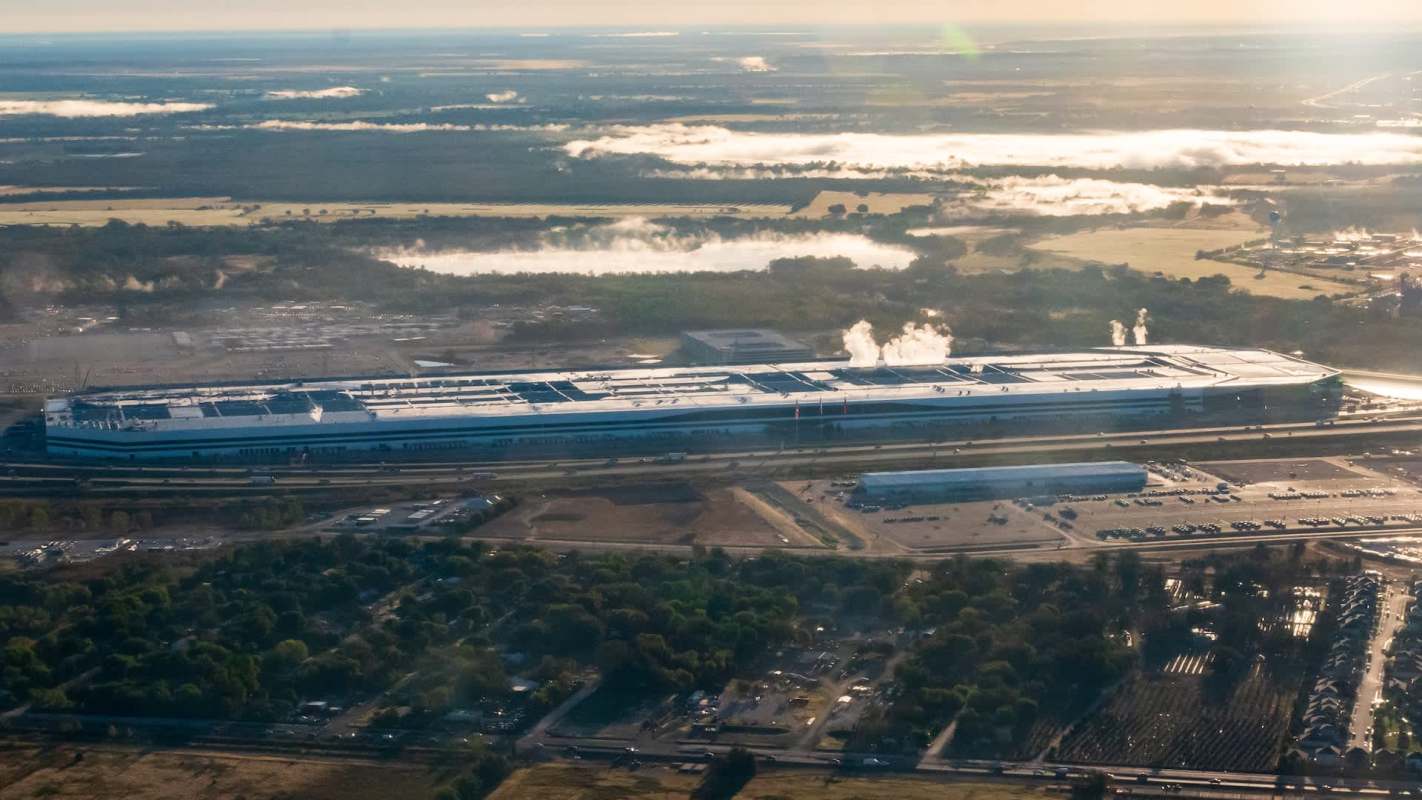
Tesla's Gigafactory in Austin, Texas, has received renewed scrutiny regarding its significant water use amid ongoing drought conditions in the region.
The facility, located just outside Austin city limits, consumed an annual 556 million gallons of treated water from 2023 to 2025, reflecting a 68% rise over two years, according to Austin Current. This places Tesla as the third-largest water customer for Austin Water.
Compounding the issue is Elon Musk's plan to build a new semiconductor plant in the area, which is expected to put even more pressure on Austin's water resources.
Environmental attorney Paul DiFiore expressed his concerns, stating, "It's alarming how quickly their water use has grown compared to the city."
The city of Austin reportedly manages up to 325,000 acre-feet of municipal water, with actual usage at about 140,000-acre feet, or approximately 45.6 billion gallons annually. Based on this average, Tesla currently consumes about 1.2% of the city's water on an annual basis.
That figure may not be as large as 556 million gallons might make one expect. For a small community, it may be a much bigger percentage, but for a major metropolitan area like Austin, it's not exactly single-handedly draining the local water supply either.
TCD Picks » Quince Spotlight
💡These best-sellers from Quince deliver affordable, sustainable luxury for all




By comparison, a typical office building of 300 employees uses about 1.5 million gallons of water per year. Tesla employs about 22,000 people at its Giga Texas facility, which would extrapolate to about 110 million of the 556 million gallons for the typical business operations.
The surge in water usage by a singular company over a short period of time is still concerning, however, considering that the U.S. Drought Monitor shows that most of Texas, including Austin, is experiencing severe, if not extreme, drought conditions.
Austin has over a million residents, too, so even though 1.2% sounds like a drop in the bucket, it's still a significant per-capita use of water when the water supply is strained.
A better business comparison may be that golf courses in Texas reportedly use 350,000 gallons of water per day — or 127 million gallons per year. So the Giga Texas facility is using about four to five golf courses' worth of water per year. Tesla has had a polarizing last couple of years, but most would at least agree that the company's biggest U.S. facility provides a more useful, nationwide benefit than the golf courses would.
|
Which of these savings plans for rooftop solar panels would be most appealing for you?
Click your choice to see results and earn rewards to spend on home upgrades. |
 Save $1,000 this year 💸
 Water usage is one of the more damaging factors that golf courses carry, though, so the overall picture is a complicated one. Keisuke Ikehata, a water treatment expert interviewed by the Current, said the total Tesla uses is "certainly a lot of water" but that a lot of water is needed for the types of things Tesla builds and is planning to build, adding that "we really need to be very careful in terms of planning how the industry grows and how our community grows."
"I'm very much supportive of economic growth. I'm an engineer. I love development," he said. "But I want responsible development. … Responsible water use is very important and has to be carefully evaluated. Stakeholders should be involved, and I'd like to see transparency."
This marked increase in Tesla's water consumption raises questions about the fairness of water conservation measures being applied uniformly. Environmental Attorney and member of Austin's Water Forward Task Force, Sarah Faust, pointed out this possibility to the Current, as Austin residents have been placed under strict water conservation measures.
"I hope [Austin Water] is utilizing [its tools] to the greatest degree to ensure that as much recycling and reuse is done and that appropriate limits are put on water used for commercial purposes," Faust said.
Austin Water, which only provides part of Giga Texas' water, is required to provide water to any development with a permit in its service area, but the utility does have the ability to limit water in emergency situations, per the city's Drought Contingency Plan.
Still, local officials have struggled to balance the appeal of economic growth within the city with the limitations of natural resources amid vulnerable environmental conditions.
"Water is the limiting factor of our city," noted Austin Council Member Ryan Alter. "We want those jobs. We want the economic activity that comes along with that. But we also have to balance the environmental impacts."
The potential water demands of Musk's latest project proposal could multiply the region's existing needs, as water required for semiconductor manufacturing is expected to double by 2035, according to an IDTechEX report.
Collaborative efforts between Tesla and municipal officials will be crucial in managing water resources responsibly. Clear communication and innovative strategies will be necessary to ensure sustainable growth in the region while preserving vital water resources.

Get TCD's free newsletters for easy tips, smart advice, and a chance to earn $5,000 toward home upgrades. To see more stories like this one, change your Google preferences here.






