


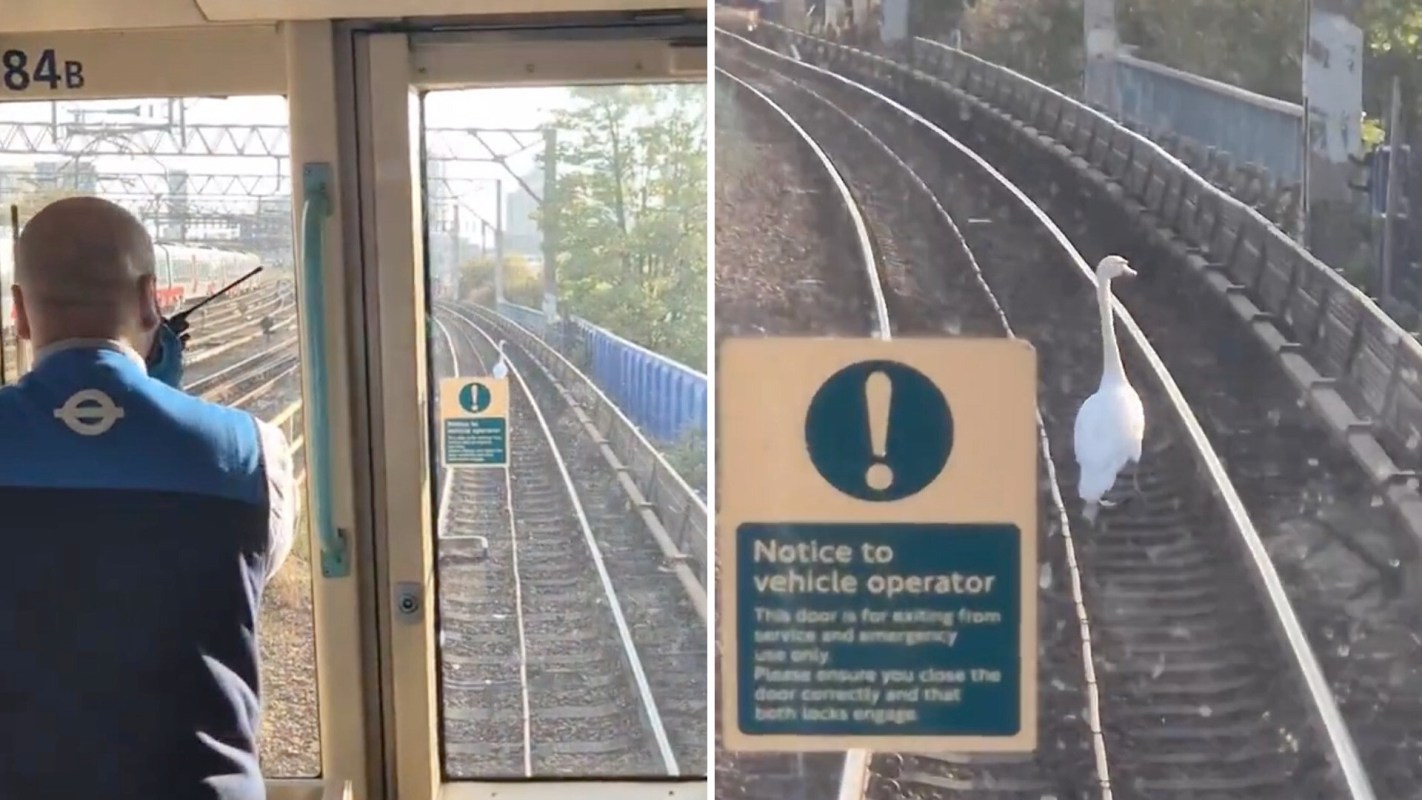
A swan on the tracks at Pudding Mill Lane disrupted part of London's Docklands Light Railway on Aug. 24, interrupting the capital's morning travel.
The line was suspended for more than an hour during rush hour, leaving commuters facing workday delays because of the bird.
Here's what to know
From about 7 a.m. to 9 a.m., according to International Business Times, DLR services between Stratford and Bow Church / Canary Wharf were affected. Staff waited for a trained wildlife rescue team to remove the swan, and passengers were told to disembark as the shutdown continued.
A video from the scene was shared on X by user Will Partridge, who said, "Swan on the tracks."
Helen Gregory, who heads DLR operations at Transport for London, said: "We apologise for any disruption to customer journeys earlier this morning due to a swan on the track near Bow Church station."
According to TfL, the DLR is the U.K.'s busiest light railway.
TCD Picks » Quince Spotlight
💡These best-sellers from Quince deliver affordable, sustainable luxury for all




More background
This was not an isolated incident. The Mildmay line was halted for more than an hour during another swan episode, and staff later discovered the bird was injured.
Rail lines, stations, and other dense urban corridors can create dangerous crossing points for wildlife, especially in cities where development leaves animals with fewer uninterrupted routes. The BBC has reported that human pressure on habitats can raise the chances of wildlife conflict.
Mute swans are native to the U.K., and the Royal Society for the Protection of Birds said their population has grown "perhaps due to better protection of the species."
The group added: "The problem of lead poisoning on lowland rivers has also largely been solved by a ban on the sale of lead fishing weights."
The U.K. has 6,500 breeding pairs of mute swans and 50,500 wintering mute swans. Many stay in the country year-round, while others migrate from elsewhere in Europe during the winter.
What's being done?
Rail workers are getting more training to handle situations like this safely. In 2024, Network Rail partnered with the Swan Sanctuary in Shepperton to teach mobile operations managers and front-line responders how to deal with swans on the tracks.
The training covered danger signs, aggressive swans, and how to safely secure birds in a swan wrap. Rail staff are not supposed to remove wildlife on their own without the proper expertise.
Swans are only one part of the problem. Network Rail said it logged 1,432 animal-related incidents in 2024, involving not only swans but also deer, donkeys, hedgehogs, and mice.
Gregory said, "Services in the area were suspended while a trained swan rescue team attended the scene, safely rescued the swan and returned it to a suitable local habitat."
Where can I learn more?
The DLR shutdown is a reminder that wildlife can upend daily routines without warning, whether that happens on a commuter rail line or at a busy outdoor attraction. These incidents play out in very different places, but each one shows what can happen when people and animals end up sharing the same crowded space.
• In Yellowstone National Park, a charging bison and clueless tourists created a dangerous roadside standoff.
• In Everglades National Park, tourists had a terrifying encounter with a deadly animal near the water.
• On a crowded nature outing, a tourist group faced instant consequences after cornering a wild animal.
They underscore why trained responses and a respectful distance matter when animals turn up in shared spaces. The same lesson sits at the center of London's swan-related rail delays.

Get TCD's free newsletters for easy tips, smart advice, and a chance to earn $5,000 toward home upgrades. To see more stories like this one, change your Google preferences here.






