


America's kitchens have become a battleground between the Department of Justice and seven U.S. states, which have filed suit over a Department of Energy regulation regarding stoves and ovens, Reuters reported.
What is happening with energy standards for stoves?
Last month, a federal court of appeals panel in New Orleans heard arguments from U.S. Justice Department lawyers regarding energy efficiency requirements for stoves and ovens. The relatively new rules were put in place during the Biden administration, and the Trump administration would like to roll them back, as it has done with regulations regarding dishwashers, faucets, microwaves, and portable air conditioners.
While the new rules are more strict than older versions, they represent a compromise between industry interests and a proposed set of rules that would have made it nearly impossible to sell gas stoves.
Banning gas stoves would be good for the environment, for American households' budgets, and for human health. But given their widespread popularity, it isn't surprising that they've been kept in play. What is surprising is that even this compromise is apparently not good enough for the current administration.
TCD Picks » Induction Cooking
💡Discover the induction option that’s just right for your needs and your home



Why is this lawsuit important?
The issue here for the government agencies involved is less about gas stoves and more about the ability of the Department of Energy to make "direct final rules."
In 2007, Congress authorized the department to make these rules in some cases, using a quicker process than the usual rulemaking procedure, which requires multiple stages of notice and feedback prior to the finalization of the rule. The current administration is challenging this power.
Timothy Ballo, an attorney with Earthjustice, told Reuters that the ability to make direct final rules allows the administration "to say 'If you don't like what we're doing, you can go pound sand.'" It is a power that participants on both sides of the aisle can see a use for in various circumstances, and one that the department would like to keep.
How energy efficiency rules help with America's bills
Although efficiency rules in this case are mostly being used as a way to test the limits of the Department of Energy's power, having the most efficient kitchen appliances can make an incredible difference to your quality of life and your household budget.
Save $10,000 on solar panels without even sharing your phone number Want to go solar but not sure who to trust? EnergySage has your back with free and transparent quotes from fully vetted providers in your area. To get started, just answer a few questions about your home — no phone number required. Within a day or two, EnergySage will email you the best options for your needs, and their expert advisers can help you compare quotes and pick a winner. Solar panels can save you more than $50k over their 25-year lifespan, and EnergySage can help you save as much as $10k on installation. Which begs the question — isn't that worth an email or two? |

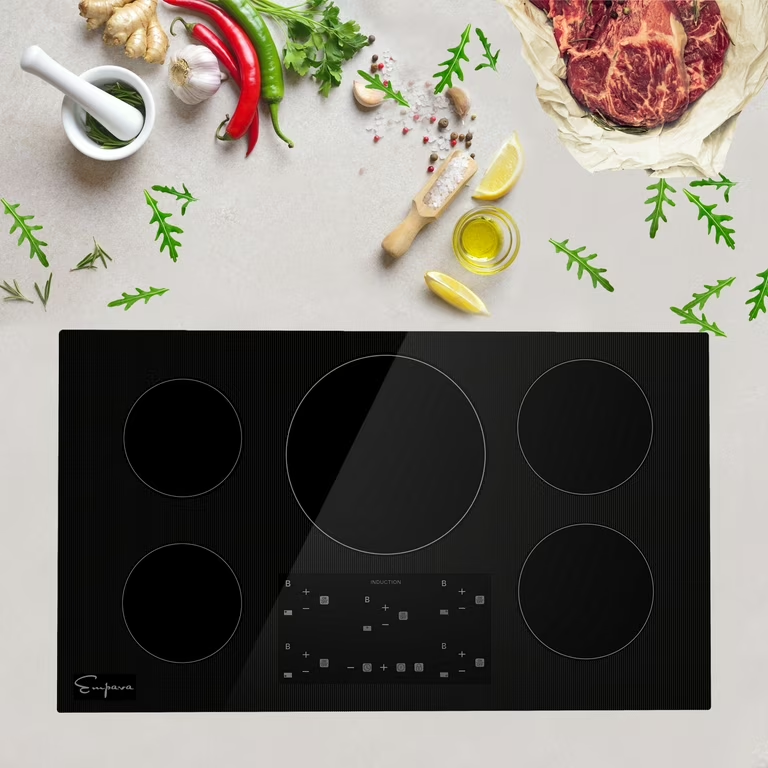
Induction stoves, which run on electricity and use exciting new technology to maximize efficiency and safety, are an easy and affordable way to avoid some of the worst problems with gas stoves. They cook faster than any other type of stove, and they're more cost-effective, too.
Under current incentive programs, you can get up to $840 off the cost of an induction range. This deal won't last forever, so acting now can save you hundreds of dollars.
If you can't afford a kitchen renovation even with these incentives, you can start small with a plug-in induction burner for your countertop. They start as inexpensive as $50.
|
What household appliance do you want to electrify most? Click your choice to see results and speak your mind. |
 Oven 🍲
Join our free newsletter for good news and useful tips, and don't miss this cool list of easy ways to help yourself while helping the planet.






