


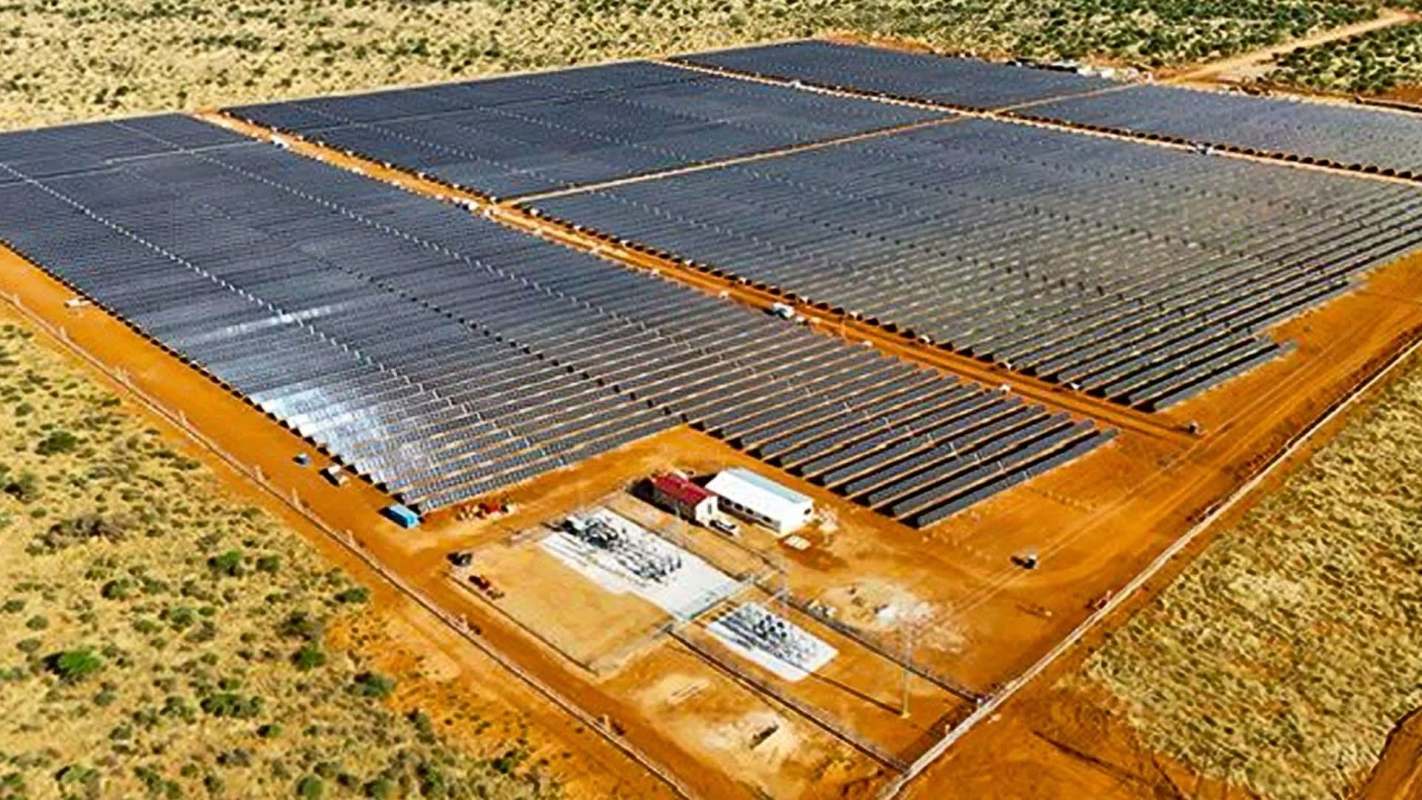
A new solar plant in Namibia is playing a dual role by powering thousands of homes while feeding electricity into a regional market that can move energy across southern Africa.
Here's what to know
In Namibia's Kunene region, the 19.3-megawatt Gerus solar PV plant has entered commercial operation, pv magazine reported. The facility is just the second purpose-built merchant solar project in Africa to sell electricity through the Southern African Power Pool, or SAPP.
Gerus is owned by U.K.-headquartered developer Solarcentury Africa. The company expects the site to produce 50.8 gigawatt-hours of electricity each year, enough to supply more than 14,000 homes in Namibia, and said that Solarcentury Trading, a participant in the SAPP, will market that power.
Solarcentury said, according to pv magazine, that the roughly $20 million spent on Gerus represents the largest U.K.-backed investment in Namibia's clean energy sector. The funding came from BB Energy, Solarcentury Africa's parent company.
Gerus comes after Solarcentury Africa's 25 MW Mailo solar plant in Zambia, which pv magazine said was inaugurated in July 2025. The company also said a third purpose-built merchant project is moving forward through a 34 MW second-phase expansion at the Mailo site.
For everyday households, more solar on the grid can help support a steadier electricity supply while reducing reliance on expensive planet-warming fuels. And for homeowners, going solar is one of the best ways to save money on home energy. If you're interested, you can check out EnergySage to get free solar installation estimates and compare quotes.
More background
Gerus is set up as a merchant project, which makes it different from plants built entirely around a fixed long-term power deal. Instead, according to pv magazine, it can trade electricity into the Southern African regional market that links utilities and large customers.
That kind of setup could be especially important in a region where electricity shortages and uneven supply remain major challenges. More flexible solar generation can help direct power where it is needed most while also reducing the pollution tied to conventional energy sources.
Save $10,000 on solar panels without even sharing your phone number Want to go solar but not sure who to trust? EnergySage has your back with free and transparent quotes from fully vetted providers that can help you save as much as $10k on installation. To get started, just answer a few questions about your home — no phone number required. Within a day or two, EnergySage will email you the best local options for your needs, and their expert advisers can help you compare quotes and pick a winner. |

AFSIA's project database, as cited by pv magazine, shows that Namibia already has 1.49 GW of operating solar capacity, mostly in the commercial and industrial segment. It also lists another 33 MW under construction, suggesting the country's solar footprint is expanding.
What's being done?
Looking ahead, Solarcentury Africa said it plans to develop, own, and operate more than 320 MW of fully merchant solar capacity by 2027, pv magazine reported.
For homeowners in the U.S., free planning tools can make solar much easier to navigate. With EnergySage's help, the average person can save up to $10,000 on solar purchases and installations. EnergySage's solar map shows the average cost of a home solar panel system on a state-by-state level, as well as details on solar panel incentives for each state, and together these resources can help readers get the best price for rooftop solar panels and access available incentives.
Adding battery storage to a solar setup is one of the best ways to protect your home during outages, save money on energy, and go off-grid. It also lets households hold onto extra power for use after sunset or when electricity prices spike. Readers can explore EnergySage for information about home battery storage options, including competitive installation estimates.
More From EnergySage
💡Go deep on the latest news and trends shaping the residential solar landscape




As Solarcentury Africa put it, merchant solar projects "play a critical role in addressing regional energy deficits while accelerating the transition to sustainable, market‑based power solutions."

Get TCD's free newsletters for easy tips, smart advice, and a chance to earn $5,000 toward home upgrades. To see more stories like this one, change your Google preferences here.






