


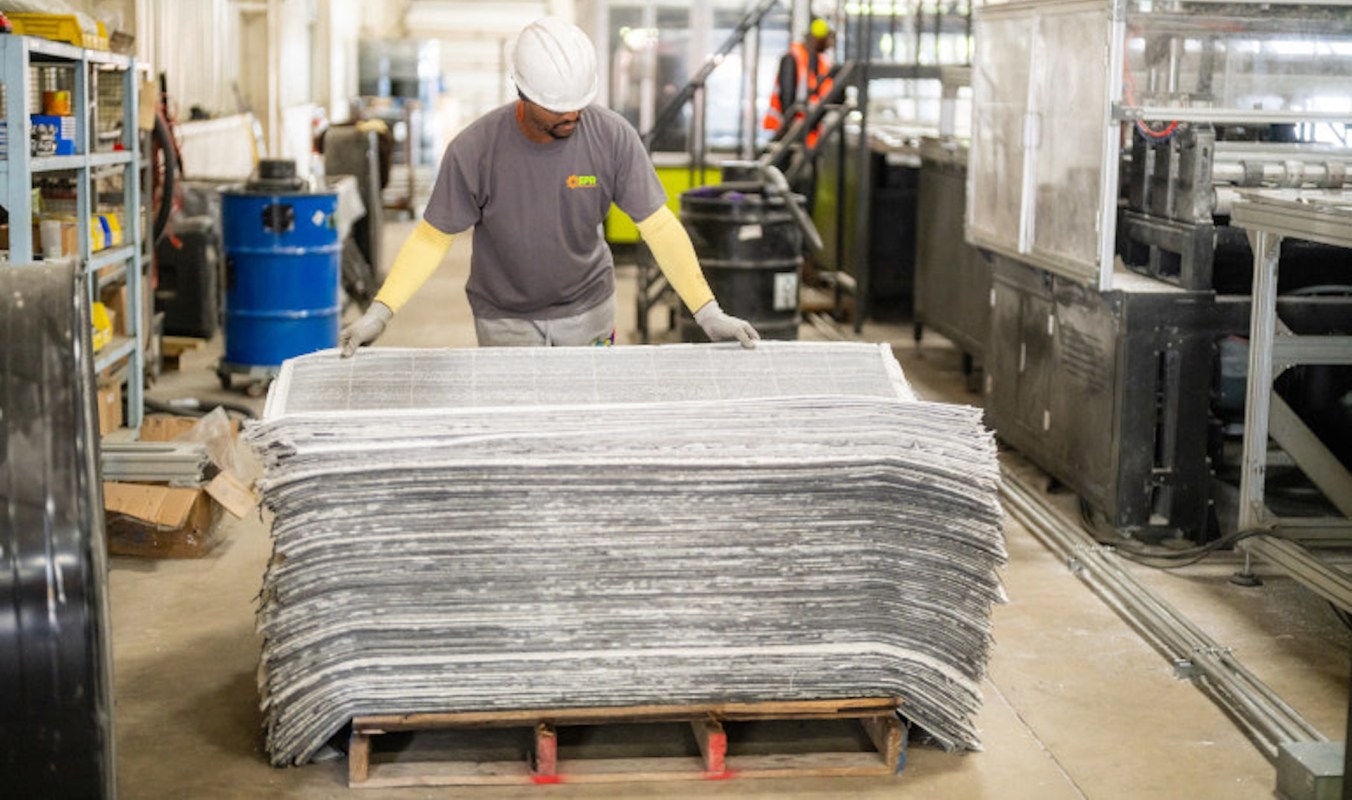
Solar power is widely seen as one of the cleanest energy sources available, but that upside depends on what happens once the panels wear out, according to Solar Power World.
Across the United States, recyclers are showing that old or damaged solar panels can provide a source of reusable materials and even a genuine business opportunity.
Here's what to know
Commercial solar panel recycling is no longer a far-off concept. As Solar Power World reported, companies like We Recycle Solar and SolarCycle are already processing retired modules at scale.
For the silicon panels that dominate the market, the business case rests on selling recovered commodities like silver. Without strong demand for those materials, recycling becomes much harder to support economically.
Brett Henderson, CEO of SolarPanelRecycling.com, explained to Solar Power World, "At the end of the day, for recycling to work, someone has to be able to consume the products you're generating and consume it at scale."
A central problem is that the largest share of a typical panel is also one of its least valuable materials: glass. Because glass contributes relatively little on its own, recyclers depend on the higher-value metals in silicon modules to offset the economics.
TCD Picks » Quince Spotlight
💡These best-sellers from Quince deliver affordable, sustainable luxury for all




"When you take a silicon panel and break it down to all of its base commodities to be recirculated back into manufacturing industries, the bulk of any panel is glass. Glass isn't a very valuable commodity. Silicon panels are economically viable to recycle [because] you're getting to subsidize it by collecting aluminum, silver," Henderson said.
That equation could change as panel makers look for ways to cut manufacturing costs. Modules built with less silver or none at all may be cheaper to produce, but they could also weaken one of the main value streams recyclers rely on.
More background
In the U.S., recycling efforts are centered mostly on silicon modules, which remain the industry's most common panel type.
Solar Power World noted that cadmium-telluride thin-film panels are a more difficult fit for outside recyclers. They generally lack aluminum frames, and because current demand for cadmium and tellurium is limited, outside recyclers have less incentive to handle them.
On the recycling line, the work starts with taking off the junction boxes and aluminum frames. After that, one of the toughest parts is removing the glass cleanly enough to reach the more valuable material layers underneath without contaminating them.
This issue is becoming more pressing even before the earliest major wave of American solar installations reaches retirement age. Many panels are still expected to last 25 years or more, but damaged units are already making their way into recycling facilities.
Better recycling systems, however, can help keep bulky solar equipment out of landfills and strengthen domestic supply chains tied to clean energy technologies.
What's being done?
According to Solar Power World, SolarPanelRecycling.com has completed a $12 million overhaul of its recycling facilities in North Carolina, Georgia, and Texas to improve glass separation without damaging silicon wafers and encapsulants.
OnePlanet, which operates near Jacksonville, Florida, said its system uses high-velocity airflow to separate 99.5% of a module's glass at 99% purity. Cleaner separation can make downstream materials more valuable and easier for refiners to process.
André Pujadas, CEO of OnePlanet, said the company's approach is designed to recover higher-purity silicon that can eventually return to industrial use.
"The whole business philosophy here would be to extract and recover minerals and reintroduce them into the supply chain for re-consumption, encouraging a circular economy," Pujadas said. "A big part of that is how much value is extracted across the entire value chain. This recycling process is very focused on a high-purity silicon. [Eventually] we will have enough silicon that it can become a feedstock for metallurgical-grade silicon production."
At the same time, recyclers are preparing for a future in which panel designs may include less silver, bifacial features, or newer tandem perovskite-silicon structures that can contain lead.
In other words, their work involves anticipating shifts in panel design.
Because the composition of that one incoming product keeps changing, adaptability may prove essential.
As Henderson said, "It's a strange industry. Solar panels are the one singular item you're bringing in, but there's so many flavors."
Where can I learn more?
Solar recycling is becoming a bigger part of the clean energy business, and people in many places are proving that there are many ways to address panel recycling.
• In Odessa, Texas, a solar panel recycling plant is tackling the industry's mounting waste stream.
• In Georgia, a major U.S. manufacturer has gone all in on panel recycling.
• In Tennessee, BBB Industries' division is recycling over 125,000 solar modules each year.
• In Italy, a startup can recover 99% of components from discarded solar panels.
Even if solar recycling or even panels themselves feel less accessible now, there's always the possibility that additional research will make them more possible in the future.

Get TCD's free newsletters for easy tips, smart advice, and a chance to earn $5,000 toward home upgrades. To see more stories like this one, change your Google preferences here.






