


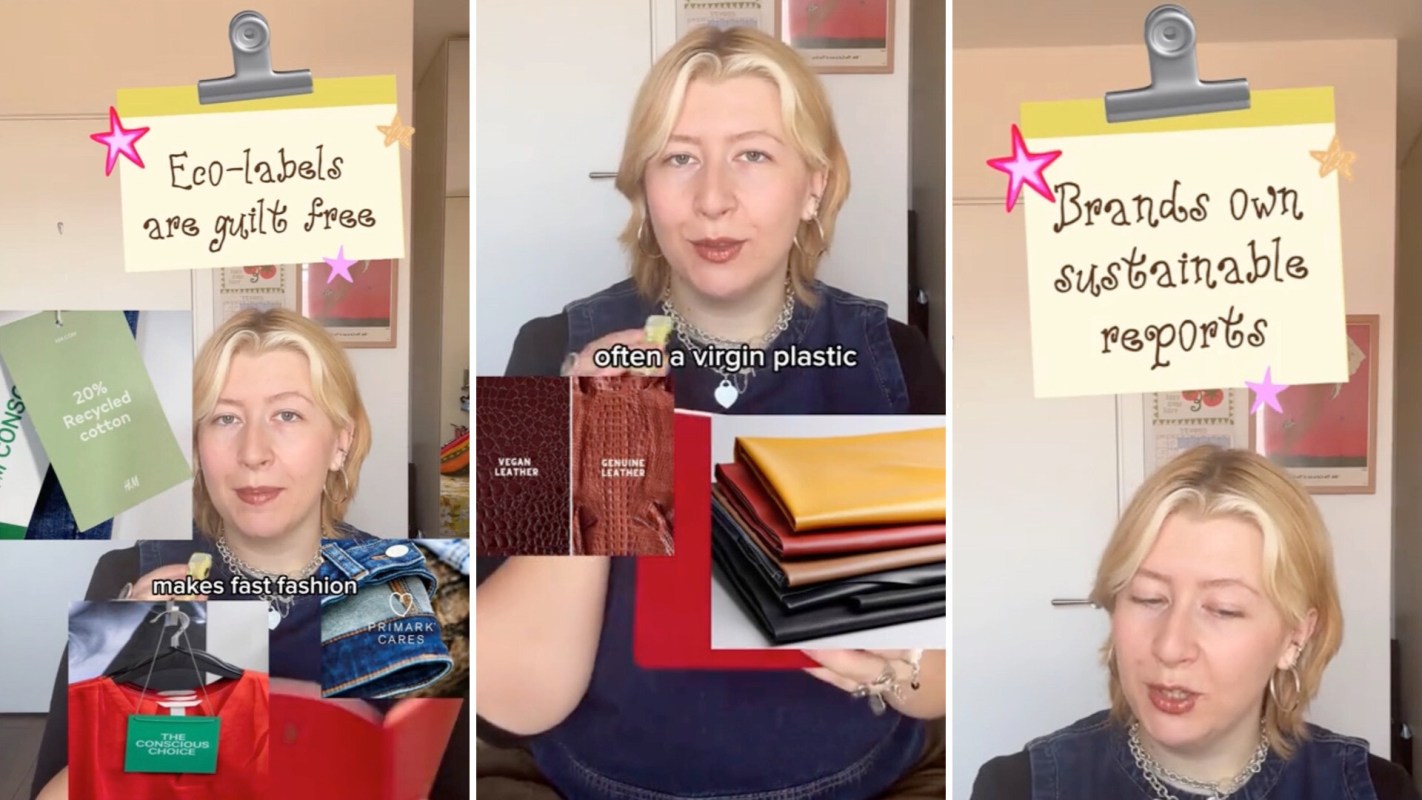
A "slow fashion" creator on TikTok called out fashion industry marketing claims that make overconsumption seem responsible, arguing that buying clothes does not become climate-friendly just because a brand wraps sales in soft, earthy language.
Here's what to know
In the post, Lottie (@lottielashley) detailed "a list of lies told by fast fashion" — framing the video as a critique of the familiar assertions that present shopping as ethical or environmentally friendly.
@lottielashley A list of lies told by fast fashion #slowfashion #greenwashing #secondhandfashion #autumnstyle #sustainablefashion ♬ original sound - Lottie🐞
Lottie listed common misconceptions used to make fast fashion seem eco-friendly. She explained that while vegan leather can protect animals, it is made from plastic and also pointed out that recycled polyester doesn't mean the garment itself is recyclable.
Lottie also emphasized that viewers shouldn't rely on a brand's own sustainability report.
These types of posts encourage viewers to consider secondhand and slow-fashion choices. The focus goes beyond one purchase and looks at the cycle in which brands push shoppers to replace clothes often, follow trends, and buy "must-have" pieces that do not last.
"Love this! I was going to do a video on marketing as it's actually so misleading," one commenter wrote.
TCD Picks » Quince Spotlight
💡These best-sellers from Quince deliver affordable, sustainable luxury for all




Greenwashing has become one of fast fashion's most effective strategies. A company can spotlight recycled fibers or "conscious" collections while still producing vast amounts of cheap clothing, encouraging constant consumption, and leaving shoppers with low-quality garments that need to be replaced after only a short time.
More background
Fast fashion is linked to massive textile waste, water contamination from dyes and chemical treatments, air pollution from manufacturing and shipping, and labor systems that rely on low-paid workers and unsafe conditions.
It can also drain consumers' wallets. Cheaply made tops, shoes, bags and more may seem affordable, but garments that stretch, pill, tear, or lose their shape after just a few wears can cost more over time than buying fewer, better-made pieces.
Marketing can make that reality harder to see. When brands frame buying another outfit as a form of environmental action, they can distract from one of the simplest ways to shop more sustainably: buying less and using what you already own for longer.
What can be done?
The most practical response is to slow purchases, skip trend-driven impulse buys, and prioritize durability over volume. Shopping secondhand can reduce demand for newly produced clothing and save you money in the process.
Mending, tailoring, and rewearing are also simple ways to be able to use what you already have for longer. Even simple fixes such as sewing on a button, fixing a seam, or hemming pants can extend the life of clothes that might otherwise be thrown out.
It also helps to stay skeptical of vague eco-language. If a brand highlights one "green" material but still floods the market with drops, shoppers may want to take a closer look at quality, transparency, and whether the item is something they will have years from now.
"Buy a sewing machine, learn to make clothing, buy fabric in remnants, make clothing you like, and wear it a tonne, then rework it into something else," one user said.
Where can I learn more?
These articles at the labor abuses, waste, pollution, and drop in quality behind fast fashion's marketing language. They also show how "conscious" shopping slogans can pull attention away from business models built on volume, disposability, and replacement.
• Across fast fashion, wages of 4 cents per garment keep prices deceptively low.
• Cheap clothing's huge problem worsens pollution, landfills, and economies in affected countries.
• Ultra-fast fashion is eating the world through mounting textile waste and nonstop trend cycles.
• Textile waste is a public health crisis, sending fashion pollution into nearby communities.
• Even high-end labels have cut back on quality, pushing flimsy polyester pieces onto shoppers.

Get TCD's free newsletters for easy tips, smart advice, and a chance to earn $5,000 toward home upgrades. To see more stories like this one, change your Google preferences here.






