


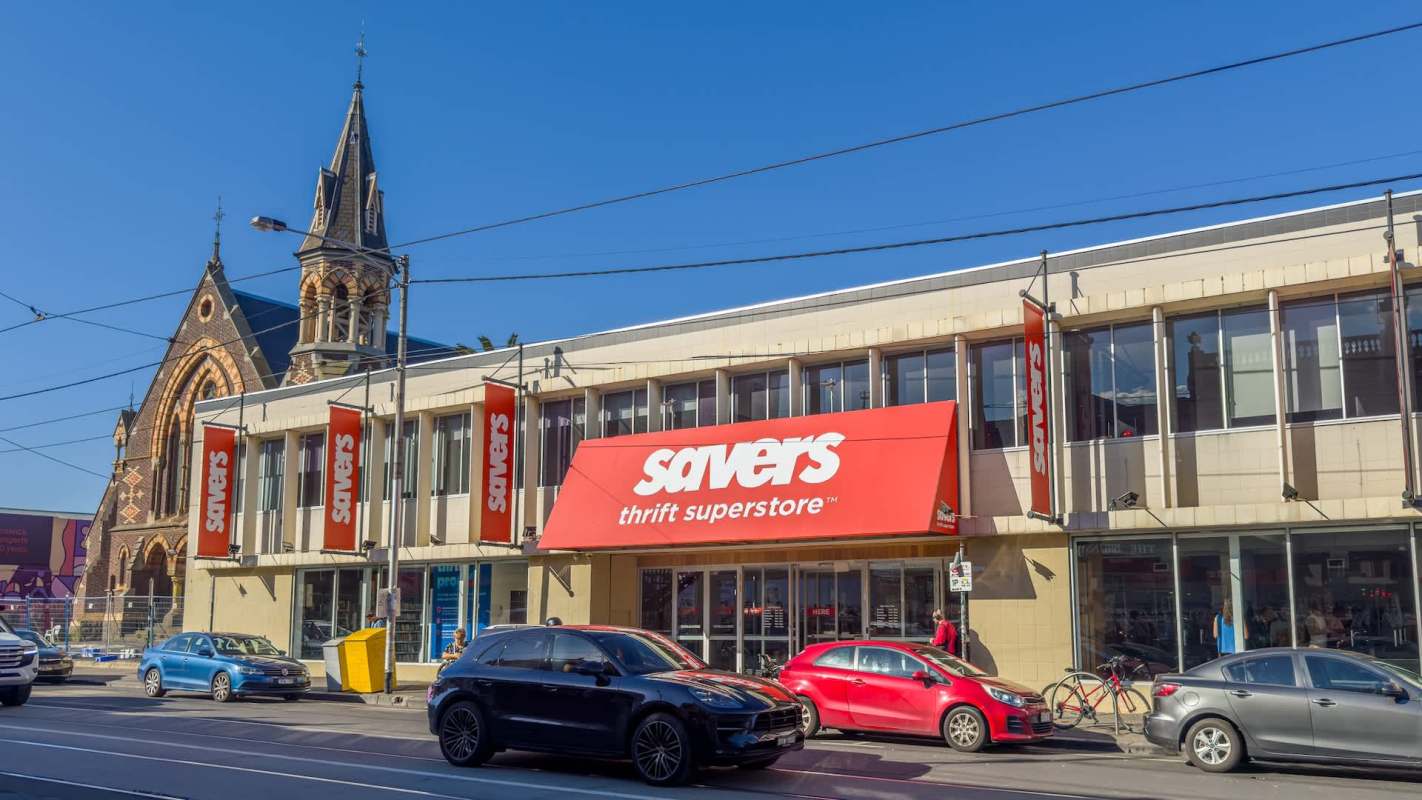
Shoppers formed a line about 328 feet (100 meters) long outside Savers' new thrift store in Geelong, Australia, on August 27, with some said to have driven for hours to attend.
While the excitement was real, the expansion down under has drawn scrutiny because Savers Australia is part of a $2.2 billion U.S.-based for-profit parent company.
Here's what to know
While the Geelong opening marked Savers' 19th store in Australia, the company is far larger in North America, where it has 185 stores in the U.S. and 172 in Canada, as ABC News Australia noted. Savers Australia belongs to Savers Value Village, a U.S. company valued at $2.2 billion and majority-owned by private equity firm Ares Management.
The retailer brought in more than $300 million in 2025 and posted a gross profit margin of about 50%, which is higher than the industry average.
That size helps explain why Savers has become a point of tension in Australia's secondhand sector. In contrast with many competitors, it operates as a for-profit business, competing for customers and donations in a space often linked with charities and community fundraising.
Speaking with the publication, Esther Koning-Oakes, who leads Norlane Community House and its Treasures op shop in Geelong, said local organizations are uneasy about what further Savers expansion could mean for community-run stores.
TCD Picks » Quince Spotlight
💡These best-sellers from Quince deliver affordable, sustainable luxury for all




"I think a lot of people, when they donate things, they want to donate it for a good cause," she said. "Having it for a for-profit company means that that is going into shareholders or upper management, and it doesn't actually go back into community."
More background
Savers said nonprofits still benefit, just through a different setup.
Michael Fisher, head of Savers Australia, told ABC News Australia that the company paid $5.6 million to its Australian nonprofit partners in 2025, which works out to about $310,000 per store.
"In Australia and globally, we partner with not-for-profit organisations," he explained. "They go and solicit donations from the general public, they bring them to the stores, and we pay them for those donations. So if you donate to us at that store, you're actually donating to the not-for-profit, and we pay them for that."
Diabetes Victoria is one of those nonprofit partners. Its chief executive, Glen Noonan, said the arrangement gives the group a way to earn revenue from donated goods without having to operate its own shops.
"From the revenue we generate, we provide much-needed services to Victorians," he told ABC News Australia.
What can be done?
Thrifting can be one of the simplest ways to save money while keeping usable goods in circulation, especially for clothing, kitchen items, kids' gear, and home essentials.
Some people may prefer direct charity shops, while others may be comfortable with for-profit resale models that still generate funding for nonprofit partners.
Fisher indicated that Savers is planning additional growth in Australia even amid some dissent.
"It's fair to say that we'll open another store next year," he told the outlet. "We're really excited with the growth of second-hand across Australia and we're happy to participate."
Where can I learn more?
Stores like Savers offer lower prices and memorable finds. Resale can benefit both shoppers and the planet, but knowing where to buy used clothing can make a big difference when it comes to ethical spending and the quality of purchases.
• Thrifters can save a staggering amount annually by choosing secondhand clothing over new purchases.
• Before opening, one shopper turned an early-morning haul into Y2K Levi's and a Harley vest.
• On resale platform Depop, shoppers are still debating who secondhand fashion serves most.
• Veteran thrifters say shopping habits can backfire when bargains become clutter instead of essentials.
They help explain why secondhand shopping keeps pulling in devoted customers even as questions remain about who benefits most. That blend of savings, thrill, and scrutiny sits at the heart of the Savers debate in Australia.

Get TCD's free newsletters for easy tips, smart advice, and a chance to earn $5,000 toward home upgrades. To see more stories like this one, change your Google preferences here.






