


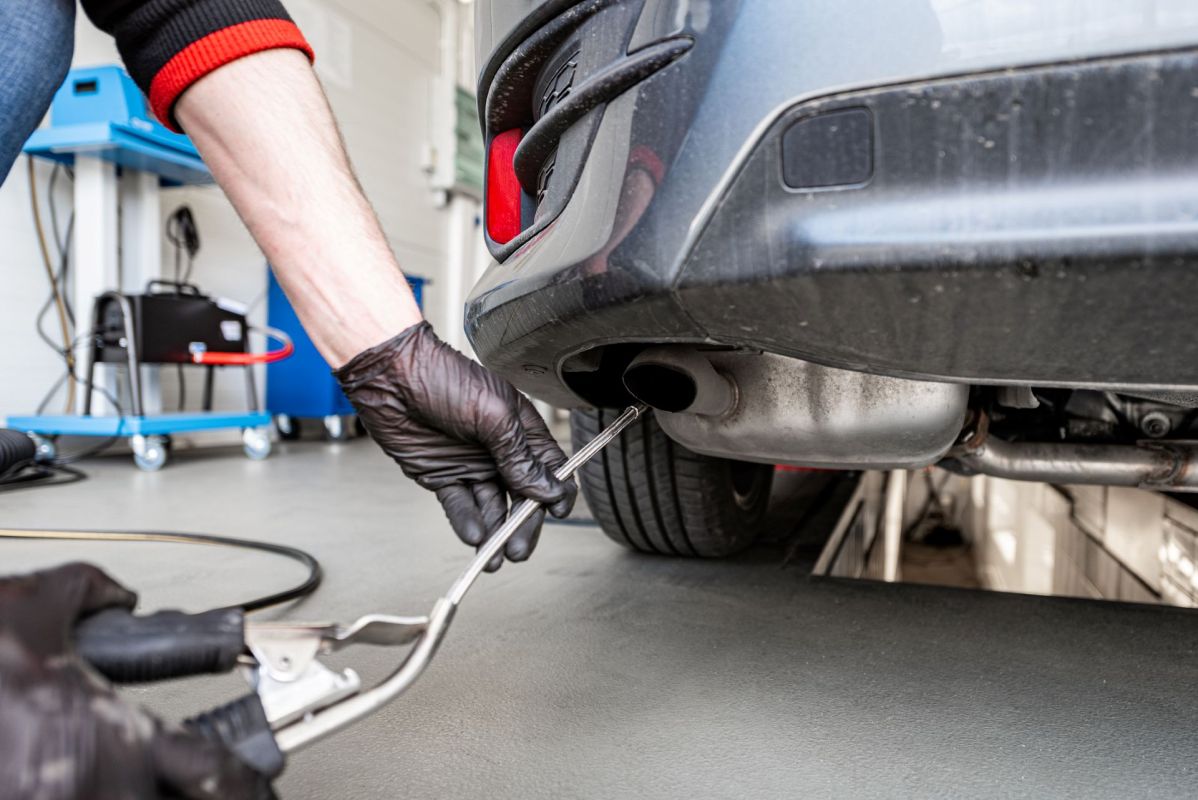
A question hangs over San Antonio's new vehicle pollution testing rollout: Will enough certified shops exist to keep nearly 2 million registered vehicles moving without long waits, failed inspections, and costly repair surprises for drivers?
The answer could shape far more than convenience. If the transition goes smoothly, inspectors could identify and repair higher-polluting vehicles more quickly. But if inspection capacity falls short, a policy meant to protect public health could instead become a major burden for families who rely on their cars every day.
Here's what to know
Drivers once had roughly 650 registered locations in Bexar County available when safety inspections were still required. Now, MySA reported, the county has just under 310 state-certified emissions inspection sites, and some of those newly certified locations are dealerships that may not be the most convenient option for motorists seeking a quick inspection.
Charissa Barnes, CEO of Texas Tag & Title and Official Inspection Station, told MySA, "I think we're going to end up at 350 to 400 come November 1. Is that going to be enough inspection stations to handle the demand of the motoring public? I guess we're going to wait and see."
As MySA noted, Bexar County has almost 2 million registered vehicles, so the area could need around 160,000 inspections each month. Even using a rough estimate that spreads demand evenly across certified sites, that would amount to close to 30 inspections per day at each location.
More background
Part of the challenge comes from how the transition was structured. Legislators left a gap between the old safety inspection system and the emissions-only program, and local experts have warned that the setup could frustrate many drivers once the new system is fully in place.
TCD Picks » Quince Spotlight
💡These best-sellers from Quince deliver affordable, sustainable luxury for all




Another issue is staffing. There is no clear way to track how many employees at each certified site are actually approved to perform emissions inspections. That means a shop may appear ready on paper while having only one certified worker available, adding strain and slowing service.
Barnes' team also found a likely financial challenge during trial runs. The team ran test inspections that skipped the state database connection, and more than 20% of vehicles failed, with faulty catalytic converters emerging as the biggest problem. Because catalytic converter repairs or replacements can cost thousands of dollars, many drivers could be facing a steep expense.
Even something as common as a check engine light results in an automatic failure. That raises the chances that drivers already stretched by transportation costs will have to pay for repairs before they can renew their registration and remain legally on the road.
What's being done?
More businesses are joining the state-certified list.
Barnes said her shops are working to cut inspections to roughly nine minutes per customer to move drivers through more efficiently.
Her company has also been running practice tests to prepare for the changeover.
Barnes is also trying to expand staffing by adding 40 certified inspectors, though she told MySA that finding people to hire has been hard since safety inspections stopped and disrupted the market.
Barnes said, "For over a decade, Official Inspection Stations not only did inspections but renewed registration. Our customers have come to expect that service from us. We're going to be able to do vehicle inspections and renew your registration, business as usual."
Where can I learn more?
These stories put San Antonio's emissions rollout in a wider context, from tighter vehicle checks in Colorado to fights over industrial pollution and air-quality enforcement in other states.
• Colorado regulators are prioritizing tighter vehicle inspections as EPA pressure over carbon monoxide grows.
• In San Antonio, residents challenged a permit for 32 diesel generators at a proposed data center.
• In Detroit, Stellantis sought a workaround to avoid Michigan's air-pollution rules on particulates.
• Across the country, failing air quality grades show ozone pollution still threatens millions.
• In Minnesota, regulators faced backlash after a surprise inspection exposed long-running pollution concerns.

Get TCD's free newsletters for easy tips, smart advice, and a chance to earn $5,000 toward home upgrades. To see more stories like this one, change your Google preferences here.






