


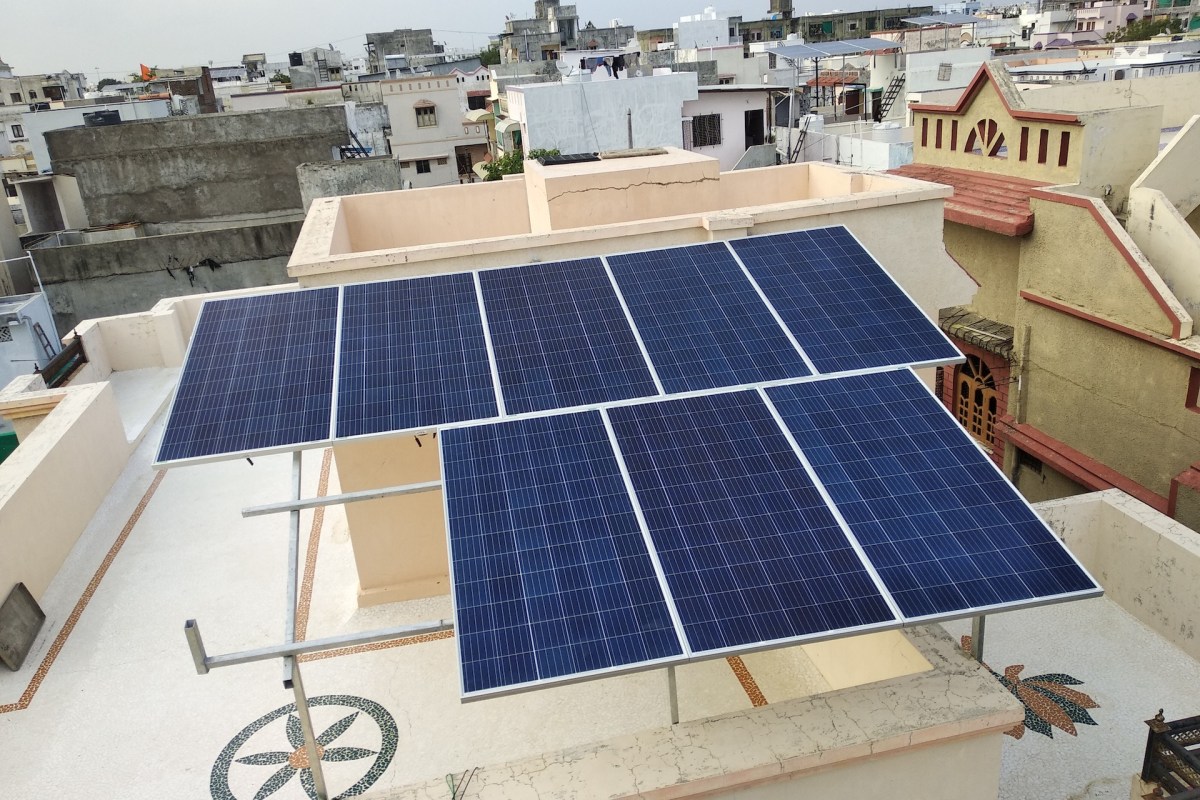
India's rooftop solar market is gaining steam, with households leading the way. New data shows installations across the country more than doubled from a year earlier as incentives and simpler approvals helped turn household energy demand into growth for cleaner power.
What happened?
Mercom India Research's latest rooftop solar market report put India's first-quarter additions at 2.7 gigawatts, PV Magazine reported.
The figure was above the 2.2 GW added in the previous quarter and the 1.2 GW recorded in the same quarter a year earlier, Mercom's data showed.
Homes dominated the quarter's new rooftop solar capacity, accounting for 82% of additions, while industry accounted for 11%, commercial projects for 7%, and government installations for 0.4%, according to Mercom. The firm said the PM Surya Ghar program was the key catalyst, aided by subsidies, streamlined approvals, and stronger state-level support.
"The rooftop solar market maintained strong momentum in Q1 2026, with installations increasing 25% quarter over quarter and 125% year over year, driven primarily by robust residential demand under the PM Surya Ghar program," said Raj Prabhu, CEO of Mercom Capital Group, according to PV.
By the end of March, rooftop solar capacity nationwide had reached 23.5 GW, Mercom said. It named Maharashtra, Uttar Pradesh, and Gujarat as the leading states for the quarter and said system costs were largely stable, except for higher-priced setups that used Chinese modules.
The trend makes sense — going solar is one of the best ways to save money on home energy. Many who have made the shift have had their bills reduced by hundreds of dollars. If you're ready to go solar, explore EnergySage's free tools to get quick solar installation estimates and compare quotes.
Why does it matter?
Rooftop solar can lower electricity bills; reduce dependence on grids that rely on polluting, non-renewable energy sources; and give families more control over household energy costs.
Save $10,000 on solar panels without even sharing your phone number Want to go solar but not sure who to trust? EnergySage has your back with free and transparent quotes from fully vetted providers that can help you save as much as $10k on installation. To get started, just answer a few questions about your home — no phone number required. Within a day or two, EnergySage will email you the best local options for your needs, and their expert advisers can help you compare quotes and pick a winner. |

When the residential sector accounts for such a large share of new installations, it suggests that solar is becoming a more practical option for homeowners, not just businesses or public institutions.
EnergySage's solar mapping tool shows the average cost of a home solar panel system and details on solar panel incentives in each state in the United States. These resources can help you secure the best price on rooftop solar panels, saving you both upfront and in the long run.
India's high level of solar adoption also shows how much policy design can shape adoption. Subsidies and streamlined approvals can make the difference between a household putting off a project and moving ahead with one that delivers savings for years.
Adding battery storage to a solar setup increases savings and protects your home during outages. It can also help ensure your home can run off-grid. Along with solar assistance, EnergySage provides free tools for information about home battery storage options, including competitive installation estimates.
More From EnergySage
💡Go deep on the latest news and trends shaping the residential solar landscape


What's being done?
India's growth is being driven by a mix of public incentives and market readiness, but Mercom warned that the next phase will depend heavily on execution, including access to financing, installation standards, coordination with DISCOMs, and grid preparedness. Rapid growth is harder to sustain if the customer experience becomes complicated.
In the U.S., if you're ready to take the leap and save money with solar, EnergySage's expertise and free tools are a great help. With EnergySage's help, the average person can save up to $10,000 on a solar purchase and installation.
"As rooftop solar penetration rises, improving on-ground execution and consumer experience will become critical to sustain long-term growth," Prabhu said, per PV. He added, "While consumer interest in rooftop solar remains strong, the next phase of growth will depend more on implementation and execution."

Get TCD's free newsletters for easy tips, smart advice, and a chance to earn $5,000 toward home upgrades. To see more stories like this one, change your Google preferences here.






