


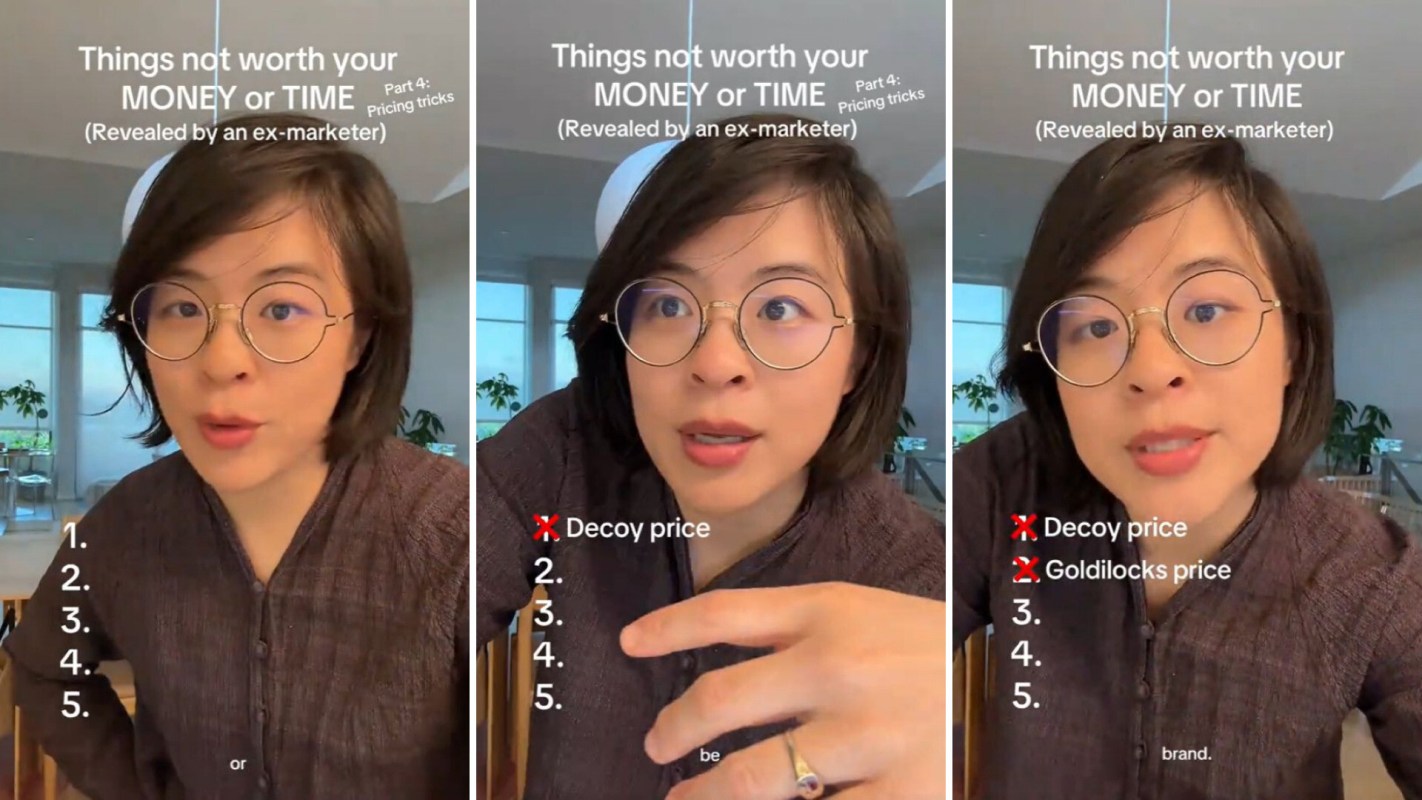
A video by a content creator with two decades of marketing experience is resonating with shoppers who feel like "deals" keep getting more expensive.
She argues that many familiar promotions work less as genuine savings opportunities and more as prompts that make higher spending seem sensible.
What happened?
In the TikTok, Crystal (@SlowBuyClub), who focuses on buying slow and resisting marketing, broke down five pricing tricks she says consumers should watch for. Viewers chimed in with their own experiences.
"I'm Crystal, 20 years a marketer, 20 years a shopaholic," she says. "Now I help overbuyers become strategic shoppers." From there, she points to five tactics she believes mask the real cost of a purchase: decoy pricing, three-tier "Goldilocks" pricing, buy-now-pay-later offers, upgrade-driven customization, and member-only pricing.
Among the examples she highlighted was the common three-option setup used for subscriptions, plans, and similar services. "The middle one is never the best value," she says. "It's just the most profitable one for the brand."
She also said installment options can reshape buyers' perception of cost, noting that "a $200 product becomes four easy payments of $50."
TCD Picks » Quince Spotlight
💡These best-sellers from Quince deliver affordable, sustainable luxury for all




Why does it matter?
The concern is not just that people spend more but also that the real price can become harder to see. Once costs are spread across upgrades, financing, or membership fees, comparing products and judging what is actually worth buying gets much less straightforward.
For shoppers already trying to stretch paychecks, tactics such as decoy pricing or "exclusive" member pricing may not reduce the total cost so much as move it elsewhere while still pushing unnecessary add-ons and extra spending.
Buying fewer things you do not actually need can reduce clutter at home, cut down on waste, and break the cycle of regretful purchases and returns. As the creator put it, "Notice how all five of these tactics do the same thing. They hide the real price so you can't compare it."
What are people saying?
Viewers said the breakdown gave language to shopping habits they had already noticed. "The decoy price is described as an 'anchor' by behavioural economists," one commenter wrote. "It's so funny how our minds work."
"Feeling No. 3 right now. Why am I using Afterpay for things like groceries that I actually have the money for?" one person said.
Another summed up the critique of "best value" labels: "Of course the price in the middle has the best value. They don't say value for who."

Get TCD's free newsletters for easy tips, smart advice, and a chance to earn $5,000 toward home upgrades. To see more stories like this one, change your Google preferences here.






