


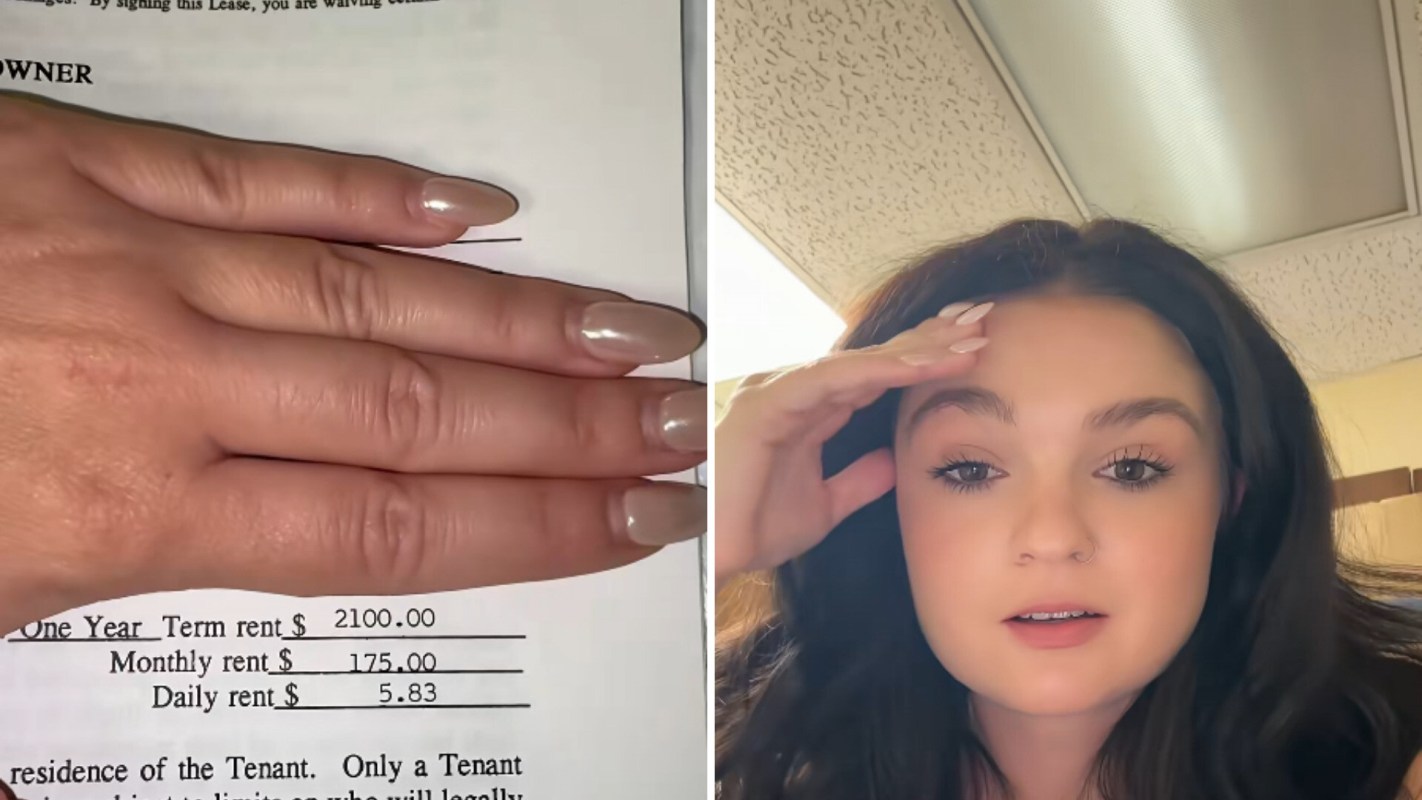
A TikTok post about a $2,100 lease-break charge is striking a nerve with renters who say housing costs are becoming harder and harder to escape.
In just a few seconds, one person's disbelief turned into a broader conversation about rent hikes, fees, and apartments that cost far more without offering much more in return.
Here's what to know
In the clip, Emma (@emma_carr13) reacts to learning what rent and lease-break fees looked like in 1997, writing, "$2100 to pay off your whole years lease?? Oh what a time to be alive," in the caption.
The video also shows that the monthly rent was only $175.
@emma_carr13 $2100 to pay off your whole years lease?? Oh what a time to be alive😭😭 #fyp #inflation #economy #adulting ♬ original sound - Noah
The replies quickly turned into a comparison of what rent used to cost. One commenter wrote, "In like 2016 it was normal for an apartment to be $400 a month."
Several people made that point by citing their own previous rents. "My rent in 2010 was 560 a month for a 1 bed," one person wrote, while another added, "my rent in 2019 right before covid was $860."
TCD Picks » Quince Spotlight
💡These best-sellers from Quince deliver affordable, sustainable luxury for all




More background
Lease-break fees can be especially painful because they often hit when someone is already under financial pressure. A renter trying to move for work, family, or cost reasons may suddenly need to come up with a large lump sum before they can even start over somewhere else.
For some commenters, the issue was not just rising prices but how little seemed to justify them. One commenter wrote, "[Our] first apartment in 2004 was $385. When we moved in 2011 rent was $425. That same apartment now rents for $840 in nowhere, Arkansas, with zero updates from what I can see in the pictures. It's doubled in price, while ppl there still make minimum wage."
That frustration also connects to another issue renters face: rules that can make it harder to offset high costs. Across the country, landlords and property managers have been known to prevent residents from adopting money-saving habits such as gardening or hanging clotheslines to dry laundry, even though both can help reduce household expenses.
What can be done?
Understanding the fine print before signing or renewing a lease can help clarify early-termination clauses, notice periods, and reletting fees if plans change.
Asking landlords in writing whether fees are fixed, negotiable, or eligible for payment plans can also clarify what options exist. Keeping records of unit conditions, maintenance requests, and any unresolved issues may be useful as well if disputes arise later.
"We just getting scammed now," one commenter said.

Get TCD's free newsletters for easy tips, smart advice, and a chance to earn $5,000 toward home upgrades. To see more stories like this one, change your Google preferences here.






