


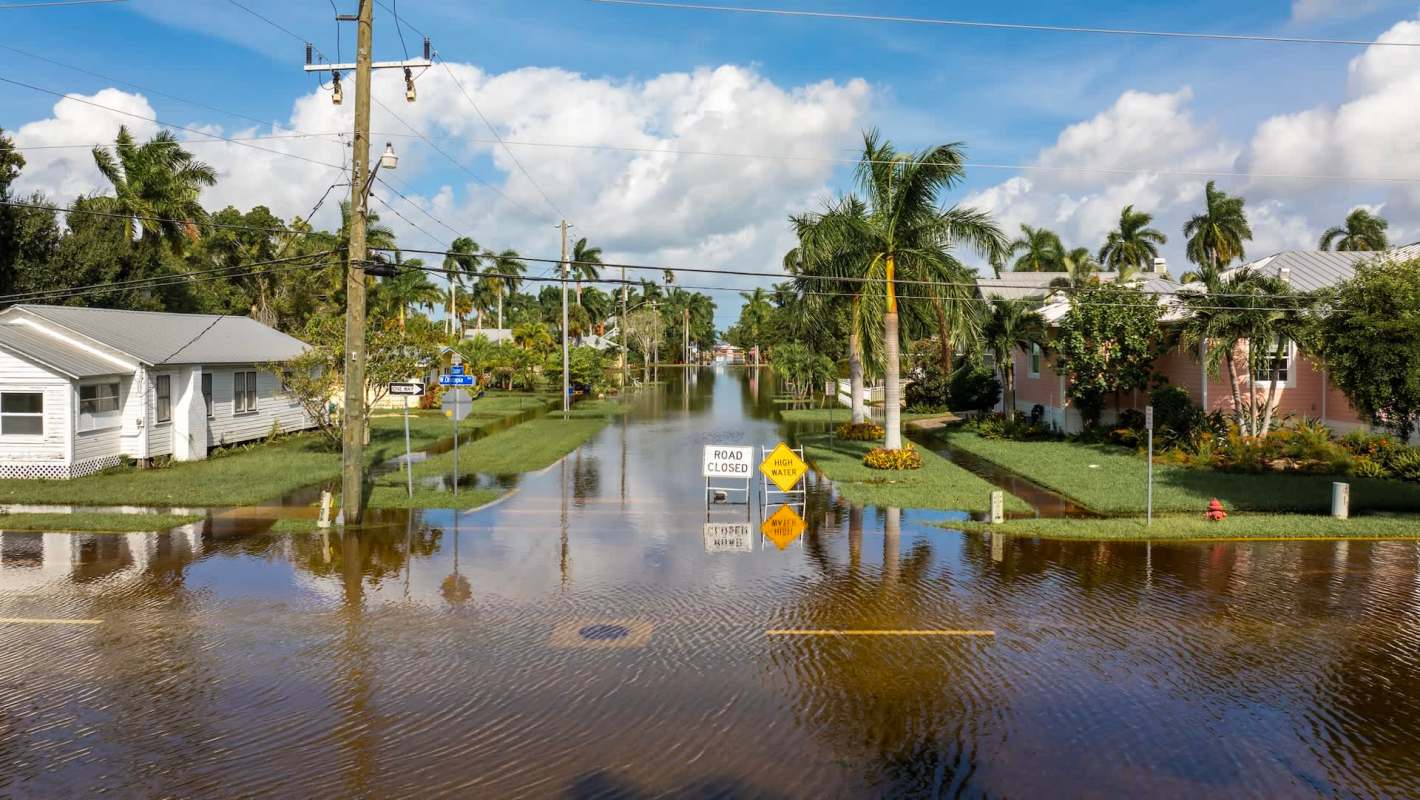
Punta Gorda, Florida, plans to expand its water treatment system after two hurricanes exposed a vulnerability in its drinking water supply, though residents continued to receive safe water.
The roughly $56 million construction project will rely on water bills and sales tax revenue to help cover costs, WINK News reported.
Here's what to know
Storm surge from Hurricanes Helene and Milton in 2024 carried seawater across Hendrickson Dam, contaminating the Shell Creek reservoir, which supplies some of Punta Gorda's water.
The Shell Creek treatment plant filters water but cannot remove salt.
The contamination increased the city's dependence on its reverse osmosis facility.
"It was a serious operational challenge, and our team worked around the clock," Punta Gorda Utilities Director Tom Spencer said in a written response to WINK News.
TCD Picks » Quince Spotlight
💡These best-sellers from Quince deliver affordable, sustainable luxury for all




"Residents had safe water at the tap throughout," he continued. "But it showed us how thin our margin can get when the reservoir is compromised."
The planned expansion would add 4 million gallons of daily reverse osmosis capacity, along with wells tapping the Upper Floridan aquifer. That deep groundwater source does not face the same storm surge exposure as Shell Creek.
The reservoir, however, has no greater protection against storm surge than it had during the hurricanes, Spencer warned.
More background
The city's water demand rose by 26% from 2020 to 2023, while withdrawals from Shell Creek fell 12%, Spencer noted.
Daily demand peaked at 9.52 million gallons in 2023, he added.
To supplement its supply, the city obtained water from the regional provider Peace River Manasota Regional Water Supply Authority. Under their agreement, Punta Gorda repaid the borrowed water after seasonal rains restored its reserves.
Resident Geri Gee emphasized the importance of keeping infrastructure ahead of population growth.
"We've been to cities that the population grew before the infrastructure, and there's so many frustrations," she said.
City Council selected the preferred expansion plan at its Oct. 28 meeting.
The project would cost an estimated $95.9 million over 25 years, including operations and maintenance, per WINK News.
What's being done?
About $17.6 million of the $35.1 million in state hurricane recovery assistance Punta Gorda has secured for construction will not have to be repaid, Spencer confirmed.
The remaining assistance will come from an interest-free loan.
Any remaining construction costs would be paid from utility revenues or reserves, Spencer said. The city will also use revenue from an approved one-cent sales tax to cover expenses beyond the state assistance.
City Council's 2025 water rate adjustment will help finance water meter replacements, Shell Creek facility improvements, and the expansion.
Spencer explained that the city must complete design and permitting, drill and test wells, manufacture equipment, and carry out construction, and the project is scheduled to be finished by the end of 2030.
Water conservation will remain part of Punta Gorda's approach to meeting additional supply needs until the expansion is finished. The city will also rely on its existing reverse osmosis facility and its connection to the regional water authority.
Resident Bob Toth, who has watched vacant neighborhood lots fill with homes during his seven years in Punta Gorda, supports the investment but believes officials should track costs carefully.
"You have to be smart about it, but it's also smart to make that investment, in my opinion," he told WINK News.
Where can I learn more?
Other Florida communities face similar questions about how to pay for water infrastructure improvements. These stories cover hurricane-related sewer upgrades and stormwater project costs and fees.
• St. Pete Beach approved $1.5 million in sewer upgrades after hurricane-related flushing warnings.
• Zephyrhills introduced an $85 annual stormwater fee for homeowners after Hurricane Milton.
• Groveland crews restored service after a pump failure, but a boil advisory remained for residents.

Get TCD's free newsletters for easy tips, smart advice, and a chance to earn $5,000 toward home upgrades. To see more stories like this one, change your Google preferences here.






