


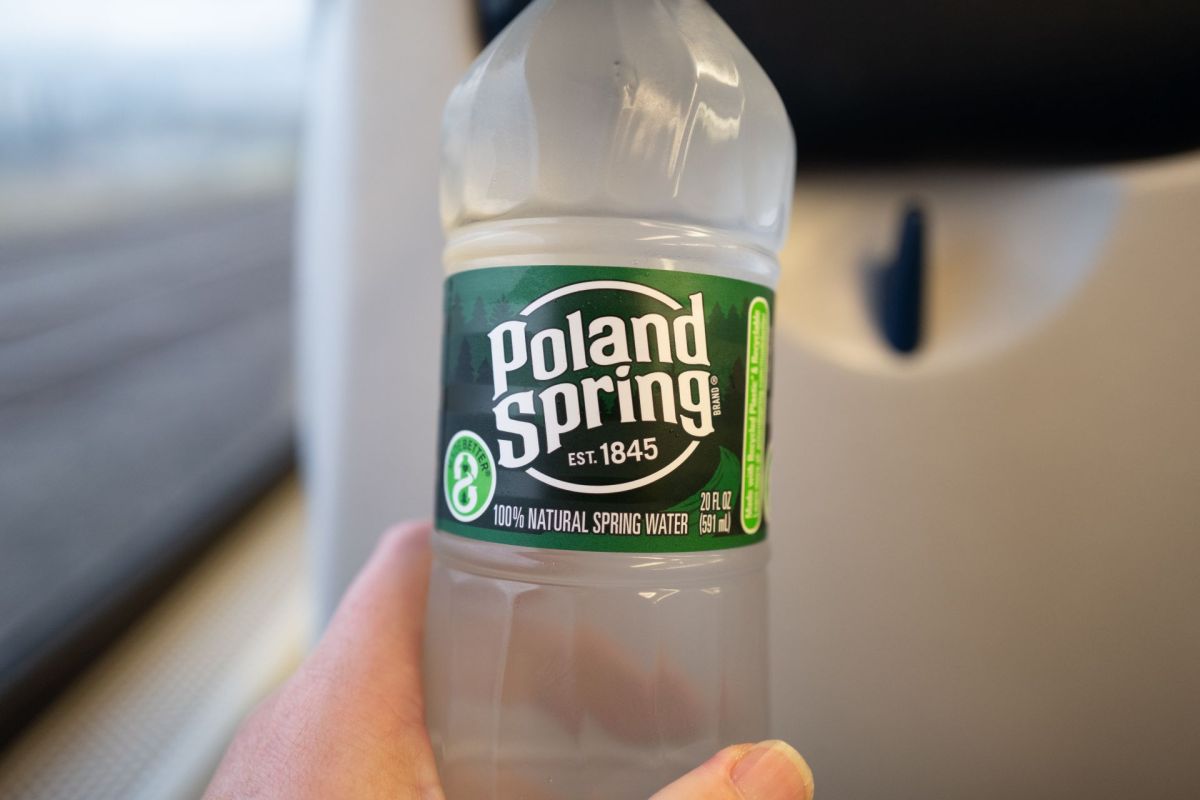
Residents around Long Pond in Denmark, Maine, say water levels have fallen so far that docks no longer reach deep water and aquatic vegetation along the shore is drying out.
For some area homeowners, the bigger concern is underground. Private wells are weakening or drying up as the state experiences widespread drought and as Poland Spring keeps drawing from an aquifer nearby.
Here's what to know
Concerns over local supplies have intensified amid the bottled-water company's permit renewal process in Denmark, as the Boston Globe recently reported.
Poland Spring has been allowed to take as much as 105 million gallons from the town each year. But the company says it usually draws much less than that and argues that its pumping is not responsible for conditions at Long Pond or in nearby private wells.
Town officials are reviewing local conditions while listening to residents and the company, Andrew Kruczek, chair of the Denmark Select Board, told the Globe. Among those pressing for answers is Long Pond homeowner Cullen Ryan, whose well has gone dry.
"It doesn't make sense to me to extract millions of gallons of water during a drought," Ryan told the newspaper.
TCD Picks » Quince Spotlight
💡These best-sellers from Quince deliver affordable, sustainable luxury for all




The company says monitoring at the site shows stable aquifer levels dating back to the start of pumping in 2010. Mark Dubois, Poland Spring's senior natural resource manager, said tests showed no change at Long Pond during periods of extra pumping or unusual dryness and told the Globe "the aquifer is overflowing."
Back-to-back dry years are also reshaping debate over major water withdrawals in Maine, a place many people have long thought of as flush with water.
More background
Longtime residents told the Globe they cannot remember Long Pond being this low in decades.
Denise Eldridge, 76, said her well measured only 3 inches of water and that replacing the well was expected to cost about $20,000.
When homeowners Tara and David Scholder got back from a vacation in August, they found that their toilet tank would not refill. Their well sample came up brownish-grey, which the Globe noted can indicate low water levels, and they have been relying on bottled water, disposable cups and plates, and showers at neighbors' homes.
Poland Spring pays Denmark nothing for the water it pumps and bottles, according to the newspaper, although it contributes about $30,000 annually in property taxes and has given the town more than $250,000 for things like fire department equipment and ballpark lighting.
What's being done?
Denmark officials are reviewing Poland Spring's permit application as they try to determine whether pumping is linked to the pond's decline or problems in private wells, the Globe reported.
The town's water extraction ordinance says withdrawals cannot damage surface waters.
Dubois said monitoring is handled partly by a licensed geologist retained by Poland Spring and partly by the town's hydrogeologist and code enforcement officer.
Residents who want more distance from the company in the process are pushing for stronger outside oversight.
Audrey Rabinowitz, who lives on Long Pond and previously served on the town's water extraction review committee, said that Denmark needs more funding for independent monitoring and that the state should more broadly examine the effects of Poland Spring's pumping, according to the Globe.
Where can I learn more?
These stories look at other places where water shortages, heavy use, and local concerns are colliding:
• In Pennsylvania, residents asked who is responsible after data-center water use left homes dry.
• Cities facing shortages are embracing extreme water recycling as reservoirs shrink and demand rises.
• At Lake Mead, improved storage conditions lifted water forecasts after unexpected gains.
• Households preparing for shortages are rethinking water going to waste from everyday use.

Get TCD's free newsletters for easy tips, smart advice, and a chance to earn $5,000 toward home upgrades. To see more stories like this one, change your Google preferences here.






