


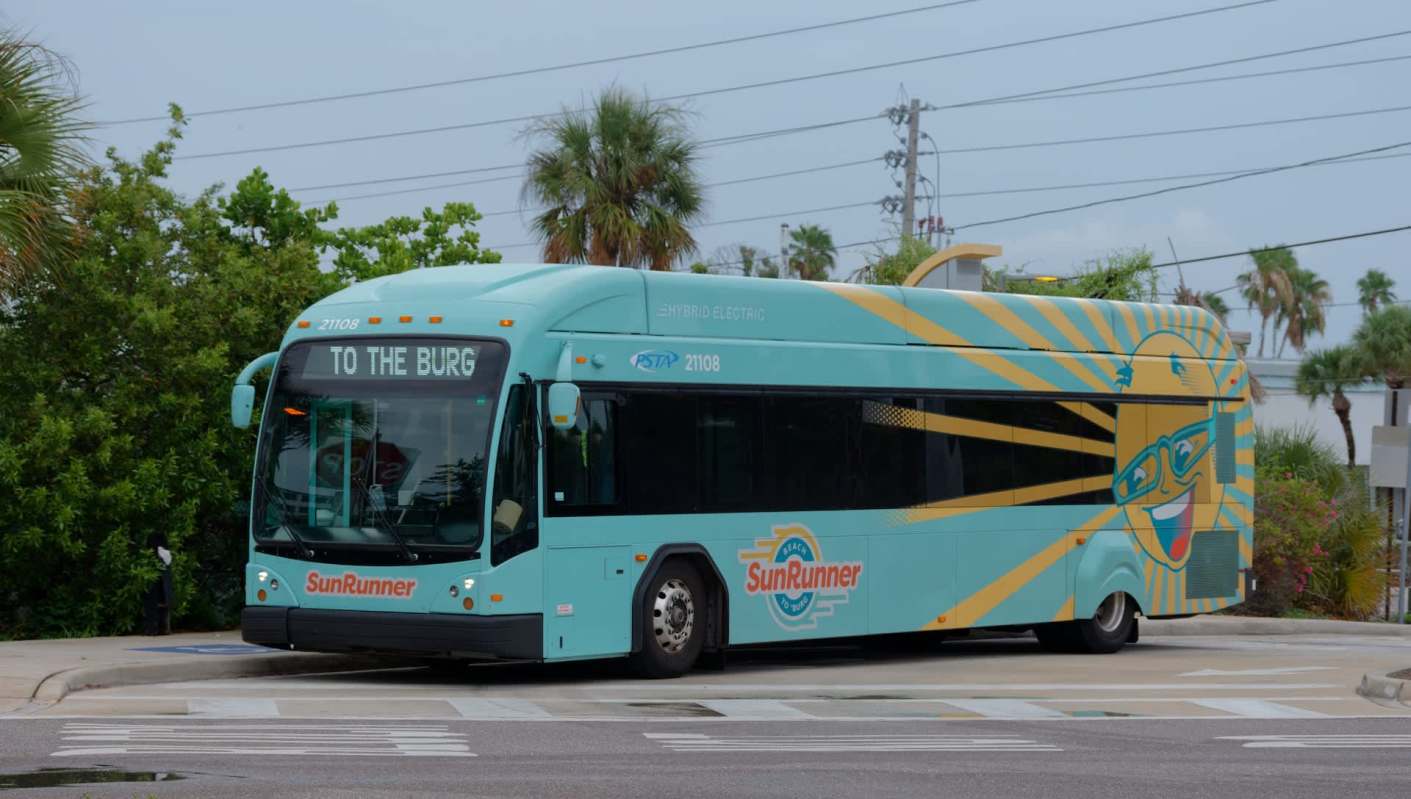
For those who rely on public transit for day-to-day transportation, service cuts can mean not being able to get to work, school, and other essential obligations.
Perhaps it should come as no surprise then that when the local transit authority in Pinellas County, Fla., proposed eliminating certain routes, residents showed up in droves to protest the changes.
Here's what to know
According to FOX 13, the Pinellas Suncoast Transit Authority had placed six different routes under review. These included Routes 16, 58, and 90, as well as the Grouper Airport Shuttle and Snapper service in Safety Harbor and Clearwater.
Many residents appeared at a board of directors meeting to protest the cuts, which the transit authority said would help make the system more efficient.
"Transit is an engine of opportunity for our communities," said Gloria Lepik-Corrigan, a Clearwater resident and public transit advocate, per FOX 13. "It brings people to stores, doctors, jobs, restaurants, and community events."
Separate from the route discussion, the board is also considering fare and fee adjustments. One proposal would impose an 11-cent fee on riders who pay with a debit or credit card.
TCD Picks » Quince Spotlight
💡These best-sellers from Quince deliver affordable, sustainable luxury for all




Ultimately, the board voted to keep Routes 16 and 58, Snapper service to Clearwater, and the Grouper Airport Shuttle. However, the board also decided to end the Snapper on-demand service in Safety Harbor and to wait until the end of 2025 before making a final call on Route 90.
More background
In comments reported by FOX 13, Route 58 rider Mark Shaw said the bus is necessary for both his commute and his granddaughter's trips to St. Petersburg College.
"I can't afford to take an Uber to work back and forth every day," Shaw said. "I have looked at alternate routes, but none can get me to my job at 7 a.m."
Gabriel Ray, a student in Clearwater, told the board that bus access also shapes what he can do at school.
"I cannot do clubs if I don't have the bus," Ray said. "I cannot stay after school. I can't get help from teachers."
Where can I learn more?
Pinellas County riders aren't the only ones speaking up when transit gets more expensive or less useful. Stories from other cities show how decisions about fares, rail investment, and service gaps can affect transportation.
• New York City riders said subway trips were out of reach after officials raised fares.
• In Florida, lawmakers considered revitalizing the state's high-speed rail to expand statewide transit access.
• In Los Angeles, commuters have argued the E Line still lacks essential components for success.
• In Toronto, critics say abandoning trolleybuses reduced flexible transit options for riders across the city.

Get TCD's free newsletters for easy tips, smart advice, and a chance to earn $5,000 toward home upgrades. To see more stories like this one, change your Google preferences here.






