


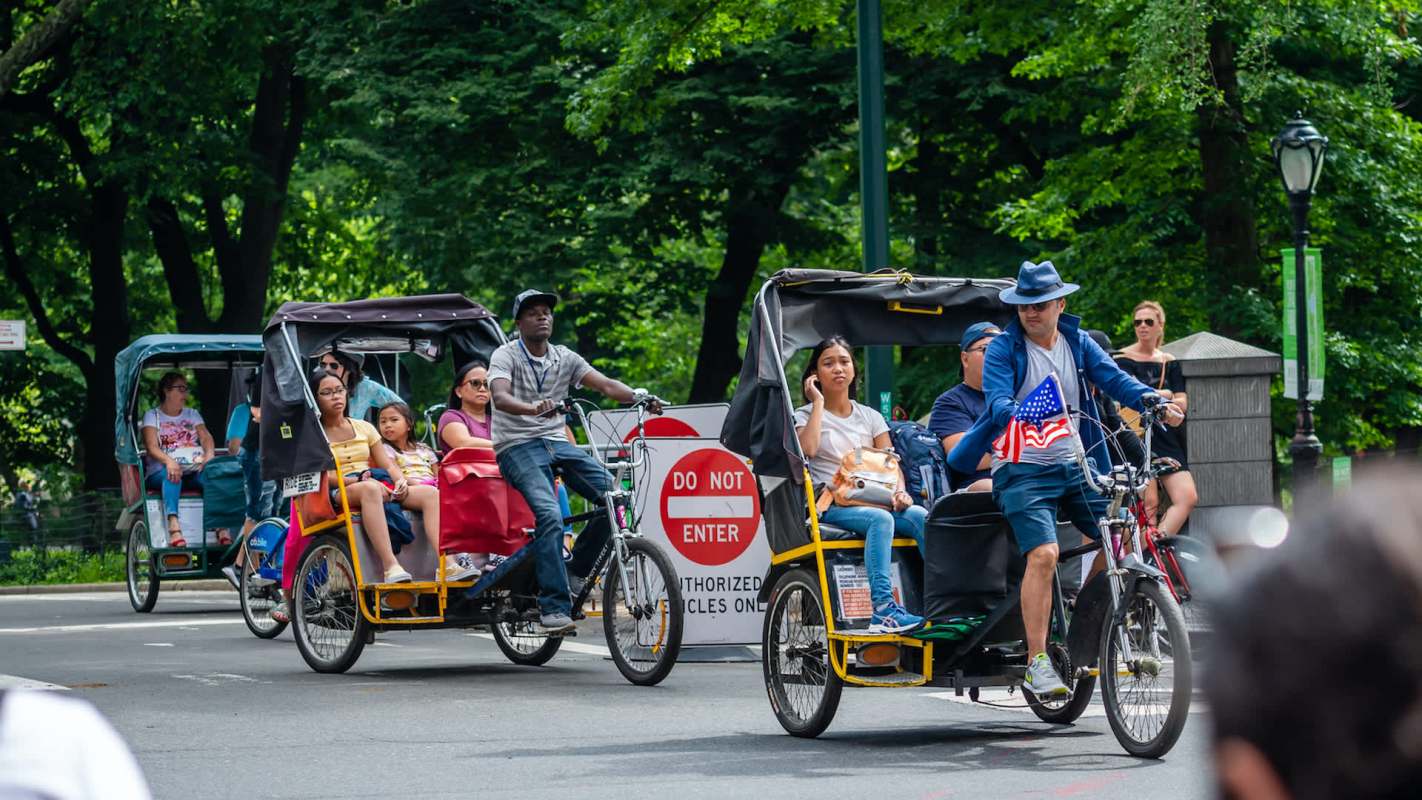
A New York City ride that starts as a scenic tour through Central Park increasingly ends with an unpleasant surprise—a fare passengers may not fully understand until the trip is over.
That frustration is reaching City Hall, where lawmakers are weighing new rules for pedicabs after an investigation found obscured rate signs and unlicensed operators.
Here's what to know
Among the changes being discussed are replacing timers with meters and letting the city determine the per-minute fare, CBS New York reported. The goal is to tighten oversight in a business closely tied to some of the city's most visible tourist areas.
While pedicabs are iconic fixtures in Central Park and other crowded parts of the city, some riders do not learn the true cost until after the trip.
Calls for tighter oversight gained momentum after a City Council investigation identified two recurring problems: some operators were unlicensed, and some rate signs were hidden or blocked from view, making it harder for customers to understand pricing before agreeing to a ride.
Because pedicabs often rely on tourists and spur-of-the-moment customers, hidden rates and unlicensed operators can undermine trust across the industry.
TCD Picks » Quince Spotlight
💡These best-sellers from Quince deliver affordable, sustainable luxury for all




More background
Reform is also being pushed inside the pedicab business, not just by lawmakers.
CBS said the New York Pedicab Alliance has advocated for fair, capped rates. The group argues that drivers who follow the rules can suffer when riders assume the entire industry behaves like its worst offenders.
For longtime drivers, the damage is immediate when customers expect to be overcharged. Dishonest operators make it tougher for legitimate drivers, and in a place like Central Park, where many rides are impulsive decisions by visitors, that distrust can hurt honest operators almost immediately.
The Times Square Alliance said the concerns extend beyond what passengers are charged. The group said some drivers face exploitation by fleet owners and that the issue also involves how fleet owners treat the people pedaling the vehicles behind the scenes.
What's being done?
One proposal would require pedicabs to use meters instead of timers, making charges easier for riders to follow during a trip rather than leaving them to decipher a posted rate afterward.
According to CBS, another change backed by the Times Square Alliance would put pedicabs under the Taxi and Limousine Commission. That could move enforcement to an agency already known for policing parts of the city's for-hire transportation system.
Those findings involving unlicensed operators and rate signs hidden from view have pushed lawmakers toward stronger rules and clearer enforcement meant to better protect riders and honest drivers.
Where can I learn more?
These stories look at how New York and other cities are reshaping transportation on busy streets. They cover electric ride-hail mandates, congestion pricing in Manhattan, and broader changes to public vehicle fleets.
• New York City will require zero-emission Uber and Lyft fleets by 2030.
• Hamburg became the first German city to ban gas-powered taxis from its fleet.
• After the first rush hour, commuters and businesses voiced mixed reactions to congestion pricing.
• New York City says all municipal vehicles will be electric within 15 years.

Get TCD's free newsletters for easy tips, smart advice, and a chance to earn $5,000 toward home upgrades. To see more stories like this one, change your Google preferences here.






