


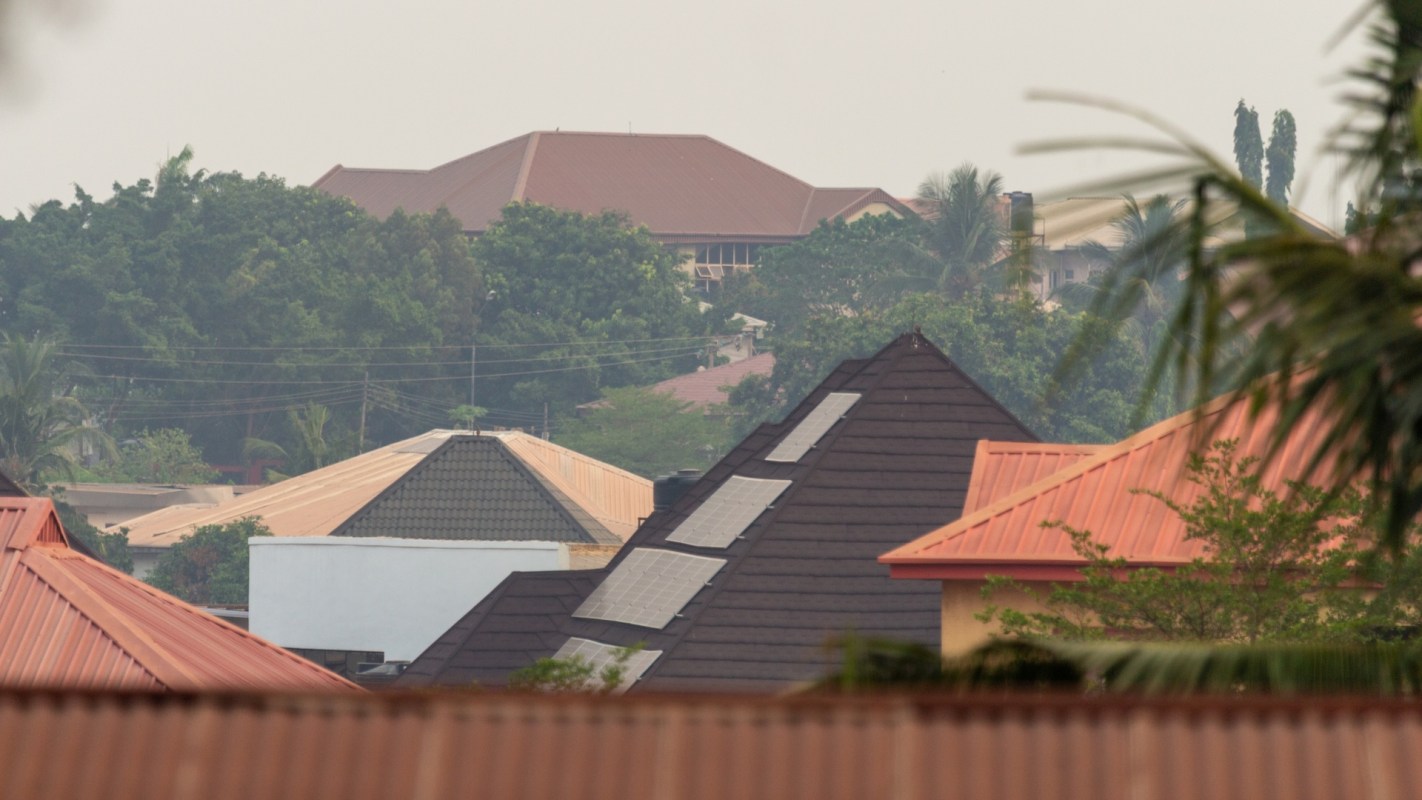
After a third outage in one week in Lagos, Nigeria, entrepreneur Lolu Taiwo stopped waiting for better utility service and hired a solar installer, BusinessDay reported.
Here's what to know
According to BusinessDay, the move to self-generated solar power now includes some of Nigeria's largest organizations.
Dangote Group, NNPC Limited, and Total are among roughly 250 manufacturers, banks, and academic institutions generating about 6,500 megawatts for themselves. The national grid, on the other hand, supplies 3,940 MW to more than 220 million people as of March this year.
The Presidential Villa in Abuja is also finishing a solar-hybrid system valued at about N17 billion.
Crushed by your bills? See instant solar savings from vetted installers in just a few clicks With energy prices through the roof, there's never been a better time to go solar — and EasyHome can help you find the best prices from the best installers in your area. EasyHome takes the guesswork and headaches out of energy upgrades by showing you estimated savings from a network of vetted local partners. To get started, just enter your ZIP and share a few details about your home — seeing your estimate is really that easy. |

Many solar users appreciate the steadier electricity and lower costs from relying less on generators. While sunlight is not available 24/7, panels generate power even on cloudy days, and obtaining fuel for generators is far less securely reliable than the fact that the sun will rise tomorrow. Investing in a battery can then capture surplus solar power for use when the sun has set.
"Diesel was eating us alive," Taiwo told BusinessDay. "The grid gives us maybe five hours a day if we're lucky. We haven't looked back."
Going solar is one of the best ways to save money on home energy, especially if you compare equipment and installer pricing carefully. Readers considering a system can explore EnergySage to get free solar installation estimates and compare quotes.
More background
Before big institutions embraced solar, home and small-business customers had already helped build the industry.
Their purchases of panels and lithium batteries expanded installer networks and supply chains. According to BusinessDay, off-grid solar installations reached roughly 1.15 gigawatts by early 2025 — about 96% of Nigeria's total installed solar capacity.
Nigeria added 803 MW of solar capacity in 2025, up 141% from 2024. That made the country Africa's second-largest solar market after South Africa.
The country's total solar capacity could rise to 87 GW by 2035.
At the same time, the boom has exposed strain on conventional power systems. Distribution companies recorded a combined N2.4 trillion in losses over two years, and some of their highest-paying customers received compensation after promised service levels were not met.
More From EnergySage
💡Go deep on the latest news and trends shaping the residential solar landscape

Lagos-based electrical engineer and renewable energy installation expert Chidi Okafor said, "What we are seeing is a market that has grown faster than the systems meant to govern it."
What can be done?
BusinessDay stated that the federal government's 2026 budget allocates upwards of N30 billion to support mini-grids and inverter programs serving many communities.
And this is clearly having a positive impact on many people across Nigeria.
Abuja-based professional Josh Ayorinde shared, "My family has completely disconnected from the national grid. The switch to solar has made life comfortable for us. There is always light. My parents can conveniently work from home without fear of electricity disruption."
For homeowners, solar shopping tools can make the process less intimidating. EnergySage offers free tools that let you compare competitive bids from local installers without sharing your contact information unless you choose to keep the conversation going.
Resources like EnergySage's solar map show the average cost of a home solar panel system by state, along with solar incentives available in each state. Together, those free services can help readers get the best price for rooftop solar panels and access available incentives. With EnergySage's help, the average person can save up to $10,000 on solar purchases and installations.
Adding battery storage to a solar setup is one of the best ways to protect your home during outages, save on energy costs, and go off-grid. It can also help households keep essential appliances running when the wider grid fails. Readers can explore EnergySage for information about home battery storage options, including competitive installation estimates.
Where can I learn more?
Nigeria's solar boom started with households finding a workable alternative to unreliable power, and similar pressures are driving interest elsewhere.
• For homeowners, solar panel costs depend on equipment choices, labor rates, and incentives.
• In the Philippines, trustworthiness of providers remains a major obstacle to broader rooftop solar adoption.
• In the United States, threats to rooftop incentives could slow households trying to cut utility dependence.
As for the fate of the solar industry, trustworthy installers and stable policy can make the difference between solar taking off and stalling out.

Get TCD's free newsletters for easy tips, smart advice, and a chance to earn $5,000 toward home upgrades. To see more stories like this one, change your Google preferences here.






