


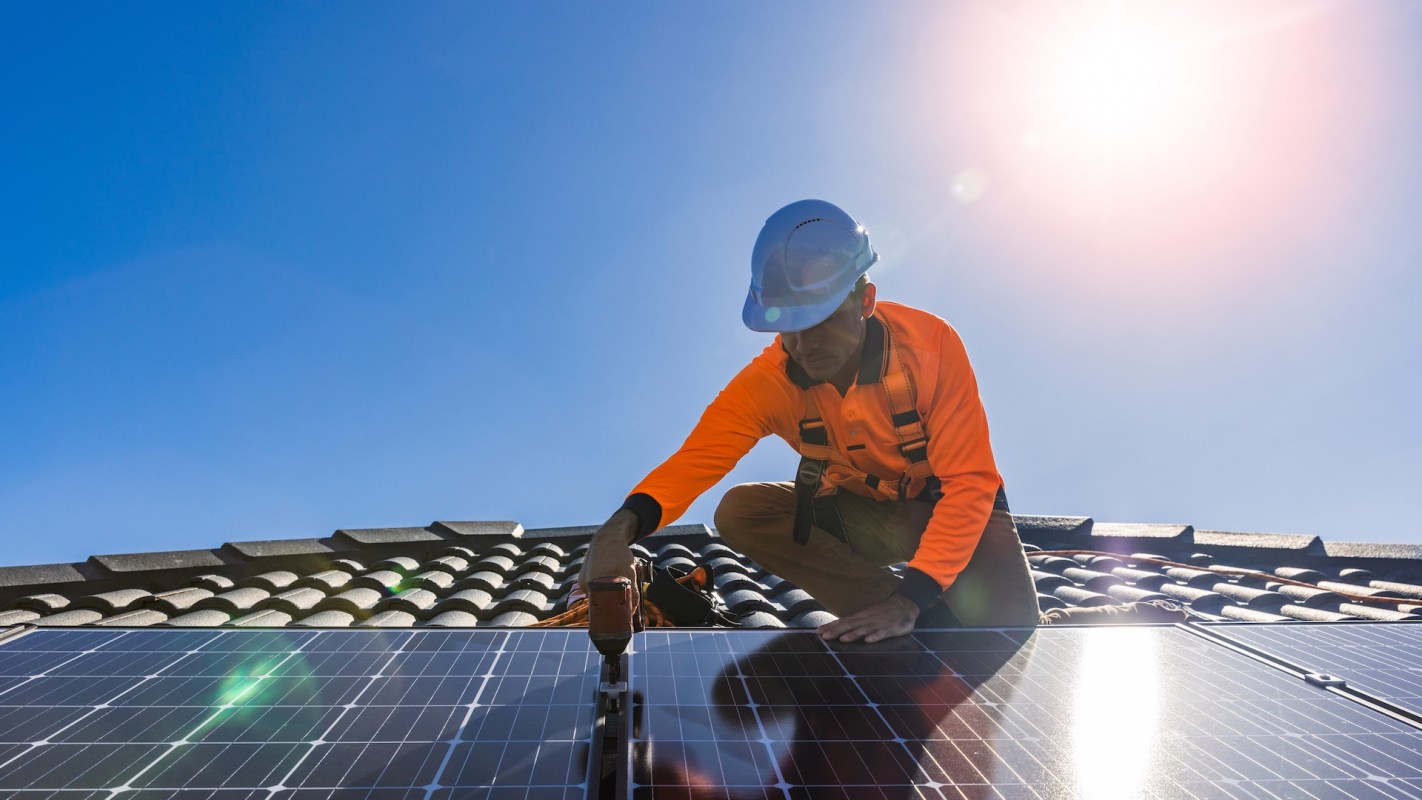
For retirees and other homeowners watching utility bills climb, one Reddit post offered a different kind of investment strategy. A New England homeowner said spending $70,000 on heat pumps and solar panels could bring more peace of mind by cutting major recurring expenses instead of chasing higher investment income.
Here's what to know
Their answer was a roughly $70,000 draw from savings for heat pumps and solar panels. In the post on r/retirement, the homeowner said the system now handles the home's heating, cooling, electricity use, and some plug-in hybrid charging.
Before the upgrade, they said the house used about 900 gallons of heating oil and 8,000 kilowatt-hours of electricity a year, which cost roughly $4,800 annually at the rates they were paying.
By the poster's calculations, current local prices — $5.49 per gallon for heating oil and 28 cents per kilowatt-hour for electricity — mean the system is now offsetting about $7,265 in yearly costs.
Their conclusion was simple: "Safe from energy price hikes and market 'corrections'."
Going solar is one of the best ways to save money on home energy and protect your home. If you're interested in going solar, EnergySage can help you get free solar installation estimates and compare quotes.
More background
The post framed electrification as a retirement budgeting strategy, not just an environmental choice. For people living on fixed incomes, sharp swings in oil, gas, and electric bills can be especially hard to absorb.
Several commenters echoed that view. One wrote, "Sounds like a good investment! I think low bills sounds like a plan I can stand by." Another commenter from New Mexico wrote that, after federal and state tax rebates, their solar project cost roughly $16,000 and left them with an electric bill of about $17 a month.
Save $10,000 on solar panels without even sharing your phone number Want to go solar but not sure who to trust? EnergySage has your back with free and transparent quotes from fully vetted providers that can help you save as much as $10k on installation. To get started, just answer a few questions about your home — no phone number required. Within a day or two, EnergySage will email you the best local options for your needs, and their expert advisers can help you compare quotes and pick a winner. |

Not everyone was persuaded. One commenter said, "I struggle to justify the payback of the big upfront solar cost," pointing to concerns about roof issues and the appeal of keeping money invested elsewhere.
Heat pumps can replace costly heating while also providing cooling, and solar can reduce or even eliminate a home's electricity bill. Together, they can make unpredictable energy spending far more manageable.
What can be done?
For a project with a large upfront price tag, seeing multiple quotes in one place can make it much easier to determine whether the long-term savings make sense.
If rooftop solar is an option, EnergySage can help the average person save up to $10,000 on solar purchases and installations.
More From EnergySage
💡Go deep on the latest news and trends shaping the residential solar landscape


You can also check EnergySage's solar map, which shows the average cost of a home solar panel system by state, along with details on solar panel incentives for each state. These resources can help readers get the best price for rooftop solar panels and access available incentives.
Adding battery storage to a solar setup is also one of the best ways to protect your home during outages, save money on energy, and go off-grid. Homeowners who want to compare options can explore EnergySage for information on home battery storage options, including competitive installation estimates.
The OP summed up the logic in one line: "Don't think of big returns now- think security."
Where can I learn more?
Here are a few stories on solar tax credits, installation costs, and what homeowners have said about lower electric bills.
• One household said it had paid one electric bill since installing solar a decade ago.
• EnergySage's COO broke down interconnected factors behind solar costs for homeowners weighing installation.
• A sudden policy fight could threaten lucrative incentives that helped rooftop solar grow.
• Homeowners were told they could get up to $9,000 off solar costs.

Get TCD's free newsletters for easy tips, smart advice, and a chance to earn $5,000 toward home upgrades. To see more stories like this one, change your Google preferences here.






